
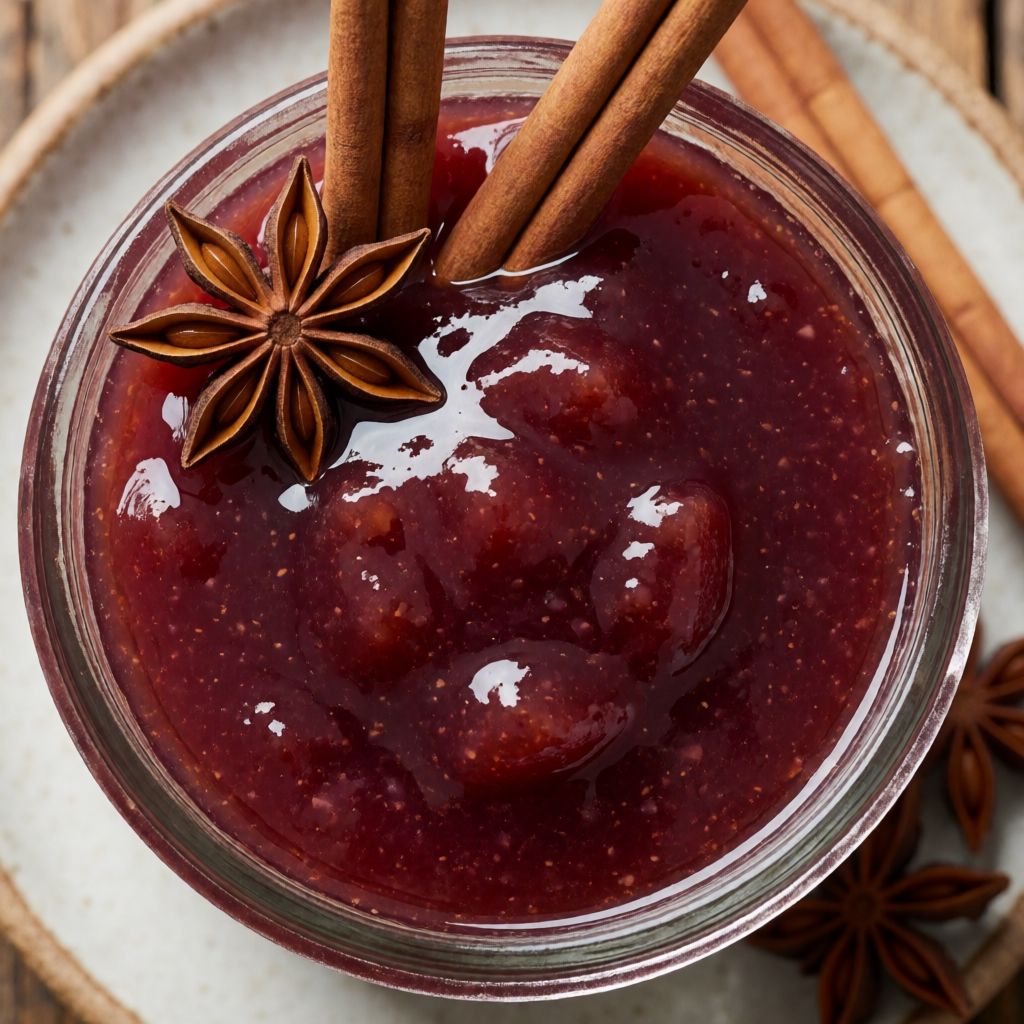
 AI photo
Plum Jam
A simple spiced plum jam, flavoured with vanilla, cinnamon and star anise, perfect for breakfast toast.
Labels are worked out automatically from the ingredients and can be wrong. Check the packaging if it matters to you.
Ingredients
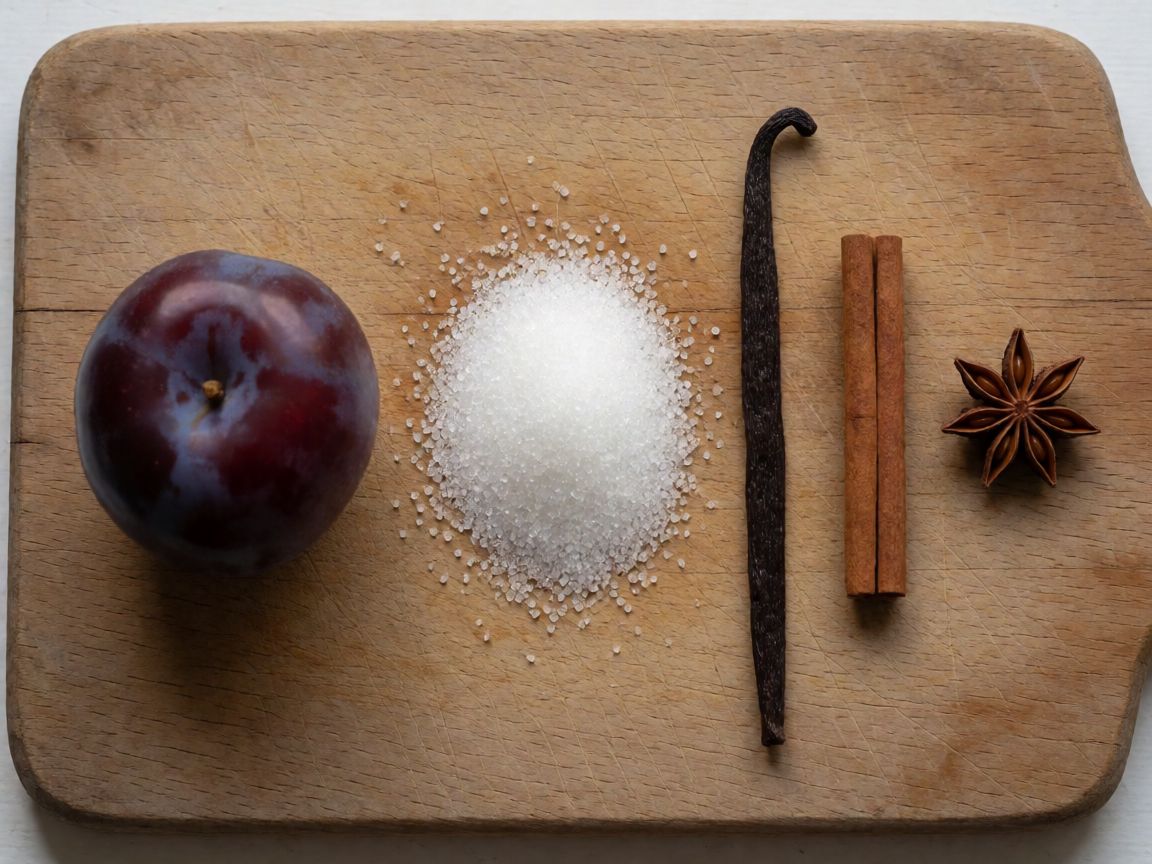
- 400 g Plums
- 125 g Sugar
- 1 pcs Vanilla pod
- 1 pcs Cinnamon stick
- 2 pcs Star anise optional, can be left out





Steps
Peel the plums, cut them in half and remove the stones.
10 minSplit the vanilla pod and mix the vanilla seeds with the sugar, so the tiny vanilla specks are evenly distributed through the sugar.
2 minPut the sugar, vanilla, plums, cinnamon stick and star anise into a saucepan and bring to the boil over medium heat.
5 minReduce the heat to a gentle simmer and cook for 30–45 minutes, until the sugar caramelises and the plum juice thickens.
38 minKeep an eye on it so the mixture doesn't boil dry or burn; add a little water if needed. The mixture should look clear and thickened.
Spoon the finished plum jam into a clean, sterilised jar that's cooled to room temperature, and store it in the fridge.
5 min
This is not really a sweet in the pudding sense — it's plums with the water pulled out of them until what's left is thick enough to sit on a spoon rather than slide off it. Sugar here isn't flavour, it's a tool: it pulls moisture out of the fruit by osmosis, slows down anything that might spoil it, and at the end, as it starts to catch a little colour at the pan's edge, it brings the toasty note that makes jam taste like jam and not stewed fruit.
What decides whether this works isn't a clock, it's evaporation. The recipe gives you 30–45 minutes because that's roughly how long it takes a certain amount of water to leave a certain amount of plum in a pan on your hob — but your plums aren't the recipe's plums, and your hob isn't a professional one. Watch the bubbles instead: at first they're big and wet-sounding, almost splashy. As the water leaves, they get smaller, slower, and start to hiss rather than plop. That change in sound tells you more than any timer.
Some say you need shop pectin or "jam sugar" or it won't set — no, because a plum that isn't dead ripe already carries plenty of pectin and acid of its own, mostly just under the skin and around the stone. Peeling the plums here, as the recipe asks, loses some of that natural pectin along with the deep garnet colour the skins give. It's a fair trade if you want a smooth jam for a spoon rather than a toast-topping with bits — but know what you're giving up, and know you can leave the skins on if you'd rather keep both.
Plums: buy the ones that are a day or two from eating raw, not the ones you'd choose for the fruit bowl. Underripe fruit holds more pectin and more acid, both of which you need for the jam to set on its own — a very ripe, sweet plum will taste lovely and refuse to thicken, no matter how long you cook it. If plums are out, any stone fruit with a tart skin behaves the same way — greengage, damson, even slightly underripe apricot.
Sugar: 125 g against 400 g of fruit is a light hand, by old preserving standards. Jam used to be made closer to equal weights of fruit and sugar because that ratio was what kept a jar edible on a shelf for a year without a fridge — sugar that concentrated is hostile to mould and yeast. This recipe doesn't aim for that; it aims for a jar that lives in your fridge and gets eaten over a couple of weeks with toast or on a scone at tea. Use less sugar than this and the jam still sets, roughly, but it won't keep as long, so treat the fridge as non-negotiable, not a suggestion.
Vanilla pod: splitting it and rubbing the seeds into the sugar with your fingers, rather than just dropping the pod in whole, is what stops the seeds clumping into one dark streak and instead spreads the flavour through every spoonful. If you've only got vanilla extract, a teaspoon stirred in near the end does the job, though you lose the little black flecks that tell you real vanilla was used.
Cinnamon stick and star anise: whole spices, not ground, because ground cinnamon would cloud the jam and turn gritty, and because a whole stick releases its oils slowly over 30–40 minutes of simmering rather than dumping all its flavour in the first minute. Star anise is there for a background liquorice note you can leave out entirely and lose nothing structural — the jam sets the same with or without it. If you don't have star anise, a cardamom pod, lightly cracked, does something similar without taking over.
Sterilised jar: this matters less for shelf life here, since the jar's going straight into the fridge, and more for keeping out anything that could grow mould on the surface in the first few days. Let the jar cool to room temperature before filling — pour hot jam into a jar straight from a hot oven or kettle and the glass can crack from the sudden change, and pour hot jam into a cold jar and you risk the same from the other direction.
And be patient with the reduction. There's no shortcut that doesn't end in either runny jam or burnt sugar — the water has to leave the pan at its own pace, and all you can do is give it a wide enough surface and keep it from catching at the edges.