
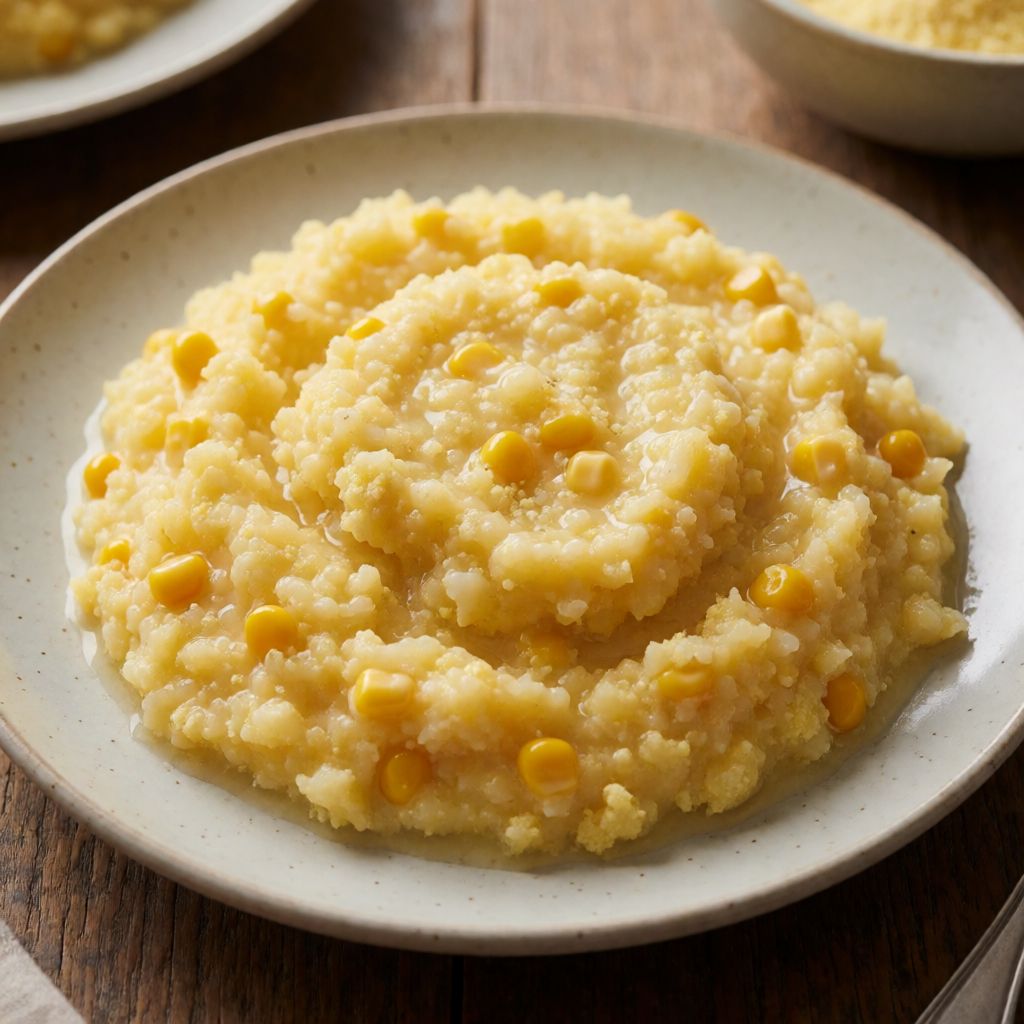
 AI photo
How to Make Polenta
A simple step-by-step guide to cooking classic cornmeal polenta until thick and creamy.
Labels are worked out automatically from the ingredients and can be wrong. Check the packaging if it matters to you.
Ingredients


Steps
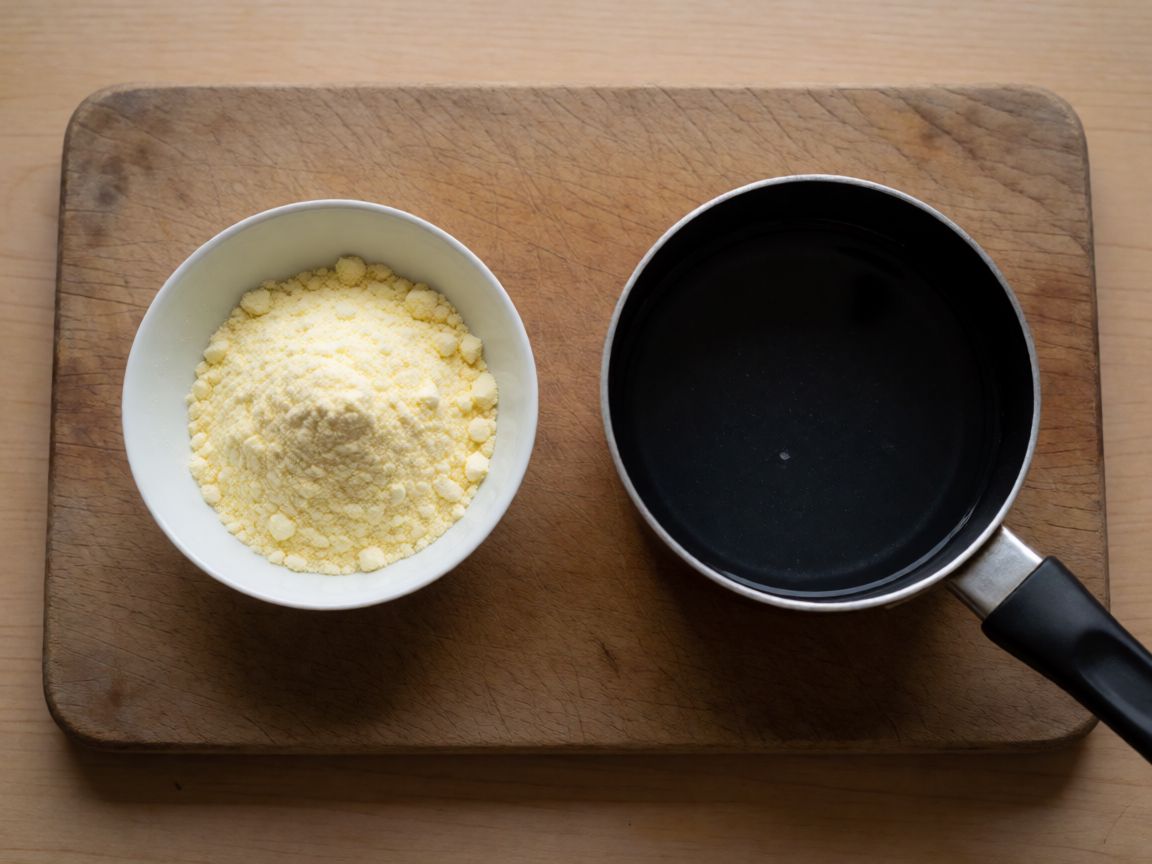
Fill a large pot with water, add the salt, cover with a lid and bring to the boil.
Remove the lid and pour in the cornmeal in a thin stream, in small batches, stirring constantly.
Gradually add all the cornmeal, continuing to stir.
Cook the polenta for about 50 minutes, stirring constantly.
50 minIf the polenta is too thick, add some hot water while cooking.
When the polenta is ready, turn it out onto a wooden board and serve.
Polenta isn't a recipe so much as a chemistry demonstration you eat afterwards. Each grain of cornmeal is a little packet of starch wrapped in a tougher coat. Heat and water don't just "cook" it — they force water into those granules until they swell and burst, spilling starch into the liquid around them, which is what thickens a thin yellow soup into something you can slice. That's the whole mechanism. Everything in the method exists to make that happen evenly, without the bottom burning before the middle softens.
What decides whether it works has nothing to do with stirring for the sake of ritual. It's about two enemies: scorching and lumps. The pot's base touches a direct flame or element, so it's always hotter than the liquid above it — if the starch there isn't kept moving, it sticks, catches, and tastes of smoke before the rest of the pot is even thickened. That's why you stir: not constantly because tradition says so, but often enough that no layer sits still long enough to burn. And pouring the cornmeal in a thin stream while stirring stops dry grains from clumping into little dough balls with a raw, gritty heart that boiling water never reaches — because once the outside of a clump gelatinizes, it seals the inside off from the water it needs.
The cornmeal itself is the whole dish, so the grind matters more than the brand. You want coarse, stone-ground cornmeal — sold as polenta or coarse cornmeal, not the fine cornflour meant for sponge cakes and shortbread. Fine flour gelatinizes almost instantly and goes gluey and flat, with none of the slight bite that makes turned-out polenta worth slicing and frying later. If all you can find is fine cornmeal, it'll still work, just faster and softer — cut the cooking time and expect something closer to porridge than to a loaf.
The ratio here — 250g cornmeal to 500ml water, roughly 1 cup to 2 — is deliberately tight. Most spoonable polenta uses four or five parts water to one of cornmeal; this one sets firm enough to hold its shape when you tip the whole mass out onto a board, because that's what the last step asks it to do. If you want a softer, bowl-eaten polenta instead, add water — but hot water, as the method says, never cold. Cold water shocks the granules that have already swollen, seizing their outer layer solid while the inside stays unfinished, and you get lumps that no amount of stirring will fix afterwards. Hot water just continues the job already underway.
Salt goes into the water before the cornmeal, not sprinkled on at the end, for the plain reason that starch doesn't season itself evenly once it's thickened — a teaspoon dissolved through the whole pot of liquid flavours every spoonful of corn as it swells, rather than sitting on the surface.
On equipment: nobody in an ordinary flat has the big copper paiolo polenta was traditionally cooked in over an open hearth in the Alps and the Balkans, where maize was the cheap grain that fed people grain couldn't otherwise feed, cooked slow because the fire was already lit for other things and nobody was in a hurry. A heavy-based saucepan does the same job on a British hob — the point was never the metal, it was a thick enough base that heat spreads instead of spiking under one spot. A lid is no use here since the pot stays uncovered once the cornmeal goes in, so don't bother improvising one with a plate; you need to see and stir, not trap steam. At the end, the "wooden board" is just a cooling, firming surface — any large plate, tray, or chopping board does exactly the same work, letting the polenta set enough to hold a knife mark.
And patience really is the last ingredient, not a virtue you bring to the kitchen. There's no shortcut that gets the starch to fully swell in half the time — turn the heat up to rush it and you'll scorch the bottom long before the centre loses its grit.