
 AI photo
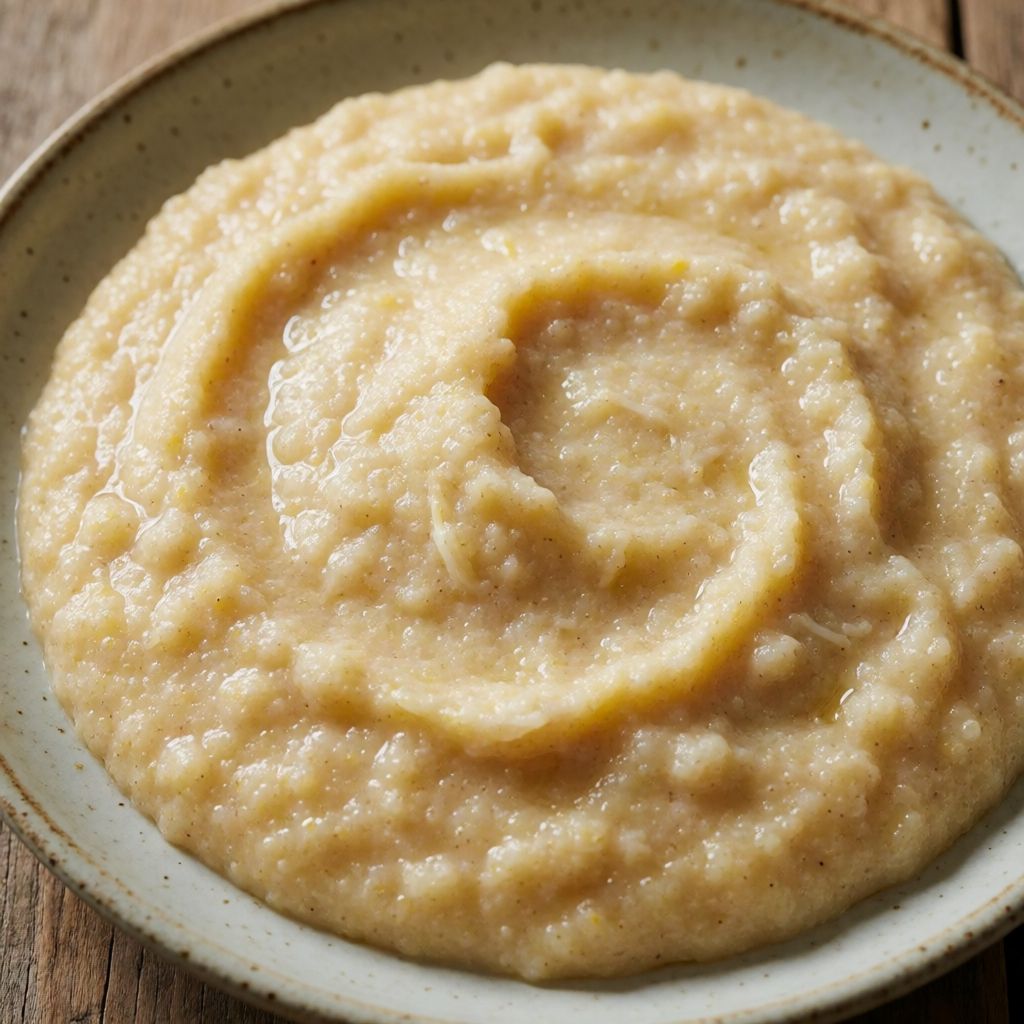
Polenta Taragna
A rustic Alpine polenta, rich with butter and melted cheese, served straight from the pot.
Labels are worked out automatically from the ingredients and can be wrong. Check the packaging if it matters to you.
Ingredients
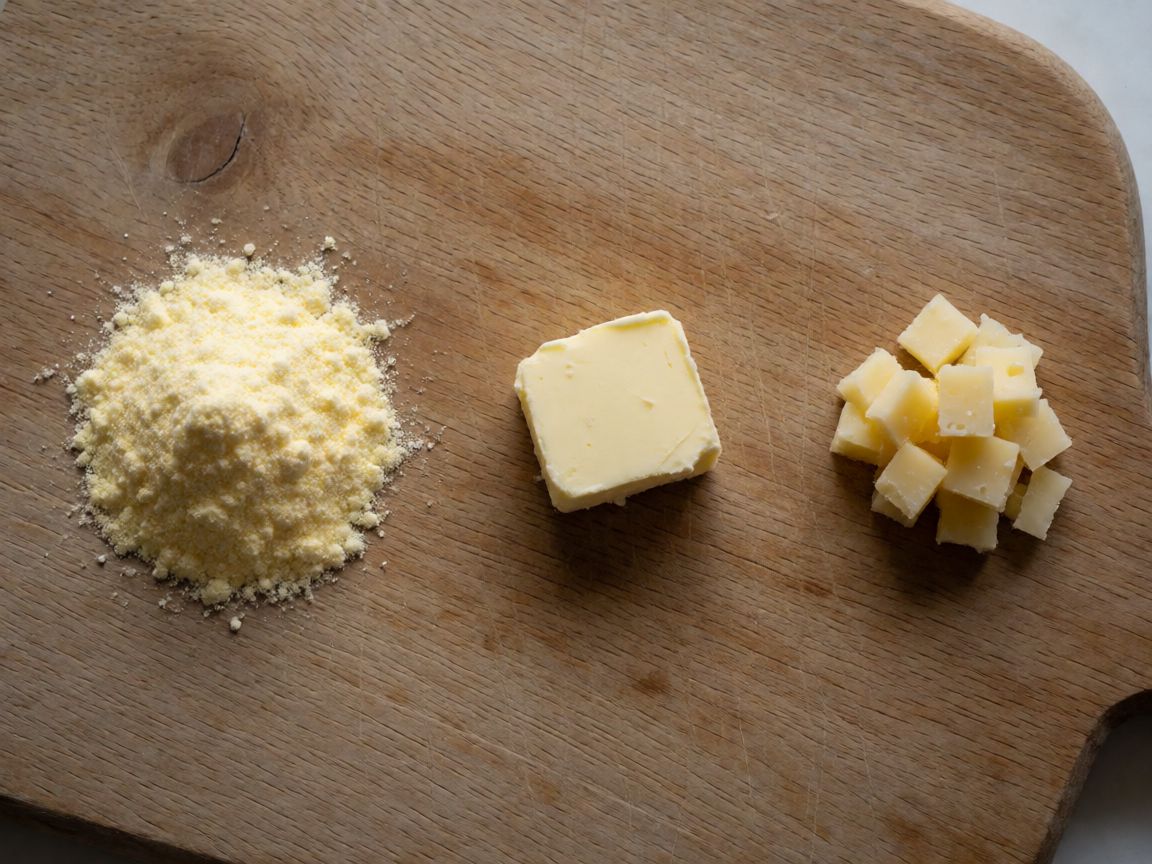
- 250 g Polenta taragna flour (maize and buckwheat meal)
- 1.25 l Water
- 0.5 tbsp Salt coarse
- 100 g Butter
- 200-250 g Emmental or Taleggio



Steps
Pour the water into a heavy-bottomed saucepan, add the salt and set it on the heat. Sprinkle the polenta taragna flour into the warm water.
Stir with a wooden spoon or a whisk so that no lumps remain.
Cook the polenta, stirring often, so that it does not catch or stick to the bottom.
60 minCut the butter and cheese into cubes and add them to the cooked polenta.
Stir until the butter and cheese have fully melted and combined with the polenta.
5 minServe the polenta hot, straight from the pot.
This is a porridge from a cold valley: buckwheat and corn cooked together until they turn into one dense, nutty mass, then shocked with butter and melting cheese right at the end. The buckwheat gives it that grey-brown colour and a slightly bitter, earthy edge that plain yellow polenta doesn't have — that's not a flaw, that's the point of using taragna flour instead of straight cornmeal.
What decides whether it works has nothing to do with exotic equipment and everything to do with heat control and time. The flour needs a long, slow cook to swell and lose its raw, gritty bite — rush it and you get wallpaper paste with crunchy bits still inside. Scorch the bottom and the whole pot tastes of it, because polenta doesn't forgive a burnt patch the way rice does; it just distributes the bitterness through everything you stir.
Some say you must stand over the pot stirring without a pause for the full hour, arm aching, or the polenta is ruined. No — because the enemy isn't gaps in stirring, it's flour settling unstirred on a hot spot and sticking there. A heavy pot, a low simmer, and a scrape of the bottom and sides every few minutes does the same job as constant whisking, and lets you put the kettle on in between. The real test of doneness isn't the clock: the polenta goes from loose and glossy to thick and matte, starts pulling cleanly off the sides of the pan, and a spoon dragged through it leaves a trench that doesn't immediately fill back in. Sixty minutes is where that usually happens, not a guarantee.
The two flours aren't there by coincidence. Buckwheat grows on poor, high, cold ground where wheat sulks and dies — it's what alpine farmers in valleys like Valtellina had before maize ever reached Europe. Once corn arrived and took over as the everyday polenta grain because it cooked into a smoother, more forgiving mass and gave more bulk per sack, buckwheat didn't disappear — it got mixed in, partly for the taste people were used to, partly because pure buckwheat polenta is heavier and harder to get right in quantity. Taragna is that compromise, written in flour. If you can't find a ready-mixed taragna blend, the criterion is simple: something like three parts fine buckwheat flour to two parts coarser cornmeal (polenta bramata), not fine instant polenta, which cooks in minutes and gives you none of the texture this dish depends on.
Water is just water — there's no flavour argument for anything special here, the quantity matters more than the source. The ratio of about five parts water to one part flour by weight is what gives you a porridge you can still stir and that sets as it cools, rather than a brick. Add the salt to the water before the flour goes in; it dissolves evenly that way instead of sitting in pockets.
Sprinkling the flour into warm, not cold and not boiling, water is what stops lumps forming — cold water lets the starch granules clump together into little dry balls before they've had a chance to separate, boiling water cooks the outside of each sprinkle into a shell before you've even started whisking. Warm water gives the starch time to hydrate evenly as you stir it in.
On a domestic hob, forget the copper paiolo you might have read about — that shape and metal existed because mountain kitchens cooked enormous batches over an open hearth for a whole farmhouse of people, and copper spreads heat evenly across a big surface. You don't need it. A heavy-bottomed saucepan, the heaviest one you own, does the equivalent job at this scale: it holds heat steady and doesn't develop the one aggressive hot spot that a thin pan will, which is the actual cause of polenta sticking and burning, not some failure of your stirring arm.
Butter and cheese go in off the simmer, once the polenta itself is done — this is an enrichment step, not a cooking step. You want them melting into the hot starch, not boiling, or the cheese can split into grease and rubbery curd instead of folding in smooth. Unsalted butter is the better choice since you've already salted the water, but it's not a disaster either way. For the cheese, the criterion is a semi-soft one with enough fat and moisture to melt into strands rather than seize — Taleggio is the traditional partner because it's from the same Alpine dairy country and does exactly that; Emmental is a reasonable British-supermarket stand-in for the same reason, fontina or a young raclette cheese would do the same job. Avoid a hard, dry, well-aged cheese like mature cheddar here — it won't melt smoothly, it'll weep oil and clump.
The butter and cheese at the end aren't a garnish, they're the historical point of the dish: in a mountain valley with little arable land but plenty of cows, dairy fat was the cheap, abundant way to turn a bowl of grain mush into something that would actually feed a family doing physical work all day. Four servings from 250 g of flour tells you the same thing — this was built to stretch, not to impress. Give yourself the full hour without resenting it; the patience is what turns raw flour into something you'd want to eat with a spoon straight from the pot, which is also how it's meant to be served — hot, immediately, before it sets into something you have to slice.