
 AI photo
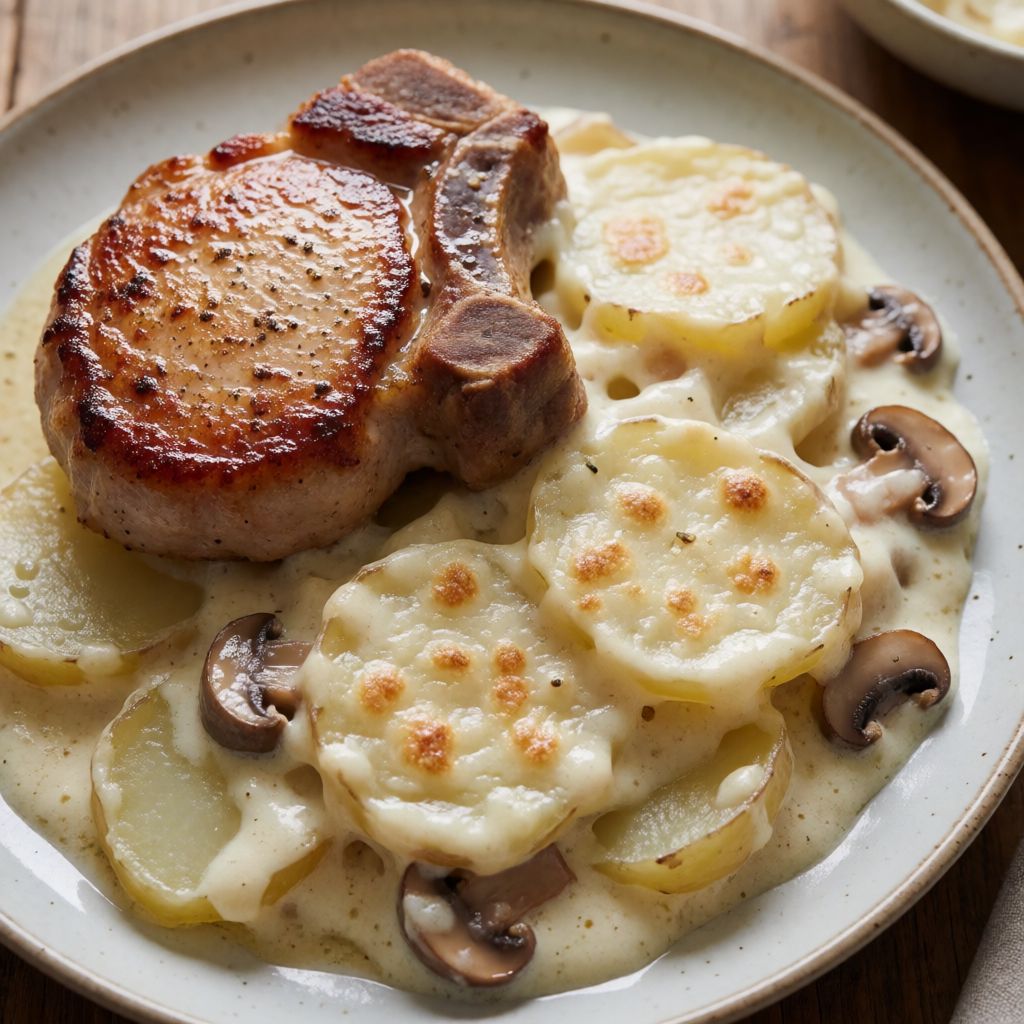
Pork Chops with Mushroom and Jerusalem Artichoke Gratin
Pan-seared pork chops layered over sliced potato and Jerusalem artichoke, baked in a creamy mushroom and onion sauce.
Labels are worked out automatically from the ingredients and can be wrong. Check the packaging if it matters to you.
Ingredients
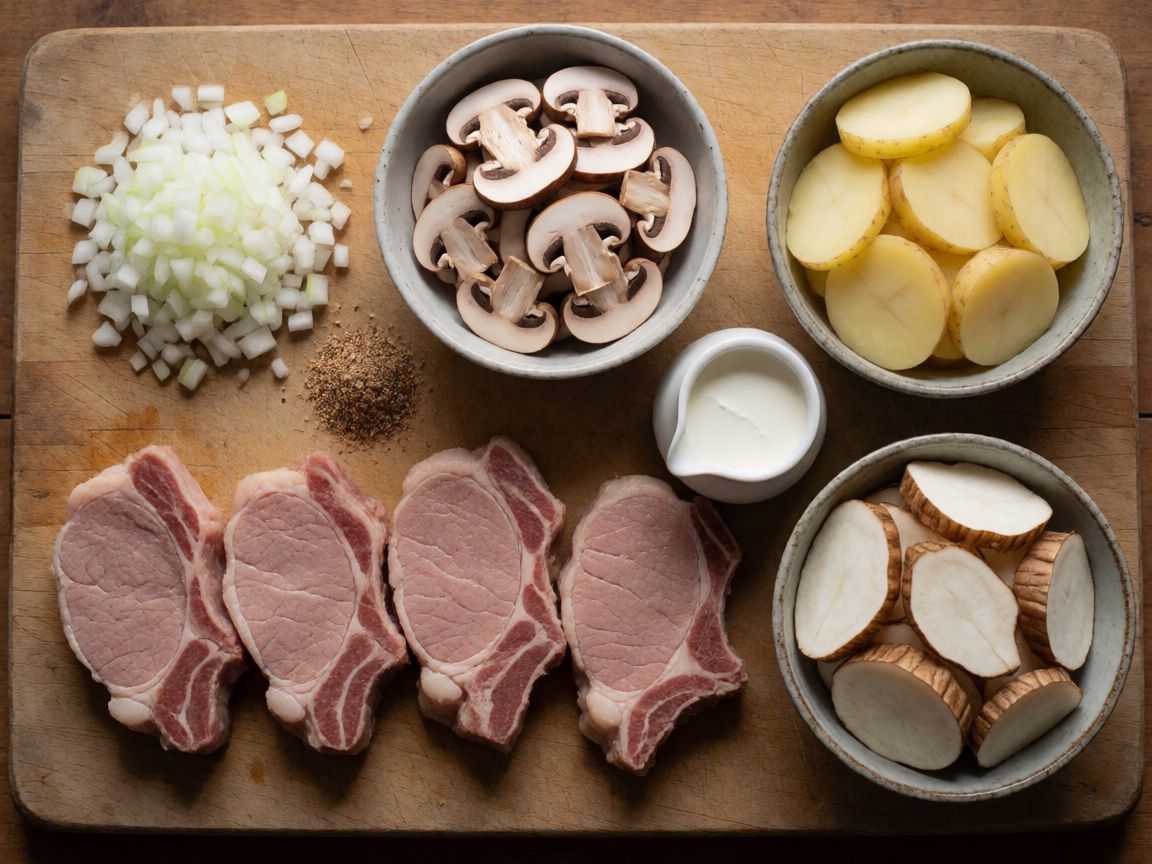
- 4 pcs Pork chops
- 1 pcs Onion finely chopped
- 250 g Mushrooms sliced
- 250 g Potato sliced
- 250 g Jerusalem artichoke sliced
- 0.25 l Double cream
- 1 pinch Nutmeg finely grated
- 1 tsp Butter for frying
- 1 tbsp Olive oil for frying
- Salt
- Black pepper freshly ground
- 1 bunch Parsley roughly chopped












Steps
Pat the pork chops dry with paper towel and fry them in a little oil in a pan. They should only lightly brown on each side, then remove from the heat.
Fry the onion and mushrooms in the same pan used for the meat.
When the onion is soft, pour in the double cream and season with salt and pepper.
Grease an ovenproof dish with butter and arrange thin slices of potato and Jerusalem artichoke in it.
Place the pork chops on top and pour over the cream, mushroom and onion mixture.
Grate nutmeg over the top and bake in the oven at 180°C (fan/convection) for 35–40 minutes.
38 minServe with good bread and a tasty seasonal salad.
This is a Sunday-roast instinct rerouted into one dish: the meat, the starch and the sauce all finish together in one oven tray, so nobody's standing over three pans at once. What decides whether it works isn't the oven at all — it's what happens in the frying pan before the dish ever goes in.
You sear the chops hard and fast, then pull them out while they're still pink inside. That's the whole trick. A pork chop baked raw-to-done in a gratin for 35 minutes under cream will cook well past the point where it's still juicy — pork chops are lean, lower fat than a shoulder joint, and lean meat punishes overcooking visibly, by going dry and stringy. So the sear is there to build colour and flavour on the surface, not to cook the inside. The oven finishes the inside gently, cushioned by cream, while the colour you built stays put.
The second decision is the potato and Jerusalem artichoke slices underneath. They're thin for a reason: a 35-40 minute bake at a moderate heat is not enough to soften a thick potato slice by dry heat alone, so the cream has to do the work by seeping down and steaming them tender from above. Thin slices give the cream less distance to travel. Cut them thick and you'll get a pork chop that's perfect sitting on a layer of potato that's still faintly raw in the middle — the dish's one real risk, and it's not about time, it's about geometry.
On the mushrooms and onion: they go into the same pan you fried the chops in, unwashed, deliberately. Whatever stuck to the bottom when the pork browned — those little dark flecks some cooks scrape out and throw away — is flavour, not dirt, and the onion releases enough moisture as it softens to lift it straight back off the pan into the mushrooms. Skip this and you're cooking two separate flavours instead of one that's been building since step one. The onion is "soft," not "golden" — you're not caramelising here, you want it collapsed and sweet-tempered before the cream goes in, because cream poured onto a half-raw onion just dilutes a crunch you didn't want.
Double cream, not single, not crème fraîche, is the one ingredient with a real job description: it has to survive 35-40 minutes in a hot oven without splitting. Single cream has too little fat to hold together under that heat and will separate into grease and watery curds — you'll see it, a broken sauce looks like oil on a puddle. If you have none, full-fat crème fraîche behaves closer to double cream than anything lighter does; a white sauce (butter, flour, milk) baked in is a reasonable stand-in but changes the texture toward "pie" rather than "gratin." Don't reach for anything low-fat here — this is the one place economy backfires, because the fat is structural, not just rich.
Nutmeg is a single pinch, grated fresh if you can — it reads as "something's going on in here" rather than announcing itself, and that's the right amount. Pre-ground nutmeg loses its oils fast once opened, so if yours has sat in the cupboard for a year, use double and don't expect much.
On the fats for frying: butter plus olive oil together is doing something practical, not decorative. Butter alone burns before the chop browns properly; oil alone browns fine but gives you none of butter's flavour. The combination lets you fry hotter without burning — the oil raises the point at which the butter's milk solids scorch. Any neutral oil with no smell of its own works in place of olive oil; sunflower or a bland rapeseed, both common in a UK kitchen, do the job without competing with the pork.
As for "medium heat" — this recipe gives you none, and rightly, because what matters is what you're looking at: the chop should hiss and colour within a minute or two of hitting the pan, not sit there sweating in its own juice. If it's not browning, the pan wasn't hot enough when it went in, and no amount of extra time fixes that — you'll just overcook the inside chasing colour on the outside.
One more thing worth saying plainly: this isn't a fast dish and shouldn't be rushed into tasting it the moment it comes out. Let it sit five minutes after the oven — the cream firms slightly as it cools, and cutting into it straight away just floods your plate. Patience here is cheap; it costs you five minutes and saves the whole look of the thing.