
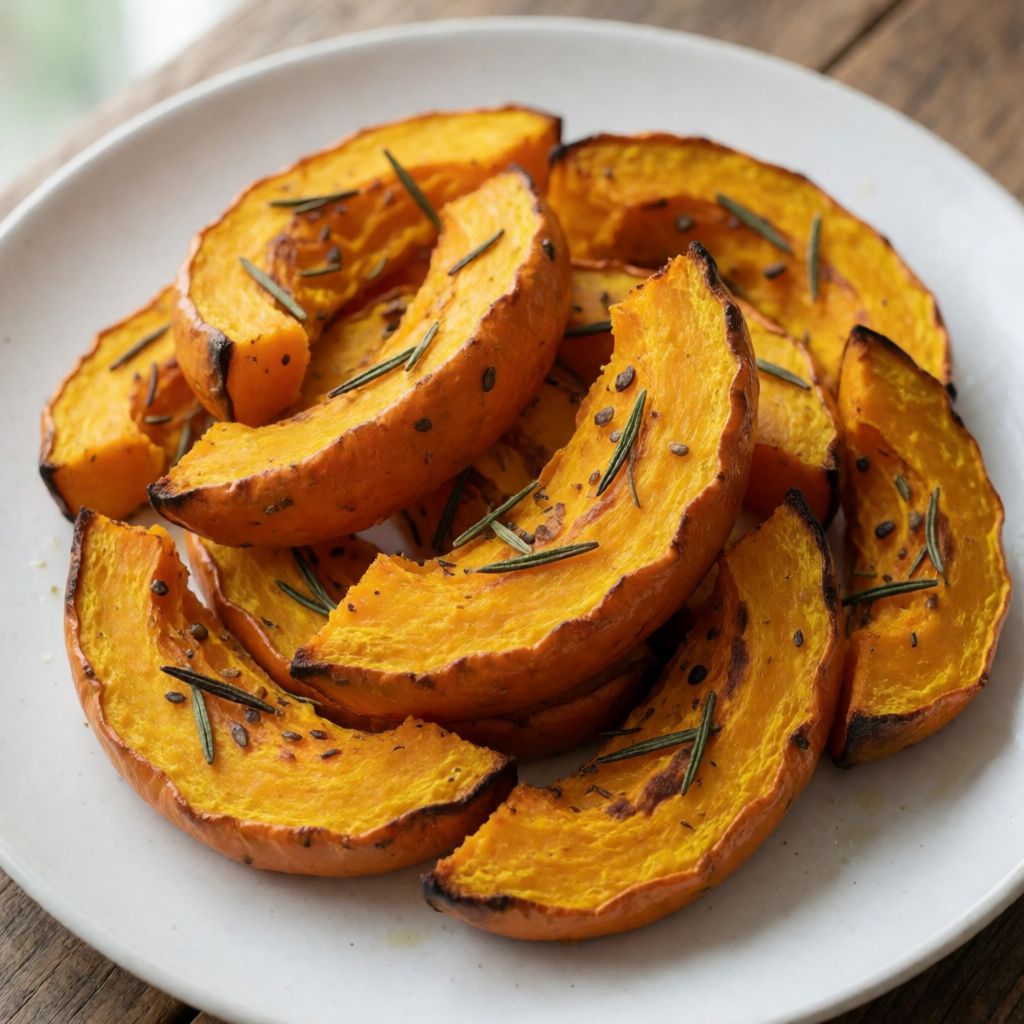
 AI photo
Air Fryer Pumpkin: A Light and Crispy Side Dish
A quick air fryer pumpkin side dish, seasoned with olive oil, rosemary and oregano, ready in minutes.
Labels are worked out automatically from the ingredients and can be wrong. Check the packaging if it matters to you.
Ingredients
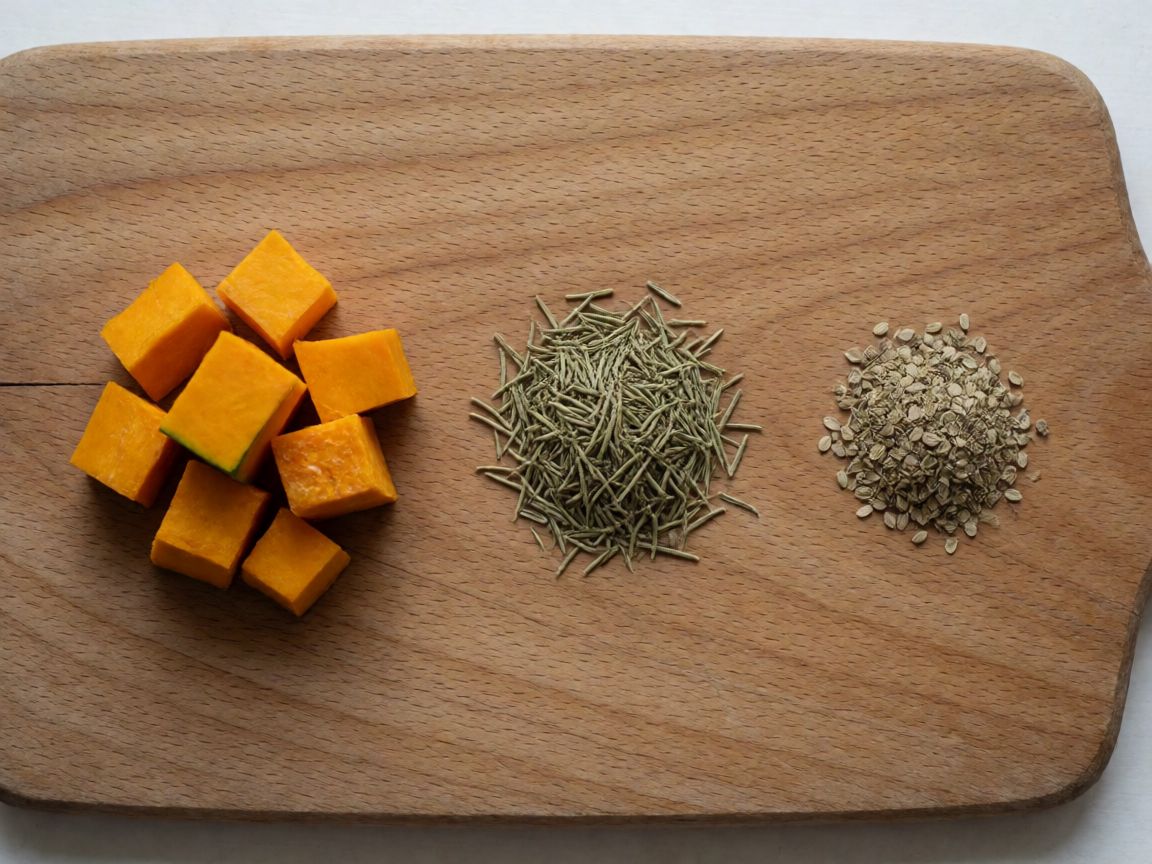
- 300 g Delica Pumpkin (or Kabocha/Butternut Squash) choose a dense, sweet squash, not a watery carving pumpkin, so it crisps well
- 1 tbsp Olive Oil
- 1 tsp Dried Rosemary
- 1 pinch Salt
- 1 pinch Oregano optional




Steps
Cut the pumpkin into small, even cubes so it cooks evenly.
Transfer to a bowl, add the olive oil, dried rosemary, salt and oregano.
Mix well with a spoon so the seasoning is evenly distributed.
Spread the pumpkin in a single layer in the air fryer basket.
Cook at 200°C for 20 minutes, stirring halfway through.
20 minServe once the pumpkin is golden and fragrant.
This is not boiling, not steaming, not quite roasting in the usual sense — it's convection in a tin box. Hot air is forced around each cube at speed, so the surface dries out fast and the sugars in the squash start to caramelise before the inside turns to mush. That's the whole mechanism, and everything in the method exists to protect it or push it along.
What decides whether it works is mostly decided before you touch the air fryer: the squash itself. Some say pumpkin is pumpkin — no, because a carving pumpkin is bred to be big, thin-walled and watery, good for a lantern, useless here. Put it in at 200°C and the water inside it has to leave first, by steam, before anything can brown; by the time it's dry enough to caramelise, it's already collapsed into wet strings. Delica, Kabocha, butternut — these are dense and sugary, closer in spirit to a sweet potato than to a Halloween pumpkin, and they crisp because there's so little water standing in the way.
After that, it's about air, not fire. A single layer in the basket means hot air can get at every face of every cube; pile them up and the pieces underneath are basically steaming in the moisture coming off the ones on top — that's the real reason for stirring halfway, not tidiness, but giving every side its turn in the airflow. Even cube size matters for the same reason twice over: a fat cube stays raw in the middle while a thin sliver burns before it's cooked through, and both are failing at the same thing — matching surface to centre.
On the squash: the test is weight and feel, not variety name. Pick one up — it should feel heavy and dense for its size, with flesh that, when you cut into it, is deep orange and almost dry-looking, not pale and wet. That density is sugar and starch, not water, and sugar is what turns gold at the edges. If all you can get is a standard pumpkin, it isn't ruined — just expect less crisp and more soft-sweet, and maybe cut the pieces smaller so more surface gets exposed to the air relative to the wet interior.
The olive oil isn't there to fry anything — an air fryer has no fat bath, it's dry heat with a fan. The oil's job is to sit on the surface of the squash and conduct heat into it faster and more evenly than air alone, and to carry the rosemary's flavour into contact with the flesh rather than letting it sit as dust on top. A tablespoon for 300g is a coating, not a puddle — too much and the pieces sit in their own oil at the bottom of the basket, which traps steam under them and undoes the whole point of using an air fryer in the first place. The criterion for substitution is simple: any oil that can sit at 200°C without smoking or turning bitter, and that doesn't fight the rosemary — rapeseed or sunflower work fine if you want oil as a pure conductor with no opinion of its own; olive oil here is doing double duty as flavour.
Dried rosemary, not fresh, and that's not a style choice, it's about what survives twenty minutes of dry heat. Fresh rosemary is mostly water held in soft leaf tissue; put it through the same air that's drying out your squash and it scorches and turns bitter well before the pumpkin is even properly coloured. Dried rosemary has already given up its water in a cool, slow way, so what's left is sturdier oil-bound flavour that can take the heat. If fresh is all you have, chop it fine and add it in the last few minutes, not at the start.
The pinch of salt goes in early here on purpose, and that's fine — with meat or fish, early salting can pull moisture out before you want it to, but with something this hot and this dry, whatever moisture the salt draws to the surface just evaporates straight off, and a slightly drier surface is exactly what you want for colour. Oregano is not structural, it's a second voice singing along with the rosemary — leave it out and nothing fails, nothing even changes much beyond aroma.
A word on the appliance itself, because it's not magic, it's just a small, fast convection oven: the fan moves air past the food far quicker than a still domestic oven does, which is why air fryer times and temperatures don't map neatly onto normal oven instructions — the air is doing more of the work per minute. That's also its real limit in a UK kitchen: the basket is small, so if you're serving more than two or try to double the recipe without doubling the batches, you're back to crowding the basket and steaming instead of crisping. It's a genuinely useful second heat source on a Sunday when the main oven is busy with the joint and the roast potatoes — but it only earns its keep if you respect how little room it has. Patience here means doing two batches rather than one crowded one, and it means waiting for amber, not for the clock.