
 AI photo
Puntarelle alla Romana
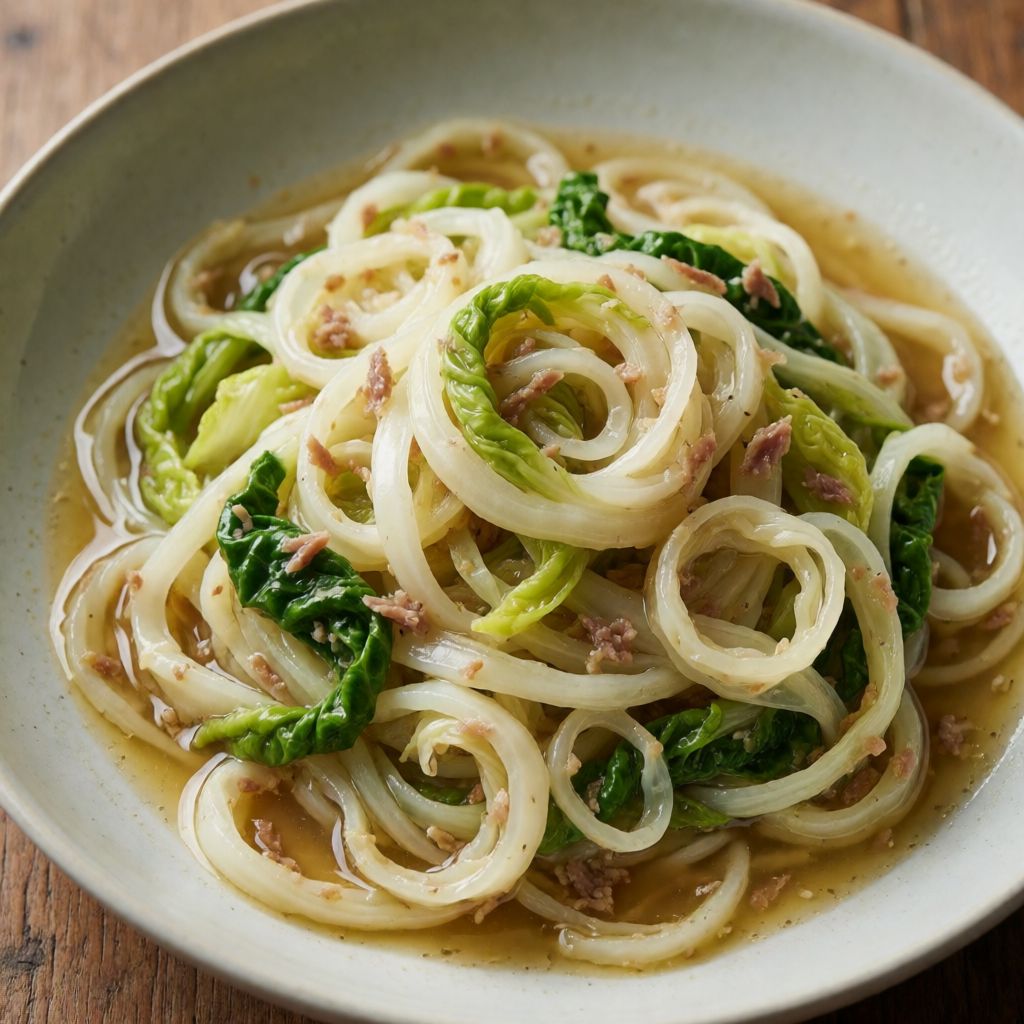
A classic Roman salad of crisp puntarelle shoots dressed with a garlicky anchovy emulsion.
Labels are worked out automatically from the ingredients and can be wrong. Check the packaging if it matters to you.
Ingredients






Steps
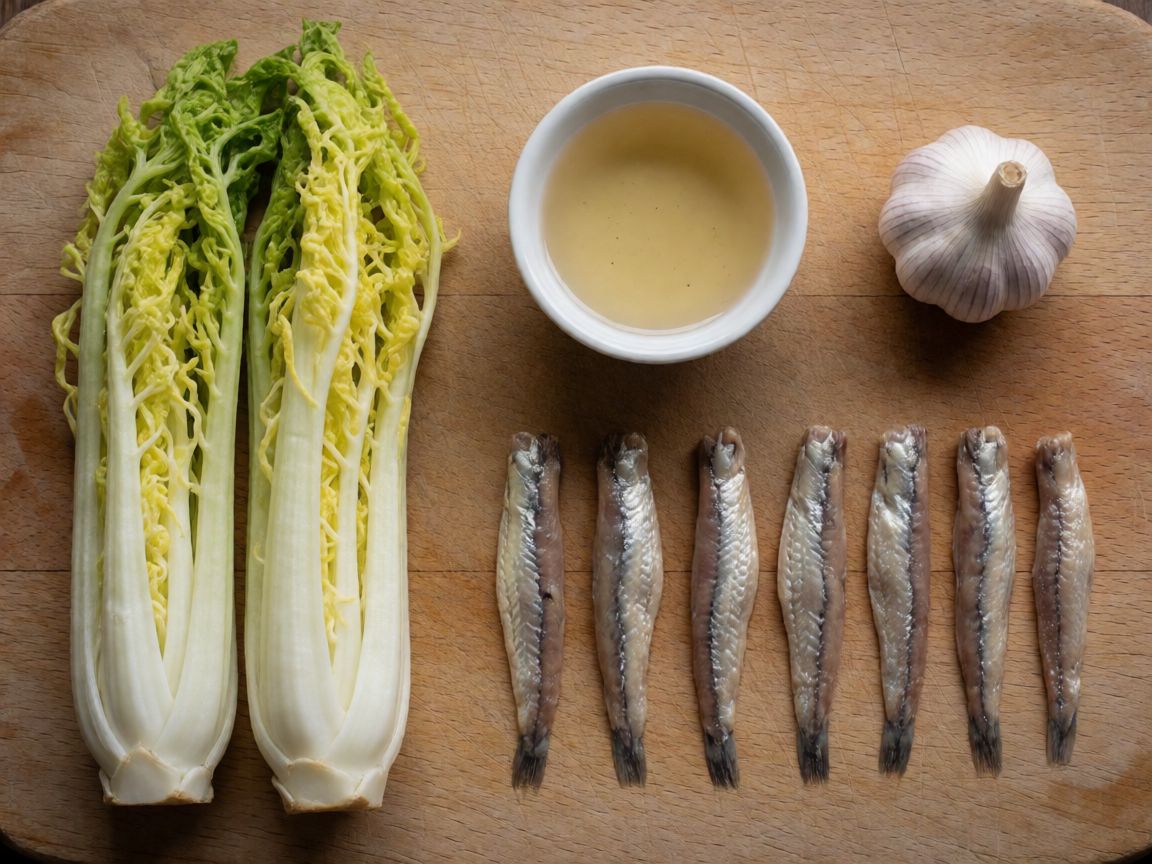
Cut the puntarelle in half to remove the tender inner shoots, then slice them into thin strips.
Soak the sliced shoots in cold water for about 1 hour.
60 minIn a bowl, prepare the dressing: mix the garlic, vinegar, olive oil and chopped anchovies, then add salt to taste.
Gently whisk the dressing until it forms a smooth emulsion.
Drain the puntarelle and pat them dry thoroughly.
Transfer the puntarelle to a large serving plate and dress with the anchovy and garlic emulsion.
Serve the salad immediately, chilled, to enjoy its delicate flavour.
This is a raw winter salad built on one single contrast: the clean, green bitterness of chicory shoots against the salty, sharp punch of anchovy and vinegar. Nothing in it is cooked. Nothing needs to be. The whole dish stands or falls on what happens to the puntarelle in cold water, and on whether the dressing comes together as one thing instead of oil floating on vinegar with bits of fish in it.
Puntarelle are the inner shoots of a particular chicory — the part that, in most other vegetables, gets thrown out as too fibrous to bother with. Cut thin and dropped into cold water, those shoots curl into tight corkscrews within the hour. That curl is not decoration. It happens because the strips are made of fibres under uneven tension — cut one side free and soak it, and the whole strip bends toward the side that shrinks less. Warm water won't do this properly; it relaxes the fibres instead of tightening them, and you get limp ribbons instead of the springy curls that catch the dressing and give the bite its crunch. So cold water is not a style choice, it's the mechanism — and an hour is the point below which the curl hasn't finished, not a number to clock-watch.
Some say you need a special tool, a sort of comb-knife, to cut puntarelle properly. No — you need thin, even strips, and a steady hand with a sharp knife does that just fine. The tool is a jig for consistency, useful if you're doing kilos of it for a trattoria, irrelevant for four people on a Sunday.
Puntarelle itself is not an exotic plant, it's one chicory variety — Catalogna — grown specifically for this inner shoot, and it exists because Roman market gardeners found a use for what other chicories waste. That's the whole history: a peasant's way of not throwing away the tender core of a bitter plant, paired with anchovies because salted fish was the cheap, shelf-stable protein of a city on the coast, long before refrigeration. There's no magic in the pairing, just two ingredients that happened to be cheap, available, and complementary in winter, when little else is green.
In an ordinary British kitchen you are unlikely to find puntarelle on the vegetable shelf — it's a winter speciality still mostly sold in Italian delis or grown by people who know to ask for Catalogna chicory. If you can't get it, look for the same thing in spirit: something bitter, crisp, with hollow or fibrous stems that will hold a curl or at least a crunch — young dandelion greens, the pale inner leaves of curly endive, or even the white ribs of chicory (Belgian endive) cut into matchsticks. None of them curl the way puntarelle does, so don't expect the corkscrew; soak them anyway, the cold water still firms the cells and takes the worst edge off the bitterness by drawing out some of the bitter sap.
Anchovies are there for salt and savour, not for fish flavour — dissolved properly into the dressing, they vanish as a taste of "fish" and reappear as depth, the way they do in a good Caesar dressing. Use oil-packed fillets if that's what's in your cupboard; if you only have anchovy paste, a teaspoon stands in for roughly two fillets, though the texture of the emulsion will be slightly looser. There is no real vegetarian substitute that does the same job — capers and a dash of soy sauce get you salt and savour but not the same rounded, almost creamy note anchovy gives the oil.
The garlic is there to perfume the oil, not to dominate it — one clove, crushed into the dressing, is enough; if raw garlic repeats on you, rub a cut clove around the inside of the bowl and discard it before adding the rest.
Vinegar does one specific job: it cuts through the bitterness of the chicory by giving your palate something sharper to notice first. Red wine vinegar is traditional because it's what a Roman kitchen had open; lemon juice works too and is arguably gentler, though it shifts the dish slightly off its usual register.
For the oil, Roman cooks reach for a decent olive oil deliberately — here you want the oil's own flavour, peppery and a little bitter itself, so that it agrees with the chicory rather than just carrying the other flavours. This is one of the few cases where "any oil with no smell of its own" is the wrong advice; a neutral oil would leave the dressing thin and pointless. Keep the salt light until the end — anchovy and the vinegar both bring salt with them, and it's easy to oversalt a dish that has no other bulk to absorb it. Chill the plate before serving if you can; cold dulls the perception of bitterness slightly and makes the crunch of the shoots far more obvious, which is the whole pleasure of eating it in the first place.