
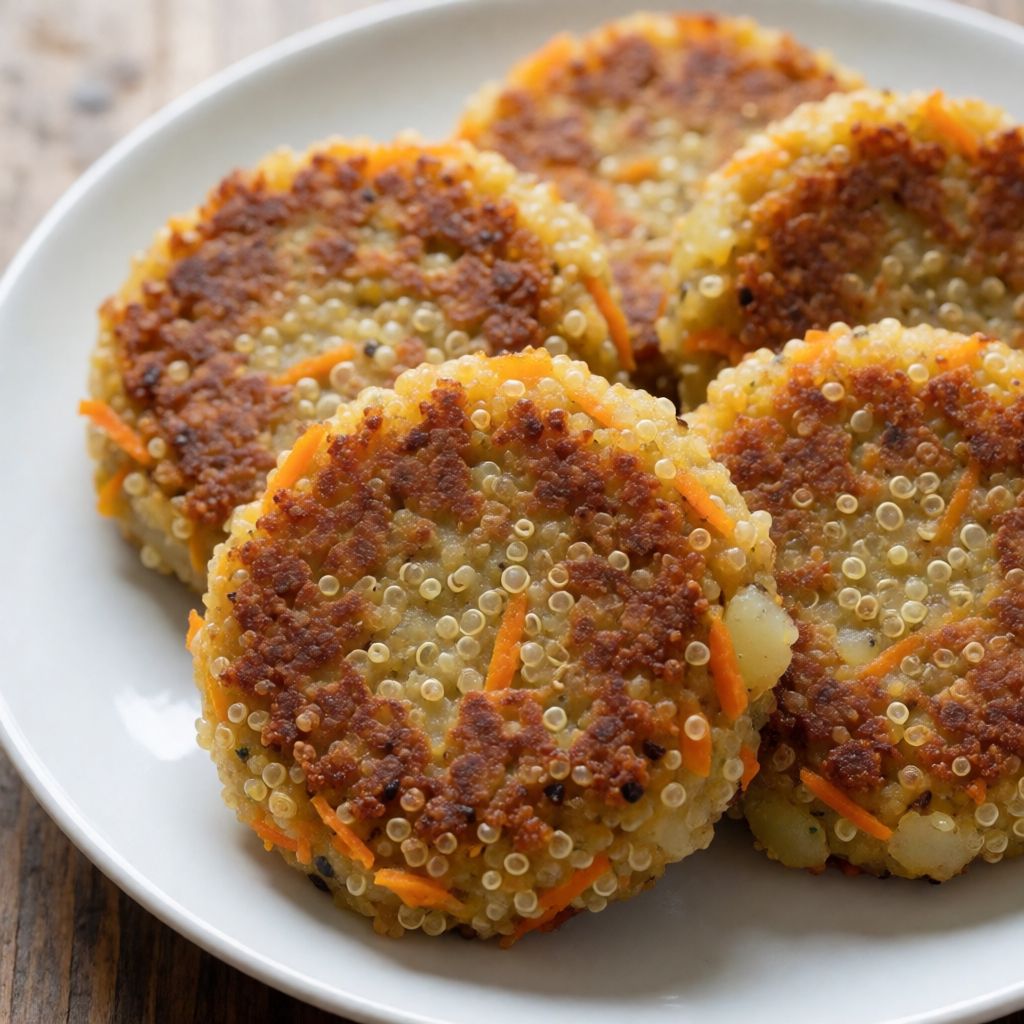
 AI photo
Quinoa Patties
A light vegetable patty made from quinoa, carrot and potato, finished with melted cheese and a crisp breadcrumb coating.
Labels are worked out automatically from the ingredients and can be wrong. Check the packaging if it matters to you.
Ingredients
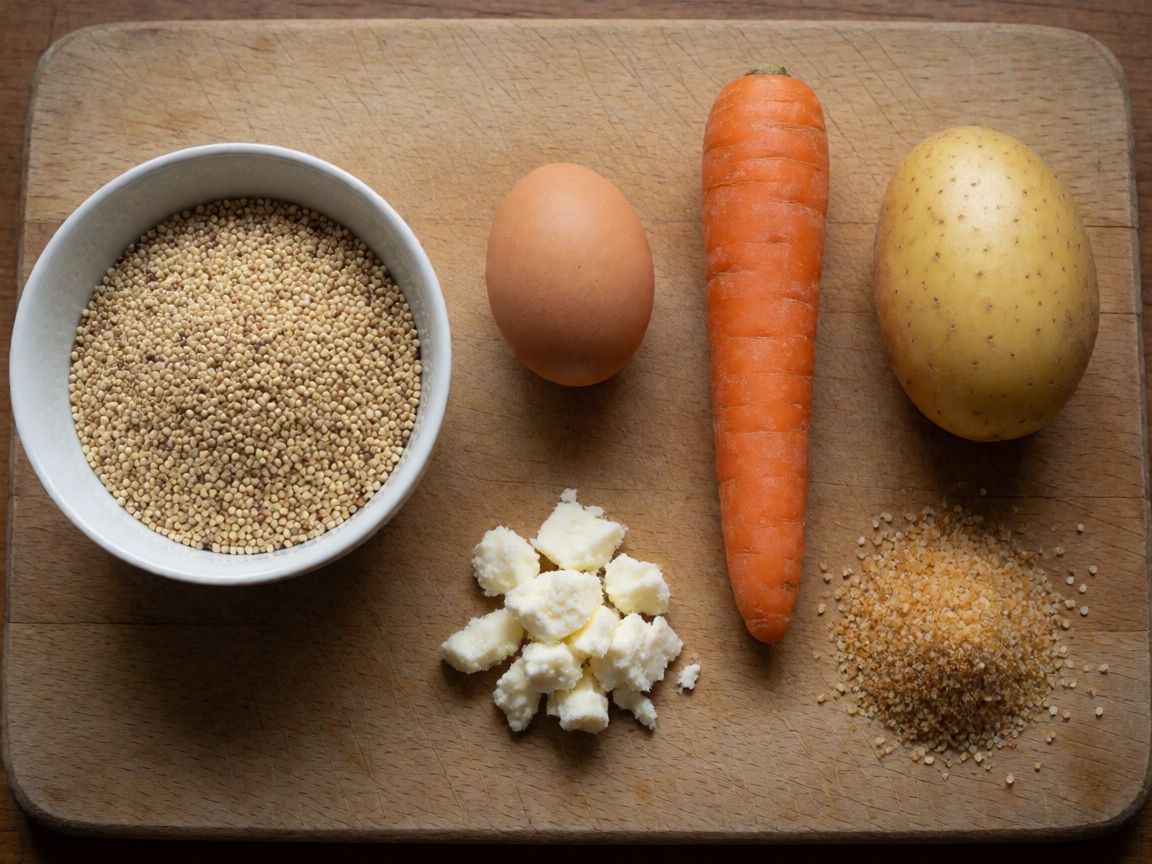
- 150 g Quinoa
- 350 ml Water
- 1 pcs Egg
- 1 pcs Carrot
- 1 pcs Potato
- 80 g Smoked scamorza
- 1 pinch Salt to taste
- 1 pinch Black pepper to taste
- 1 tbsp Breadcrumbs to taste, for coating
- 1 tbsp Olive oil to taste, for drizzling






Steps
Rinse the quinoa under running water and drain well in a colander. Tip into a pan, cover with water and bring to the boil.
Boil over high heat for at least 15 minutes, until the grains have opened up and absorbed all the water. Transfer the quinoa to a bowl and let it cool completely.
15 minWash the carrot and potato and grate them finely.
Add the grated vegetables to the cooled quinoa, add the scamorza cut into small cubes, beat in the egg, and season with salt and black pepper.
Mix by hand until evenly combined.
Lightly wet your fingers with water and shape the mixture into small balls.
Roll the balls in breadcrumbs and place them on a baking tray lined with baking parchment.
Drizzle the patties with olive oil so they turn golden and crisp while baking.
Preheat the oven to 180°C and bake the patties for about 20 minutes.
20 minArrange the finished quinoa patties on a plate and serve immediately.
These are little quinoa and vegetable balls, baked not fried, held together by egg and cheese rather than flour. What decides whether they work is moisture: too much water left in the quinoa or the grated vegetables and the balls slump into rubble the moment they hit the tray. Too little, and they're dry pellets that taste of virtue and nothing else.
The quinoa itself does most of the structural work, and it only does that work once it's cold. Hot quinoa is slippery - the starch on the outside of each grain hasn't set, so the mixture won't hold a ball shape, it'll just spread. Some say quinoa patties are naturally fragile and need extra egg or flour to bind - no, because the real fix is patience: let the grain cool properly first, and the grains grip each other on their own.
Grating the carrot and potato raw, rather than cooking them, is the other quiet decision in this recipe. Raw grated vegetable releases water slowly as it bakes, basting the inside of the patty instead of flooding the mixing bowl the way a boiled, mashed vegetable would. That's also why you shape with wet fingers rather than dry ones - a dry hand drags the surface of the mixture and starts pulling it apart as you roll; wet fingers glide and the ball stays whole.
On an ordinary UK hob, step two is the one to watch, not rush. "At least 15 minutes" is a floor, not a target - the real sign is that every grain has popped its little white tail and the water is gone, not a guess based on the clock. If water's still sitting at the bottom when the timer goes off, keep it on the heat a bit longer rather than draining it off; drained-but-wet quinoa is exactly the moisture problem that makes patties fall apart in the oven.
Quinoa (150g dry, feeds 4 as a side) is the base and it needs nothing more exotic than rinsing - that rinse matters, because the grain carries a bitter coating (saponin) and skipping it is the difference between "pleasant and nutty" and "oddly soapy." If you've only got bulgur or couscous in the cupboard, either will bind in a similar way, but neither has quinoa's crunch, so expect a softer patty.
Carrot and potato, one of each, are there for moisture, colour and a bit of sweetness as they cook down - any firm root vegetable that grates without turning to mush works the same way; courgette is the obvious wrong substitution here because it's mostly water and will make the mixture slacker, not firmer.
Egg is the actual glue - it's what sets in the oven heat and locks the grain and vegetable shreds together, so don't skip it for a vegan version without replacing it with something that sets the same way (a flax-egg or a spoon of chickpea flour paste), or the patties will simply crumble on the fork.
Smoked scamorza is there for stretch and for that faint bacon-adjacent smokiness without using bacon - cubed small so it half-melts rather than turns to a single molten blob. Any semi-firm, smoked melting cheese stands in fine; a smoked cheddar from the Sunday-roast cheeseboard drawer would do the job without you needing a special trip to the shop.
The breadcrumb coating and the olive oil drizzle aren't decoration - together they're your substitute for deep-frying. A proper fry gives a crisp shell because the surface moisture flashes off instantly in hot oil; a 180°C oven can't do that violently, so the oil you drizzle on is standing in for the oil the patty would otherwise be sitting in, carrying heat into the crumb so it browns instead of just drying out. Leave the oil off and you get a pale, sandy coating, not a crust.
A UK oven marked 180°C is usually a fan oven's dial, and fan ovens run a touch fiercer than a conventional one set the same - if yours is non-fan, nudge it up by about 20°C, or just trust your eyes over the dial: you're waiting for the crumb to go from pale and matte to gold and slightly glossy from the oil, and the 20 minutes is the minimum, not the whole story.