
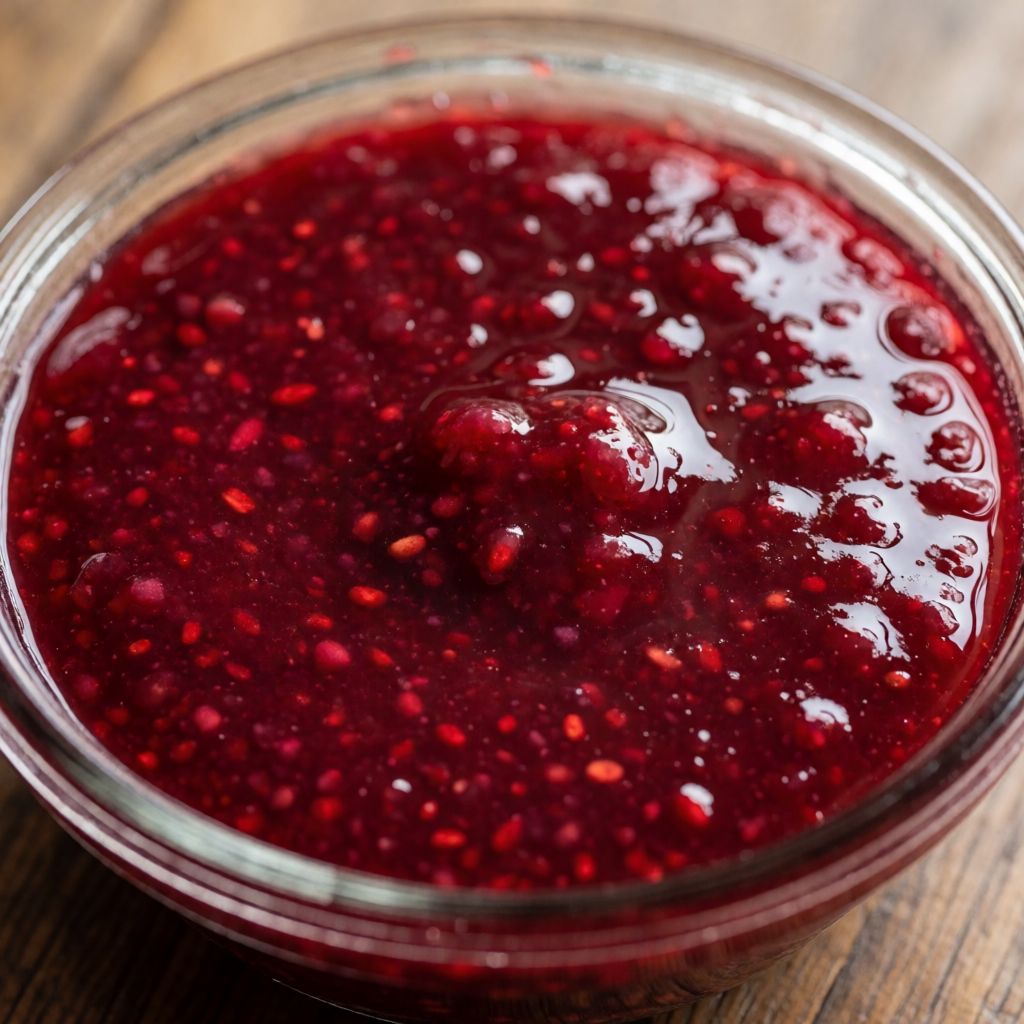
 AI photo
Raspberry Jam
A simple homemade raspberry jam, cooked in two stages and sealed in sterilised jars for pantry storage.
Labels are worked out automatically from the ingredients and can be wrong. Check the packaging if it matters to you.
Ingredients
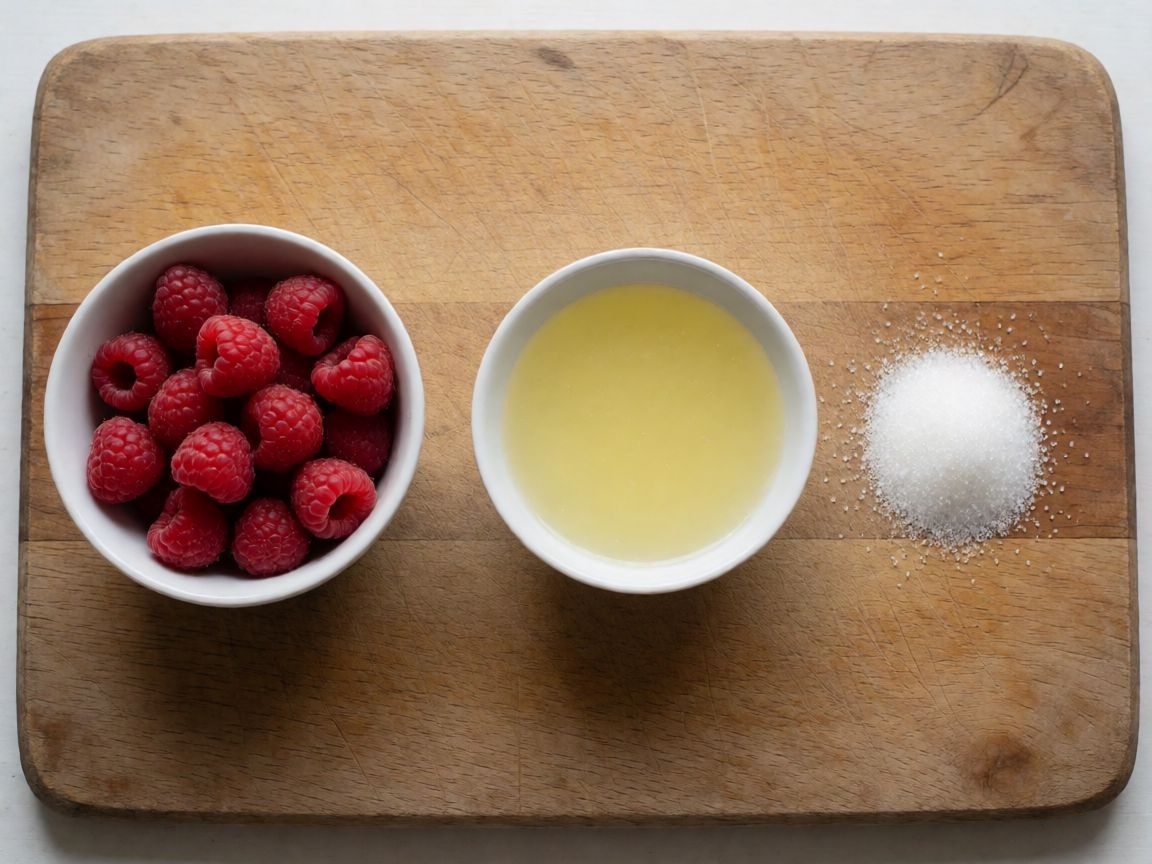
- 1 kg Raspberries
- 1 pcs Lemon Juice juice of 1 lemon
- 600 g Caster Sugar



Steps
Rinse the raspberries to remove any debris, then place them in the bottom of a saucepan.
Add the lemon juice, strained through a fine sieve.
Place the pan over the heat and cook the raspberries over medium heat from the moment they come to the boil.
10 minRemove the pan from the heat and leave the raspberries to cool completely.
Add the sugar to the raspberries.
Return the pan to the heat and bring the mixture to the boil over low heat, stirring occasionally.
45 minSpoon the jam into sterilised glass jars using a wooden spoon.
Seal the jars with their lids.
Wrap the jars in cloth and simmer them in a pan of water.
23 minTurn the jars upside down and leave them to cool completely in that position.
Store the jam in the pantry.
Jam is just fruit held in a gel - pectin, acid, sugar and heat, in that order of importance. No magic, just chemistry you can see: pectin is a web of long sugar molecules trapped in the cell walls of the fruit, and it only locks into a gel once acid and sugar pull the water out of its way. Raspberries carry a fair bit of pectin, more than you'd think from how soft they are, which is why this jam needs no setting agent bought in a sachet.
What makes this method worth noticing is the two separate boils. You cook the raspberries alone first, with nothing but lemon juice, then you take the pan off the heat and let it go cold before sugar ever goes in. Some say sugar should go in from the start, with the fruit, so everything melds together in one boil - no, because sugar added too early stiffens the fruit's cell walls before the heat has had a chance to break them open and let the pectin out. Cook the fruit first, unarmoured, and it collapses properly; the juice runs, the pectin dissolves into it. Only then do you ask sugar to do its job.
The cooling in between isn't dead time, it's the berries drinking back some of that juice, going soft and swollen, so that when the sugar goes in it dissolves into fruit that's already given up its resistance. Skip the cool-down and you're boiling raw sugar crystals against half-cooked fruit - you'll get burnt sugar on the bottom of the pan before you get a set.
Raspberries: buy them firm, not weeping in their punnet - weeping means they're already breaking down and you've lost juice and pectin before they ever reached the pan. If it's winter and the only raspberries you can find have travelled further than you have, use frozen ones; they've usually been frozen within hours of picking, which keeps more pectin than a fresh punnet that's sat three days in a shop. Just let them thaw first, or your first boil turns into a watery mess rather than a controlled simmer.
Lemon juice isn't there for flavour, it's there for acid. Pectin's gel only forms in a low-pH environment - too neutral and no amount of boiling will set it, which is the real reason some jams refuse to thicken no matter how long you cook them, not bad luck. Any acid with no flavour loud enough to fight the fruit will do the same job: citric acid dissolved in a splash of water, or lime juice if that's what's in the fridge. Strain it, as the recipe says - pips and pulp in the pan just mean grit in the jar later.
Sugar here is caster, and that's not fussiness. Finer crystals dissolve faster and more evenly in the small amount of liquid the cooled fruit offers, so you get less chance of a patch of undissolved sugar catching and scorching on the base of a thin domestic pan - which has no kazan's thick iron to spread the heat around, so hot spots are a real risk, not a theoretical one. Granulated sugar works, it just needs a slower hand and more stirring to dissolve properly before the boil picks up speed.
Notice the sugar ratio: 600 g to a kilo of raspberries is well under the old 1:1 rule that British jam-making grew up on. That 1:1 ratio wasn't tradition for its own sake, it was economics - sugar was the preservative before anyone had a fridge, so you used enough of it to make the jam shelf-stable on its own. Less sugar means a softer, fresher-tasting jam, but it also means the sugar alone won't keep it safe, which is exactly why step 9 exists: the cloth stops the jars cracking from direct contact with a hot pan base, and the simmer in water pasteurises the jam after it's already sealed, doing the preserving job sugar used to do by itself.
Turning the jars upside down once sealed isn't superstition either - it lets the still-hot jam touch and sterilise the underside of the lid, and it redistributes any fruit that's started floating before the jam sets, so you don't open a jar in January to find all the raspberries parked at the top.
A wooden spoon for filling the jars: metal spoons can carry a little heat away from hot jam and, more to the point, don't scratch or chip the inside of a hot glass jar the way a careless metal edge might - small thing, but patience with small things is most of what separates jam that keeps from jam you eat nervously within the month.