
 AI photo
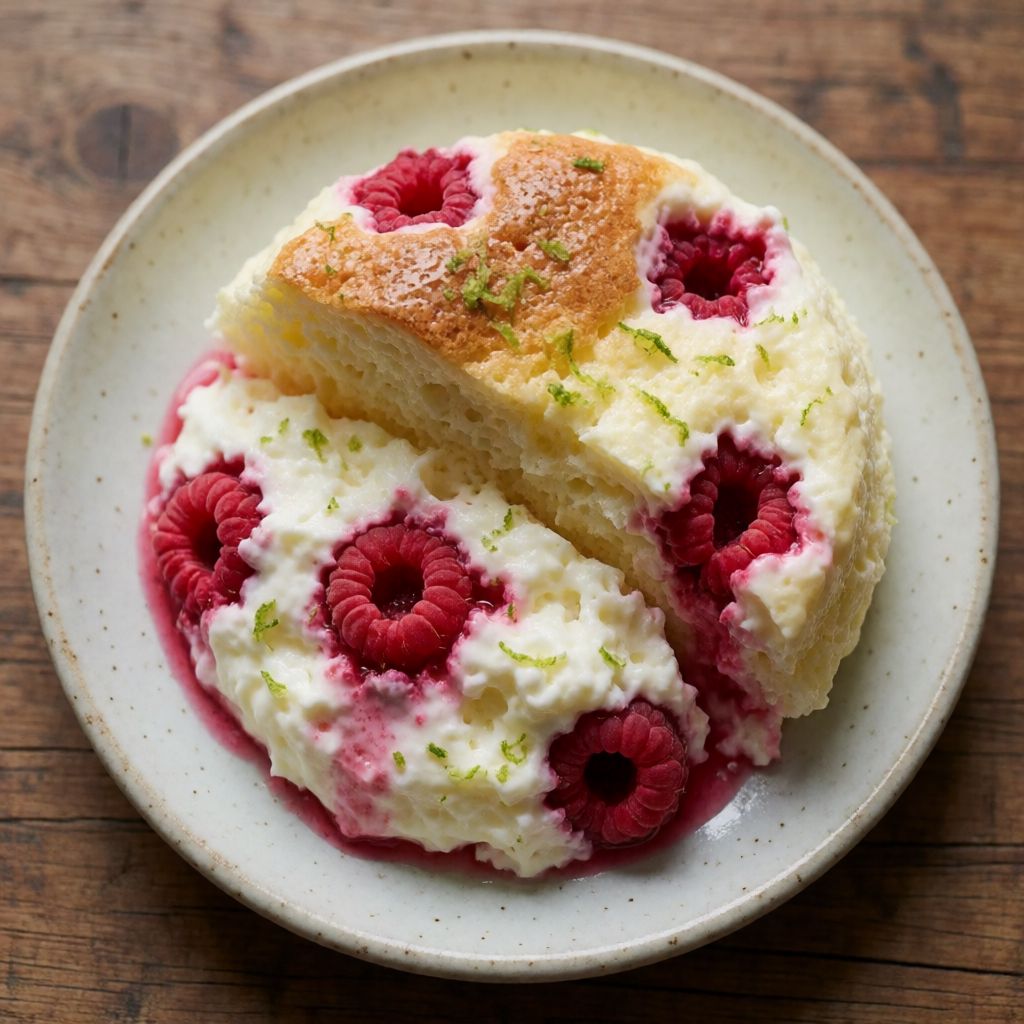
Raspberry Soufflé
A light raspberry soufflé with a delicate meringue base, baked until it puffs up golden.
Labels are worked out automatically from the ingredients and can be wrong. Check the packaging if it matters to you.
Ingredients
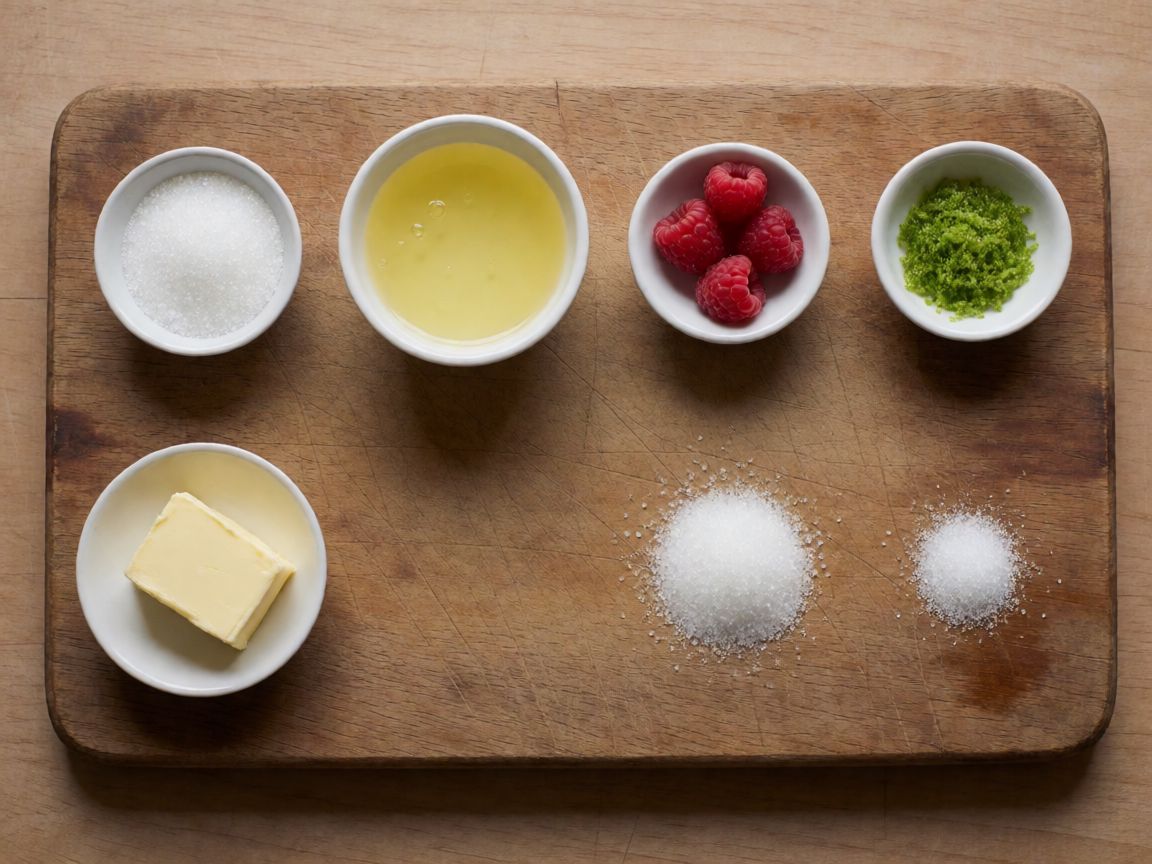
- 120 g Caster sugar
- 4 pcs Egg whites
- 200 g Raspberries
- 1 pcs Lime zest
- 15 g Butter for greasing the ramekins
- 15 g Caster sugar for dusting the ramekins




Steps
Wash the raspberries, pat dry and blend to a purée with a hand blender.
Pass the purée through a sieve to remove the seeds.
Add the lime zest to the purée and mix well.
In a bowl, whisk the egg whites with the sugar until stiff and glossy, like a meringue.
Set aside a third of the whisked egg whites in a separate bowl, add the raspberry purée and mix.
Gently fold this mixture into the remaining whisked egg whites with sugar using a spatula, taking care not to knock out the air.
Take 4 soufflé dishes (ramekins) about 10cm across, grease with butter and dust with sugar.
Spoon the mixture into the dishes right up to the rim and smooth the surface with a spatula.
Bake at 200°C for 7 minutes and serve immediately.
7 min
This is raspberry air, more or less. Four egg whites holding as much air as they can manage, flavoured with raspberry and a little lime, then given just enough heat to lock that air in place before it escapes. What decides whether this works isn't the oven - it's everything that happens in the bowl before the oven ever sees it.
Some say soufflé is a chef's trick, too risky for a home kitchen - no, because the physics behind it is almost stupidly simple: egg-white protein wraps itself around bubbles of air when you whisk, and heat sets that protein solid around the air already trapped inside. The whole difficulty is keeping those bubbles alive on the journey from bowl to oven, not some hidden skill in the baking itself.
That's the entire reason you fold instead of stir at step 6. Folding keeps the bubbles whole; stirring flattens them. Flatten them and you don't get a soufflé, you get a nice sweet raspberry omelette in a ramekin - edible, just not this.
And that's why it's eaten the moment it leaves the oven. As it cools, the hot air trapped inside that egg-white scaffold shrinks back down, and the walls - which are nothing but whisked egg white, remember, no flour, no structure of their own - fold in around the space the air used to fill. That's not you failing the dish. That's what warm air always does when it's allowed to cool. A soufflé five minutes late still tastes fine. It's just not a soufflé any more.
Start with the egg whites, because they're the whole dish and everything else is passenger. Whites foam best completely clean - no grease in the bowl, not a fleck of yolk - because fat molecules sit between the protein strands and stop them linking up around the air you're beating in. That's the real reason a 'flat' meringue happens, not bad luck or weak arms. If you're not sure your bowl is clean enough, wipe it with a bit of vinegar or lemon juice first and dry it properly.
The 120g of sugar in the whites is doing a structural job as much as a sweet one. Dissolved sugar forms a thin syrup that coats the protein strands, which is why the foam turns from foamy to glossy and stiff - that glossiness is your sign it can survive folding and the oven without weeping or sagging early. The 15g dusted on the ramekins is a different job entirely: not flavour, grip. Butter alone is too slick for the rising mixture to climb - it'll slide back down or dome lopsided. Sugar gives the rising walls something to catch on, so they climb straight. Any fine, fast-dissolving sugar works for both jobs - ordinary caster is right, golden caster will just tint things slightly. Skip icing sugar in the whites; it carries cornflour, which dulls the foam.
The raspberries are there for acid, colour and a little pectin, nothing more complicated. They're sieved after blending to take the seeds out, because a seed sitting in a thin egg-white wall is a weak point - that's where the rising soufflé will tear first. Frozen raspberries do the job just as well as fresh; thaw and drain them properly first, or the extra water they carry dilutes the mix and weakens the structure you've just built. You'll end up with something close to 100-120ml of purée from 200g of fruit, and it's noticeably wetter than whisked egg white on its own - which is exactly why step 5 has you loosen a third of the whites with the purée first, matching the two mixtures for thickness before you fold them together. Try to fold wet purée straight into stiff dry foam and you'll crush half the air out getting it to combine evenly.
Lime zest is there for its oil, not its sourness - the pith underneath is what's bitter, so stop at the skin. Raspberry on its own can sit a bit flat and one-note; the zest's sharpness lifts it. The substitution criterion is simple: any citrus with fragrant oil in the skin and no pith scraped in with it - lemon gives you something brighter, orange something rounder and sweeter.
Butter for the ramekins just needs to solidify when it cools and stay out of the way flavour-wise - unsalted is standard, but any fat that sets firm and tastes of nothing will do the same job. Smooth the mixture level with the rim rather than leaving it heaped or messy - a ragged top catches unevenly as it rises and the whole thing climbs crooked instead of straight up.
On a domestic oven, 200°C on a fan setting runs hotter than the dial suggests more often than people expect, so watch the soufflé rather than the clock past the 7-minute mark - you want it up over the rim with a little crack on top, not yet sinking at the edges. Don't open the door to check early. A rush of cooler air drops the oven temperature suddenly, and the egg-white scaffold - still being built, not yet set - sags under its own weight before it's finished. It's the same mechanism as the later collapse on the plate, just happening mid-construction instead of after.