
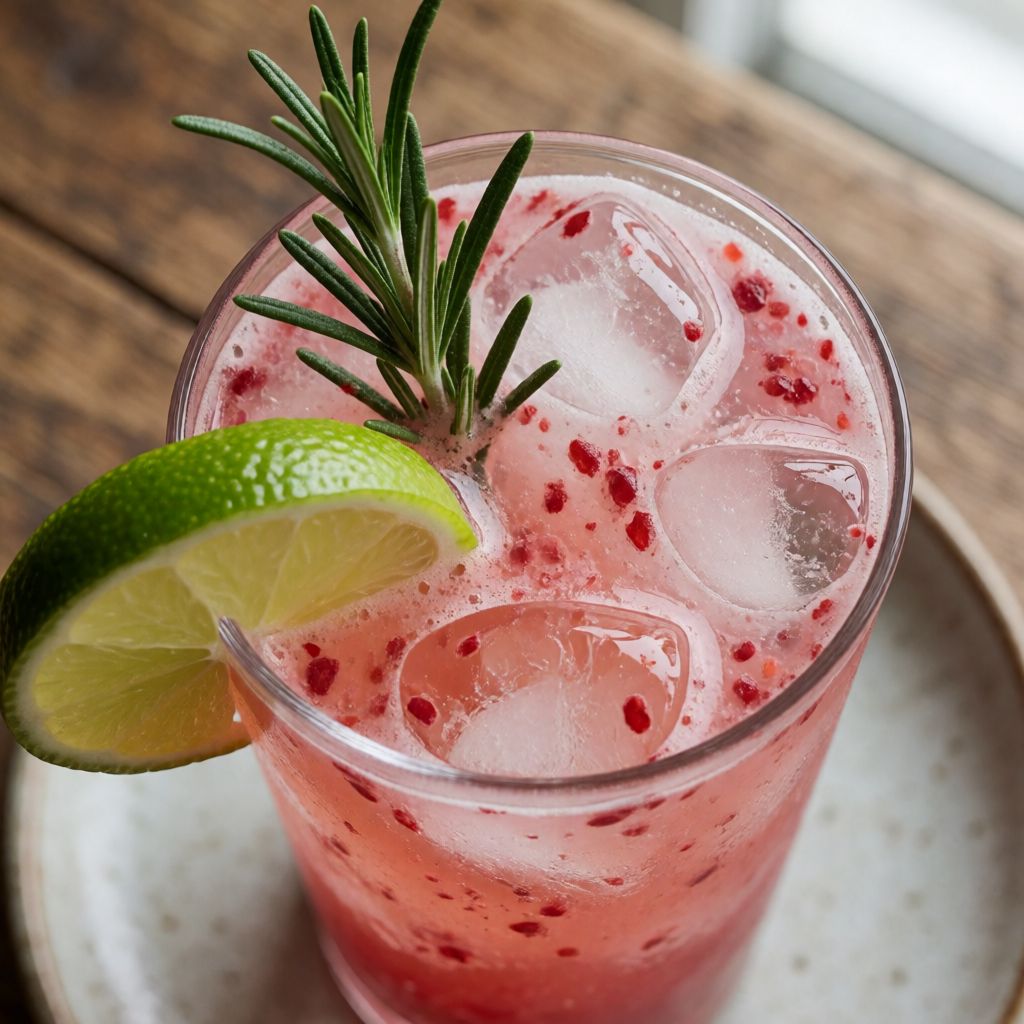
 AI photo
Raspberry and Vodka Cocktail
A refreshing raspberry and vodka cocktail with ginger beer, chilled raspberry ice and a hint of rosemary.
Labels are worked out automatically from the ingredients and can be wrong. Check the packaging if it matters to you.
Ingredients
- 125 g Raspberries
- 2-3 pcs Rosemary fresh
- 12 pcs Raspberries
- 2 pcs Lime juiced
- 2 tbsp Sugar
- 100 ml Vodka
- 400 ml Ginger Beer






Steps
A day before serving: put the raspberries in a saucepan, bring to the boil and simmer for 5 minutes
5 minLet cool, blend the cooked raspberries with a hand blender and pour the puree into an ice cube tray, filling it to about 1/3
Put the ice cube tray in the freezer for 30 minutes
30 minThen distribute the fresh raspberries and rosemary sprigs into the tray, top up with water to the brim, and put the tray in the refrigerator until the next day
540 minPut the lime juice and sugar in a saucepan and bring to the boil until the sugar dissolves
3 minPour the syrup into a glass and chill in the refrigerator
15 minTo serve: put the vodka, lime syrup, a rosemary sprig and two raspberry ice cubes in a cocktail shaker and shake well together
1 minPour into a glass filled with raspberry ice cubes, top up with ginger beer and serve
1 minNon-alcoholic version: prepare exactly the same way, simply omit the vodka
This isn't a drink you make — it's an ice cube you make, and then you pour things over it. The vodka, lime, ginger beer part takes a minute. The cube takes a day. That ratio tells you where the actual work is.
What decides whether it works is whether the cube ends up with two distinct layers doing two different jobs. The bottom third is cooked raspberry pulp, dense with flavour, frozen solid on its own first. The top two-thirds is plain water holding whole raspberries and a rosemary sprig suspended, frozen second. Skip the two-stage freeze and dump everything into the tray at once, top it with water, and the berries float before the water sets, the colour bleeds through flat and pink all the way, and you've lost the point of the thing — a cube that looks like a tiny striped glass object and melts slowly, feeding raspberry into the drink on a delay instead of all at once.
Some say ice is only there to keep a drink cold. Not this one — the cube is the flavouring, released in slow motion as it melts under the ginger beer. Plain ice just dilutes; this stuff feeds the glass.
It feeds four, properly — a garden-drink, the kind for people who've had their plate of something and want a cold glass in hand before the kettle goes on. It genuinely needs the overnight wait. There's no shortcut version, because an unset cube is just raspberry water in a tray, not an ingredient.
Raspberries do two different jobs here and shouldn't be confused. The 125g that get boiled are meant to break down — heat collapses the cell walls, drives off the thin wateriness of raw fruit, and concentrates sugar and colour into something with enough backbone to survive freezing without turning into flavourless ice. Puree that in it raw and freeze it, and you get mostly ice with a raspberry rumour running through it. The other dozen go in whole and raw for the top layer, because what you want there is a clean berry suspended in clear water, not mush. Frozen fruit is fine for the cooked batch — it's heading into a pan either way. For the whole berries, use fresh: frozen ones go soft and bleed colour into the water as they thaw inside the cube, and you lose the clean look that's the whole point of that layer.
Rosemary is doing the job mint usually does in a British garden jug — think Pimm's, with its borage or mint mostly there for look and a faint green note. Rosemary is more assertive: resin and pine cutting through sweetness that could otherwise get cloying fast, raspberry and ginger beer both leaning sugary. If the pine edge isn't to your taste, swap in mint — you'll get a gentler, more familiar drink, just a different one, not a worse one.
Lime juice and sugar get boiled together not because heat does anything magic to lime, but because sugar dissolves properly in hot liquid and badly in cold. Stir sugar into cold lime juice and you'll get grit sitting at the bottom of the glass later. The cue for done is the liquid going from cloudy, with sugar visibly swirling, to clear — that's the sign, not a stopwatch. Then it goes into the fridge, because a warm syrup poured in later would start melting your carefully built cubes before they've had a chance to do their job.
Vodka here is doing almost nothing, on purpose — it's a carrier, chosen for having no smell or taste of its own to compete with raspberry and rosemary. Which is also why there's no reason to spend money on a vodka with character for this: any clean, odourless spirit at a normal proof does exactly the same job, and a characterful one would just be a flavour you're paying for and then masking.
Ginger beer goes in last, poured, not shaken — carbonation is fragile, and a hard shake in the cocktail shaker knocks the fizz out before it ever reaches the glass. Some say you get a smoother drink building everything together in one go; don't, here, or you'll end up with something flat and oddly sweet instead of the lift the ginger beer is there to give. Any ginger beer with real bite works. Ginger ale is milder and sweeter, built for whisky and gin where ginger shouldn't shout — fine if that's what's in the fridge, but expect a softer, less gingery drink, not a failed one.
And the patience point, said plainly: the nine-odd hours in the fridge isn't a suggestion, it's the recipe. An unset cube is raspberry water sitting in a tray, not a drink ingredient. Start it the evening before, the way you'd leave a dough overnight, and the shaker work at the end really is the one-minute job it looks like.