
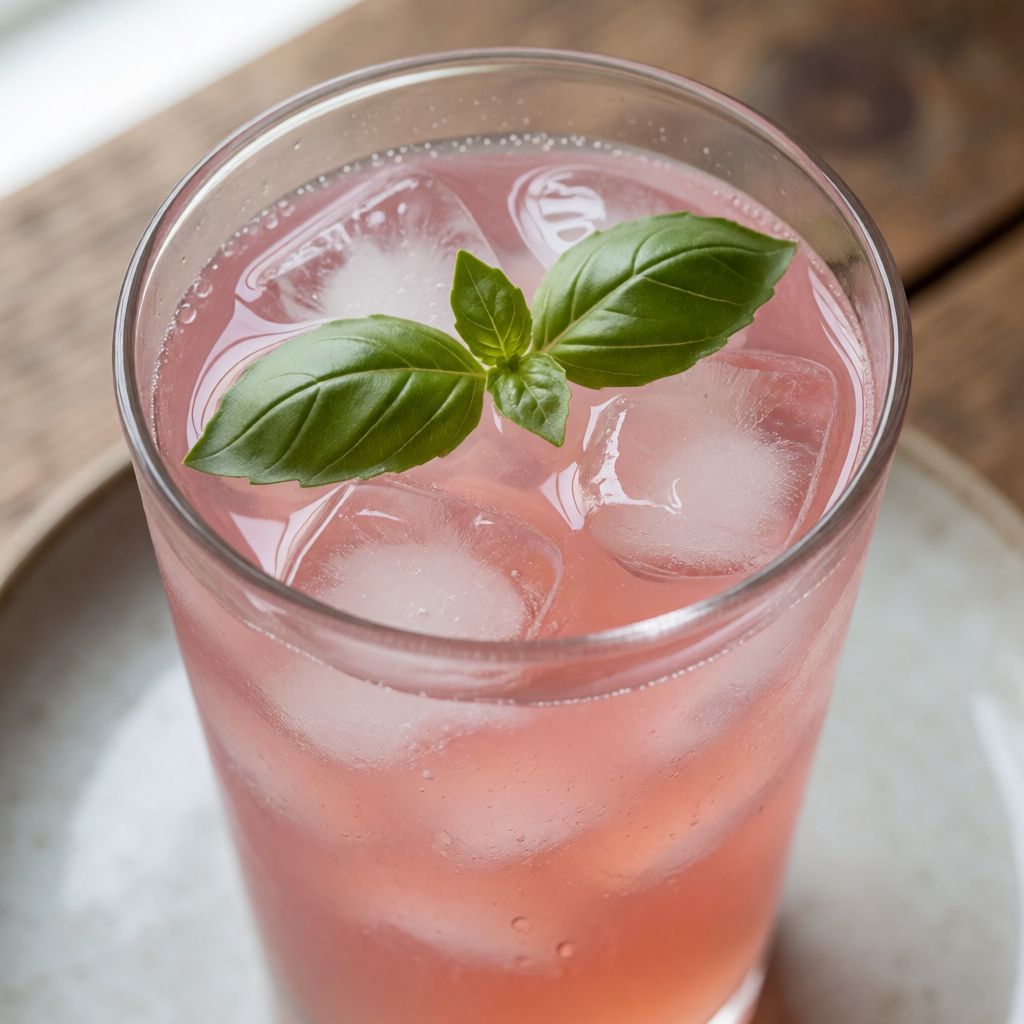
 AI photo
Rhubarb, Elderflower and Basil Cocktail
A refreshing cocktail blending tart rhubarb, floral elderflower syrup and fresh basil with vodka and sparkling water.
Labels are worked out automatically from the ingredients and can be wrong. Check the packaging if it matters to you.
Ingredients
- 100 ml Rhubarb finely chopped
- 50 ml Water
- ½ tsp Vanilla powder
- 100 ml Vodka
- 60 ml Elderflower syrup
- 10 pcs Basil fresh, finely shredded leaves
- 330 ml Sparkling water
- to taste Ice cubes


Steps
Put the rhubarb, water and vanilla powder in a saucepan, bring to the boil and simmer gently until the rhubarb is soft enough to purée.
5 minLeave the purée to cool.
10 minPut the rhubarb purée, vodka, ice and elderflower syrup in a cocktail shaker and shake well.
Pour into a glass with basil leaves and ice, then top up with sparkling water to taste.
Serve with a straw and a thin strip of rhubarb stalk for garnish.
This isn't a cocktail in the bartender's sense — nobody's measuring to the millilitre over an ice ball. It's a British hedgerow drink dressed up: cooked rhubarb, elderflower syrup, a vodka bite, basil to make it interesting, soda to lift it off the tongue. Think of it as a cordial that grew up.
What decides whether it works is the purée, not the shaking. Rhubarb raw is just sour fibre — stringy, mean, no flavour to speak of. Heat is what breaks the cell walls and lets the sourness turn into actual taste instead of just a wince. You're not cooking it to sweeten it; the sugar-fixing happens later, with syrup. You're cooking it so it collapses — the stalks go from snapping to slumping, from fighting your spoon to falling apart under it. That's the only cue you need: when it purées itself with barely a push, it's done. Keep the heat low enough that it simmers in its own juice rather than catches on the bottom of the pan — rhubarb is wet enough it doesn't need a splash more than the 50ml here, and a hard boil just drives off the water you need to loosen it.
Then the purée has to go properly cold before it meets the shaker. Not lukewarm — cold. A warm purée meeting ice does two bad things at once: it melts your ice early so you shake a watery drink instead of a chilled one, and it half-cooks the vodka's chill out of itself. Ten minutes resting is a floor, not a target — if your kitchen's warm, give it longer, or park the pan in a sink of cold water.
Rhubarb: if you can get forced, hothouse-grown stalks — pale pink, almost blushing — they're more tender and less fibrous, and they colour the drink prettily without any help. Garden rhubarb, the thick green-red stuff from June onward, is more sour and more stringy; it works fine, it just wants a slightly longer simmer and gives you a murkier, more serious colour. Either way, chop it small — 100ml chopped is maybe two good stalks — because smaller pieces give heat more surface to work on, which is the whole point of cooking it at all.
Vanilla powder is there to round off the sourness with warmth, not to add sweetness. If you don't have it, use the seeds scraped from a short length of pod, or a few drops of real extract added once the purée's off the heat (heat drives off the alcohol that carries the flavour, so late is better). The one thing to avoid is vanilla sugar as a straight swap — it works, but it quietly sweetens the purée before you've even got to the syrup, and then your balancing act at the end is guessing in the dark.
Vodka here is just a neutral carrier — its job is to be felt, not tasted. So choose by absence of character: no smell of its own, no sweetness, nothing that argues with the rhubarb. Any clean, unflavoured vodka does this; there's no reason to spend on a fancy one when its whole virtue is staying out of the way.
Elderflower syrup is the most "British" thing in the glass, and it's there for a reason that's really about timing, not magic. Elder blossoms for a few short weeks in early summer — the same stretch that garden rhubarb is still going and forced rhubarb has only just finished. Cordial-making from hedgerow elderflower became a household habit because the flowers don't keep, won't travel, and were free if you picked them yourself; syrup was simply the way to catch that one brief flavour and spend it slowly through the year. If you've no elderflower syrup, a floral honey loosened with a little hot water gets you partway there, but it won't have that particular green-sherbet lift — that's elderflower's own, and nothing else quite does it.
Basil wants shredding, not chopping to a paste and not bruising hard in the glass. Basil leaves are full of fragile aromatic oil cells — tear them gently and they release scent slowly into the drink as you sip; crush them and the cut edges oxidise fast, turning bitter and going from green to black within minutes. Add it to the glass, not the shaker, so it never meets the ice and vodka's agitation at all.
Sparkling water goes in dead last and gently — poured, not shaken, not stirred hard — because its entire value is the fizz, and fizz is just gas trying to escape; agitate it and you've paid for carbonation you then threw away. No shaker at home? A clean jam jar with a tight lid does exactly the same job — the mechanism is "cold liquid meets ice under agitation," and a jar with a lid on is perfectly capable of that. Patience matters more than kit here: rush the cooling, rush the shaking, and you get a warm, flat, oversweet drink that tastes like good intentions rather than rhubarb and elderflower.