
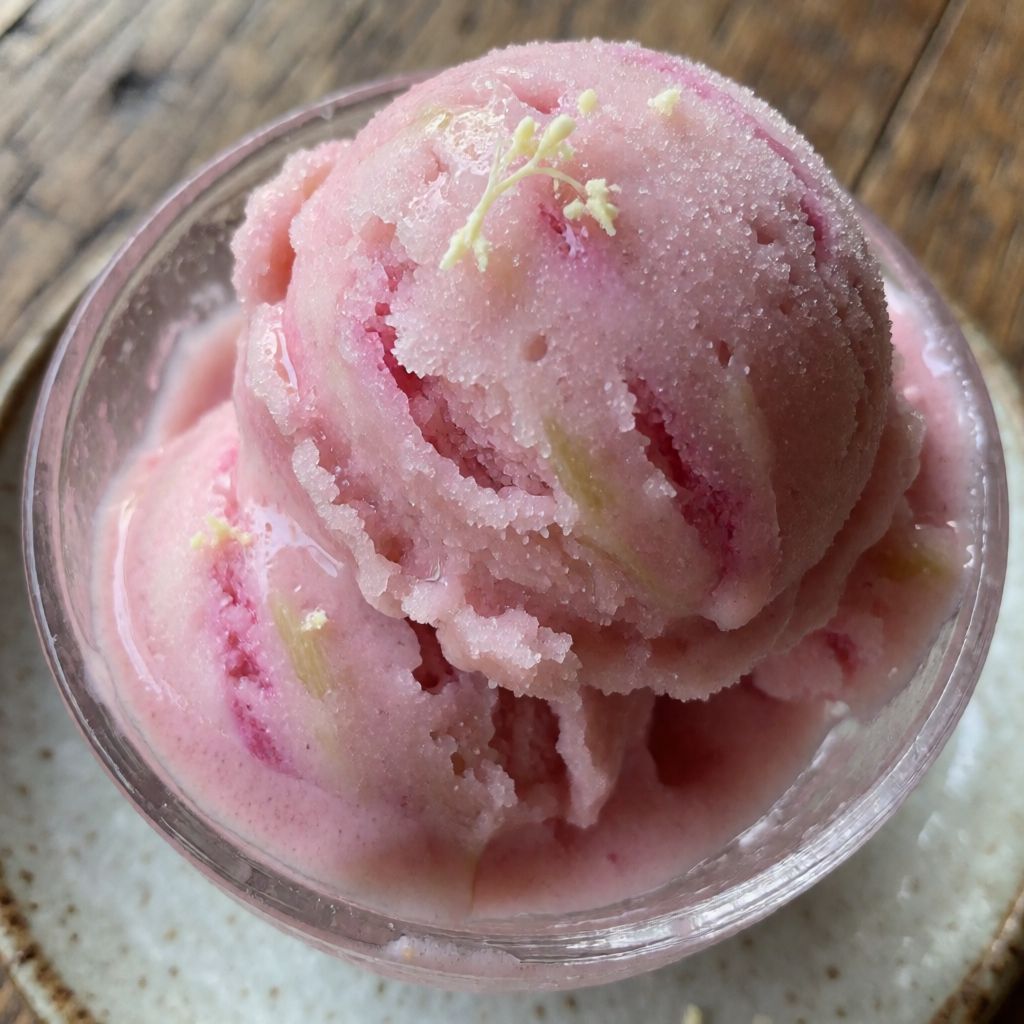
 AI photo
Rhubarb Sorbet
A refreshing, tangy rhubarb sorbet lightly perfumed with vanilla.
Labels are worked out automatically from the ingredients and can be wrong. Check the packaging if it matters to you.
Ingredients
- 1 pcs Vanilla pod
- 200 g Sugar
- 700 g Rhubarb diced
- 500 ml Water




Steps
Split the vanilla pod lengthways, scrape out the seeds with a knife and mix them with the sugar.
5 minPut the sugar, vanilla seeds, the emptied vanilla pod, rhubarb and water into a pan and bring to the boil.
5 minCover with a lid and let it simmer gently for 20 minutes.
20 minRemove the pan from the heat and strain the juice into a bowl. Use the back of a tablespoon to press out all the juice from the rhubarb pulp.
5 minChill the juice in the fridge for 1 hour, or overnight.
60 minPour the rhubarb juice into an ice cream maker and churn until you have a light, delicious sorbet.
20 minTransfer to a container and freeze for 2 hours before serving.
120 min
This is not a puree sorbet. You don't freeze blitzed rhubarb the way you'd freeze a mango or a strawberry — you boil the stalks until they fall apart, then you throw the fibres away and keep only the juice. That's the whole trick of the dish, and it's why the texture comes out smooth rather than stringy: rhubarb has long woody threads running through it, and no amount of churning turns a frozen thread into something pleasant on the tongue. Strain hard, press the pulp dry, and what's left is a clear, rose-tinted liquid with nothing in it to fight your spoon.
What decides whether this works is mostly the sugar, and not for sweetness. Sugar lowers the freezing point of the liquid and keeps ice crystals small and separate instead of fusing into one slab. Too little sugar and you get a rock you need a chisel for; too much and it never sets at all, just slushes about in the tub. 200g to 700g of rhubarb and 500ml of water is a ratio that's been tested by other people's freezers for years — trust it, don't "healthy up" the recipe by swapping in honey or less sugar, because you'll change the physics, not just the flavour.
Some say rhubarb is a fruit. It isn't — it's a vegetable, a stem, and it only ended up on dessert menus because sugar made the sourness bearable and nobody wanted to call pudding a side dish. That history explains why rhubarb always wants that much sugar: it's not spoiling the fruit's natural sweetness, there isn't any to spoil.
Vanilla pod: you split it and scrape the seeds into the sugar, which is the usual trick for spreading the flavour evenly instead of finding one lump of it in a bite. But don't throw the emptied pod away — it goes into the pan with the rhubarb and simmers along with everything else, because most of a vanilla pod's flavour lives in the walls, not just the seeds, and twenty minutes of gentle heat pulls out what scraping left behind. If you've no pod, use a good vanilla extract, a teaspoon stirred in once the juice has cooled — not vanilla essence that's mostly vanillin and alcohol smell, you want something that tastes of vanilla, not just announces it.
Sugar: plain white granulated is right here, nothing fancy. Its job, as said, is physical as much as it is sweet — it's what keeps the sorbet soft enough to scoop instead of needing a hammer. Don't swap it for a sugar substitute without knowing how it behaves when frozen; some set harder, some barely set at all, and you won't find out until the sorbet's already a brick in your freezer.
Rhubarb: 700g diced, and the choice of rhubarb matters more than people think. The pink, forced stalks — the ones grown in the dark in Yorkshire's old rhubarb sheds, a trick going back over a century because early, tender, sweet rhubarb fetched a better price before the main crop came in — give you a better colour and a milder sourness than the thick green garden stuff you get later in the year. Either works, since you're boiling it down and discarding the fibre anyway, but green rhubarb will need you to taste the sugar level before you commit, because it's sharper. Frozen rhubarb is a genuine substitute, not a compromise — it's already going to be stewed into collapse, so the texture loss from freezing doesn't cost you anything. One myth worth killing here: people sometimes treat the whole plant as dangerous because rhubarb leaves are poisonous. The leaves, yes, keep well away — oxalic acid, enough to do real harm. The stalks you're dicing are the part that's always been safe to eat, and that fear has nothing to do with what's in your pan.
Water: 500ml is there to carry the juice out of the rhubarb, not to flavour anything itself, so use what's cheapest and tastes of nothing — straight from the tap is fine. If you want a more intense sorbet, you could use a little less, but then you're relying on the rhubarb alone to release enough liquid, and a dry pan scorches before the fruit breaks down, so don't go too far.
One more thing on the pulp you're throwing away after straining: don't actually throw it away. It's cooked rhubarb with sugar and vanilla already in it — stir it through porridge or yoghurt the next morning, or alongside that Sunday roast's custard, and you've got two puddings out of one pan for the price of a bit more patience at the sieve. Waste is what happens when you don't think far enough ahead, and here you don't need to.
The two chilling stages — an hour or overnight before churning, two hours after — aren't padding in the recipe, they're doing real work. The first lets the flavour settle and the liquid go properly cold so the ice cream maker doesn't have to fight its own machinery to freeze warm juice; the second lets the churned sorbet firm up enough to scoop cleanly instead of collapsing into puddles on the plate. Rushing either step doesn't save you time, it just moves the waiting from before serving to during it, in front of your guests.