
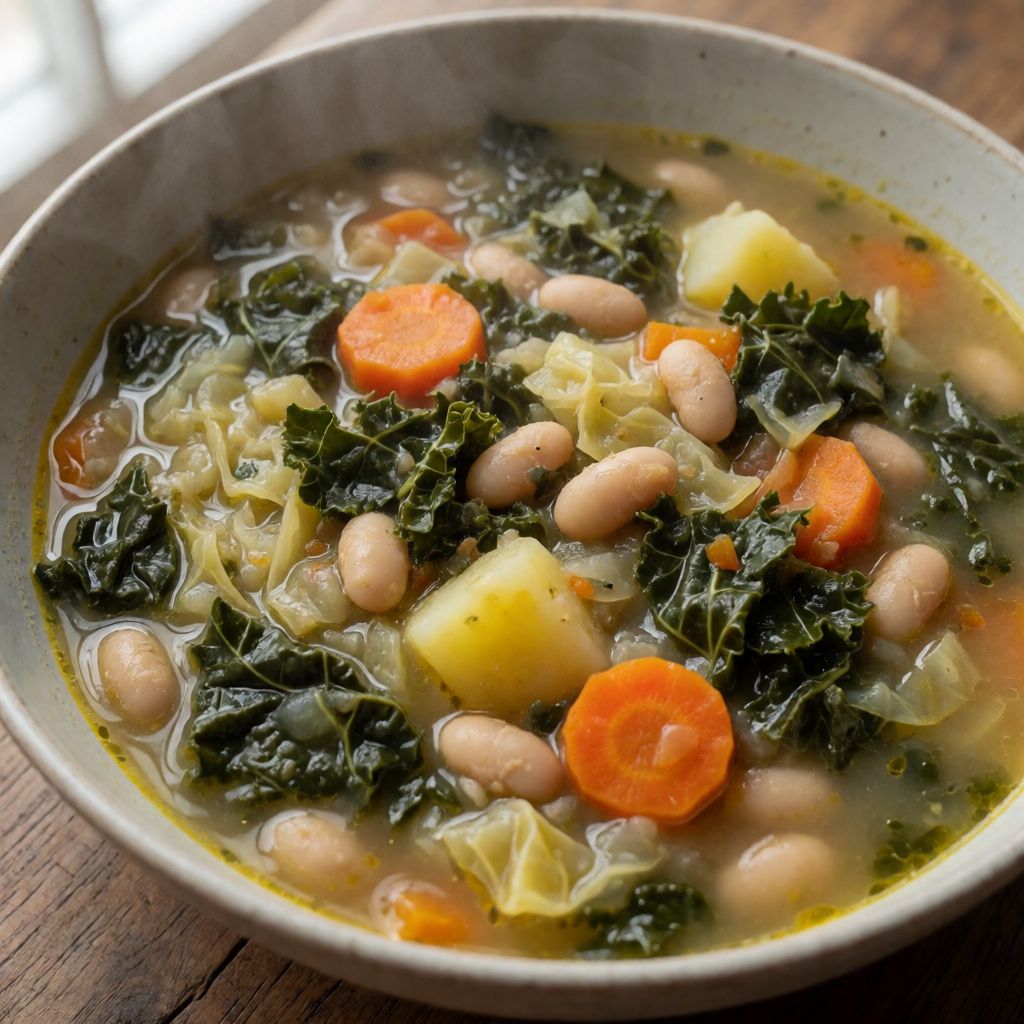
 AI photo
Tuscan Ribollita
A hearty Tuscan bean and vegetable soup, layered with bread and left to rest before serving.
Labels are worked out automatically from the ingredients and can be wrong. Check the packaging if it matters to you.
Ingredients
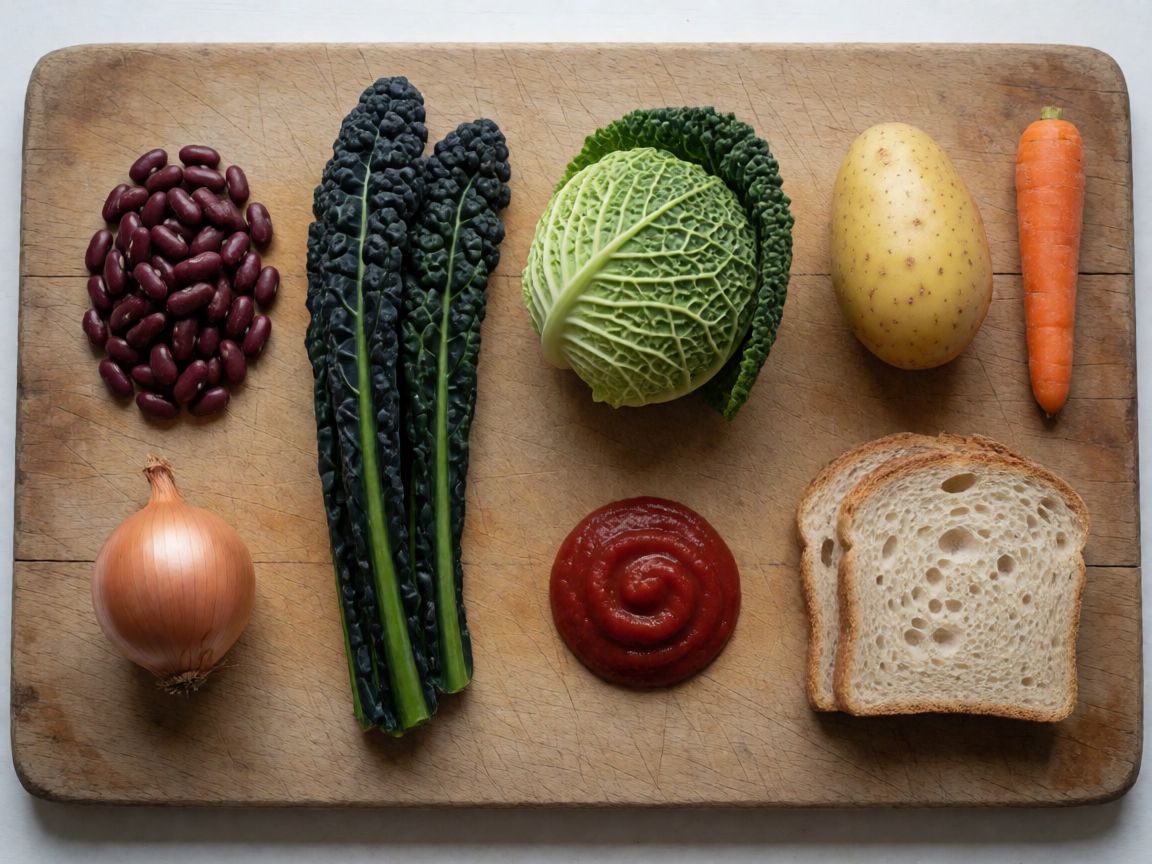
- 500 g Cannellini beans
- 200 g Cavolo nero
- 150 g Savoy cabbage
- 200 g Potato
- 2 pcs Carrot optional
- 1 pcs Onion small
- 1 tbsp Tomato purée
- Salt to taste
- Black pepper to taste
- Olive oil to taste
- Bread stale, as needed









Steps
Finely chop the onion and fry it gently in olive oil with the carrot and potato.
Add the cavolo nero and Savoy cabbage, stir, season, and add the tomato purée diluted in water.
Bring to the boil, reduce the heat and simmer the soup.
60 minAdd half the cannellini beans, mashed, and continue cooking.
30 minAdd the remaining beans.
Lay the bread in the bottom of the pot and build up layers of soup and bread.
Leave to rest.
240 minReheat the ribollita in the oven or on the stove.
Serve with olive oil and black pepper.
Ribollita means "reboiled" — and that one word tells you the whole dish. This is not soup you make and eat; it is soup you make, let die down, and bring back to life a day later, and the second life is the point, not an afterthought. It started in Tuscan farmhouses as a way to not waste bread that had gone past its best and beans that were already cooked from the day before — nothing here was bought specially, it was what was in the house. That's the real economics of it: a poor kitchen's answer to not throwing anything out, dressed up by time into something people now pay restaurant money for.
What decides whether it works is restraint at two different moments. First, the long slow simmer of cavolo nero, cabbage, potato and carrot — you're not boiling vegetables, you're breaking them down until the cavolo nero loses its toughness and the potato starts to blur into the liquid, because that cloudiness is the body of the soup, not a mistake. Second, the rest. Some say ribollita is just minestrone with bread in it — no, because minestrone is eaten fresh and this is eaten after it has sat and changed. The bread layered into the bottom of the pot isn't a crouton, it's structure: it drinks the broth, swells, and by the time you reheat it the soup has gone from liquid-with-things-in-it to something you can almost stand a spoon up in.
Cannellini beans are the backbone — 500g is a lot, and that's deliberate, because this soup is meant to be filling enough to be a meal, not a starter. If you're working from dried beans, soak and cook them yourself and you'll have better texture and the starchy cooking water to add back in; tinned beans work fine as a weeknight shortcut, just drain and rinse them, and don't expect quite the same creaminess when you mash half of them. Any white bean with a soft skin and a tendency to break down under heat will do the same job — haricot or butter beans are the easy swap, just avoid anything that holds its shape too stubbornly, like chickpeas, because the whole point of that mashed half is for it to melt into the broth.
Cavolo nero (black Tuscan kale) is the vegetable that gives this soup its character and its name's second half, because it needs that long simmer to go from leathery to soft — rush it and you're chewing on something closer to a leaf than a vegetable. If you can't find cavolo nero, curly kale is the closest relative in texture and bitterness; ordinary spring greens will work but taste milder, so season a little more boldly to compensate. The Savoy cabbage alongside it isn't there to repeat the job — it breaks down faster and adds a sweetness the kale doesn't have, so don't swap one for double the other without expecting a different soup.
Potato and carrot are doing quiet, unglamorous work: the potato dissolves slightly at the edges and thickens the broth from within, and the carrot, if you use it, adds a background sweetness against all that bitter green. The onion is the base of flavour everything else sits on — chop it fine and give it real time in the oil before anything else goes in, because an onion that's still sharp and raw-tasting at the edges will sour the whole pot; you're waiting for it to turn translucent and soft, not for a clock. The tomato purée diluted in water isn't there to make a tomato soup — it's a small wash of acidity and colour, so don't be tempted to add more than a spoon or you'll tip the balance away from the vegetables.
Bread is not a garnish here, it's an ingredient with a job, and that job only works with bread that's gone stale — fresh bread turns to paste, stale bread holds its structure while still soaking up broth. Tuscan bread is famously unsalted, which historically made sense because the soup itself carried the salt and the bread was there to carry the soup; a plain crusty white loaf a day or two old, cut thick, is the honest substitute in a British kitchen, and if what you've got is a bit too fresh, a quick low-heat dry-out in the oven will get it there.
Olive oil needs to be one with actual flavour here, poured on at the end, not the gentle neutral stuff you fried the onion in — this is one of the few times in the recipe where the oil is a seasoning, not just a cooking medium, so use the better bottle for the final drizzle. And give the rest its due: four hours sitting isn't dead time, it's the bread finishing the job the simmer started, the flavours settling into each other instead of sitting side by side. Reheating the next day, gently, on the stove or in a low oven, is where the "re-boiled" of ribollita actually happens — and it's genuinely better for it, which is a rare thing to be able to say about leftovers without exaggerating.