
 AI photo
Tender Gluten-Free Rice Pudding
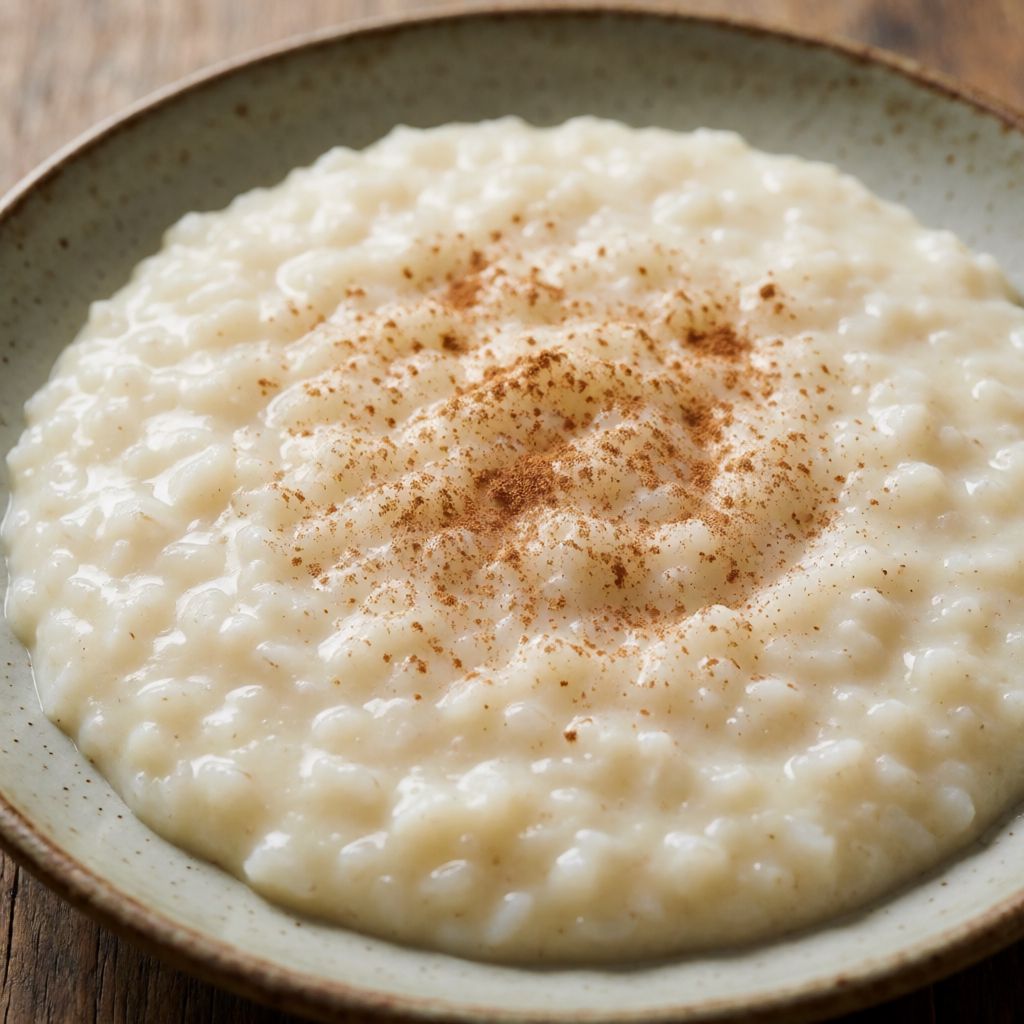
A creamy gluten-free rice pudding cooked in milk with vanilla and a touch of cinnamon.
Labels are worked out automatically from the ingredients and can be wrong. Check the packaging if it matters to you.
Ingredients
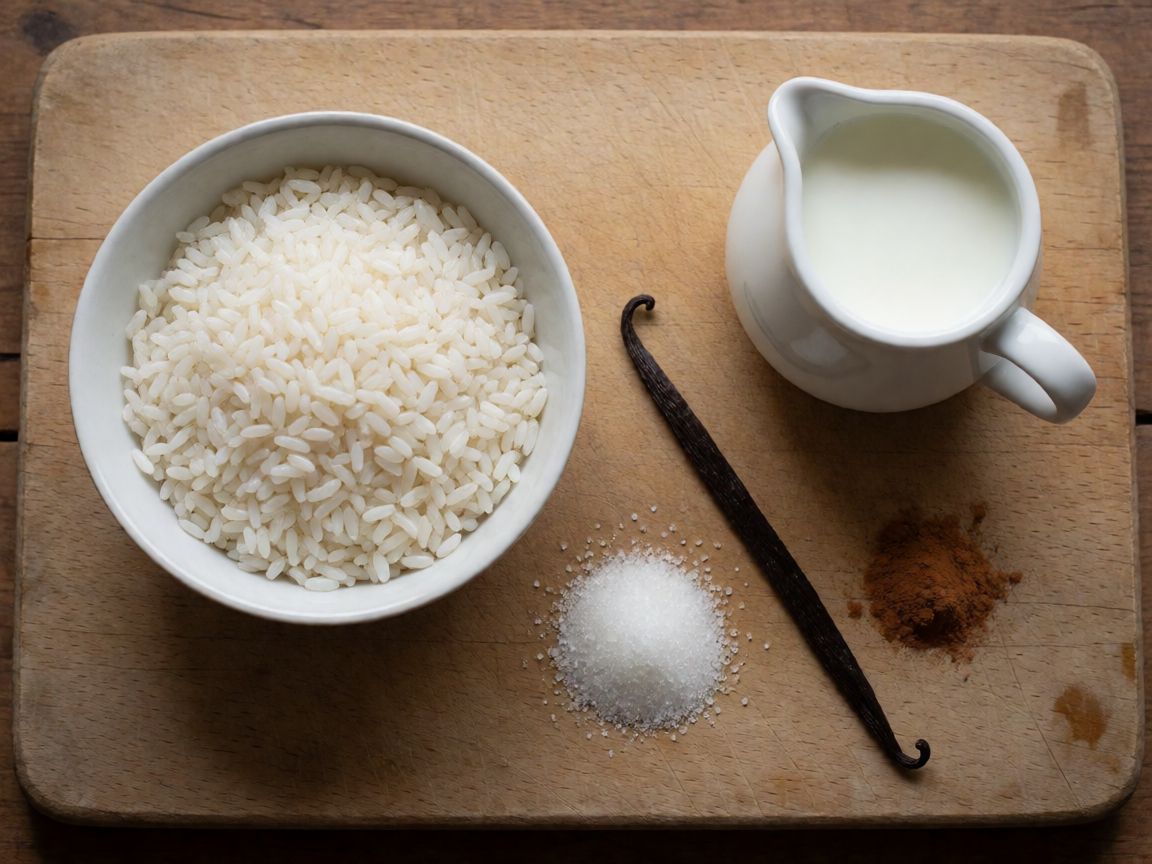
- 200 g Rice Carnaroli or Arborio
- 1 l Milk
- 90 g Caster sugar
- 1/2 pcs Vanilla pod or vanilla flavouring
- 1 pinch Salt
- Cinnamon to taste






Steps
Pour the milk into a saucepan, add the vanilla pod and a pinch of salt.
Add the sugar, stir and bring to the boil.
Remove the vanilla pod, add the rice and cook over medium-low heat until thick, stirring often.
25 minRemove from the heat and let it rest for a few minutes.
Divide the finished rice pudding into individual bowls or serve it in one large bowl.
Let cool slightly and serve sprinkled with cinnamon.
This is milk and rice teaching each other patience until the liquid turns into cream by itself — no egg, no flour, no cheat. The grain swells, breaks open a little at the edges, and lets its starch bleed into the milk. That starch is the only thickener here. Nothing else is doing the work, which is why rushing it never pays off.
What decides whether it works is heat and stirring, and they're the same problem seen from two sides. Milk sugars and proteins sit on the bottom of the pan and, left still, they catch and scorch before the rice in the middle has even softened — you'd taste burnt milk long before you taste cooked rice. So you keep the heat low enough that the surface barely trembles, and you move the rice often enough that nothing sits in one spot long enough to stick. Some say a non-stick pan solves this. No — the coating stops the rice gluing to metal, but it does nothing about milk catching at the heat; a heavy, thick-bottomed pan that spreads heat evenly matters more than any coating.
Doneness isn't a clock reading, it's a spoon reading. The rice is done when a grain, pressed between two fingers, gives without resistance but still holds its shape — not grit, not paste. The milk around it should coat the back of a spoon in a slow ribbon, not run off it like tea, not stand up like set custard. Twenty-five minutes is where this usually happens, but the pan decides the real number, not the clock.
Rice first. Carnaroli or Arborio aren't fashion — they're the rice varieties bred to carry a thick starch coat (amylopectin, mostly) around a firmer core, the exact trait that made them famous in risotto. That coat is what dissolves into the milk and thickens it; the core is what still gives you something to bite. Some say any rice will do for pudding. No — a long-grain rice like basmati has very little of that loose surface starch, so it just sits in sweet milk as separate grains, never really binding into cream. In Britain you don't even need to reach for Italian names — supermarkets sell "pudding rice," a short, round grain bred for exactly this job, cheaper than Arborio and just as good here. Risotto rice, pudding rice, even round-grain sushi rice in an emergency — the criterion is starchy and short, not the label on the bag.
Milk is the other half of the chemistry, not just the liquid. Its proteins and natural sugars are what brown, thicken and give the pudding its faint toasted-sweet smell as it cooks slowly — water would never do this, you'd get swollen rice in nothing. Whole milk gives the richest result because its fat carries flavour and stops the texture turning chalky; skimmed milk works but tastes thinner, the way weak tea with milk tastes thinner than strong. If you're avoiding dairy, any plant milk with a bit of fat in it — oat, full-fat coconut — behaves close enough, though it won't brown the same way.
Sugar goes in and dissolves before the rice does, which is deliberate: caster sugar is chosen for its fine crystal, so it melts into the milk fast with no grit left behind. Granulated would take longer and risk sitting undissolved at the bottom, right where scorching starts. A pinch of salt isn't there to make it salty — it sharpens your perception of the sweetness, the same trick that makes a pinch of salt in a chocolate cake taste more chocolatey, not more salty.
Vanilla pod goes into the cold milk before heat touches it because its flavour compounds need time and warmth to leach out slowly; you pull the pod before the rice goes in so it doesn't keep cooking and turn bitter, and so you're not fishing bits of pod out of the finished bowl. The criterion for a substitute is simple: anything aromatic that releases its scent gradually into warm milk rather than all at once — a scraped teaspoon of vanilla paste, a drop of good extract added at the end instead of the start, even a cracked cardamom pod if you want a different, equally old, direction.
Cinnamon at the end is dusted on, not cooked in, because its aroma is volatile — heat it in the pan for twenty-five minutes and most of the smell would be gone by the time you eat it. Dust it on the warm, resting pudding and you smell it the moment the spoon goes in.
This dish is older poverty dressed as comfort, really — milk and rice were cheap, filling, and needed almost no skill beyond watching a pan, which is exactly the kind of pudding that spread across milk-and-grain cultures everywhere, Britain's own baked version among them. You already keep tea with milk on the hob most days — this just asks the milk to work a little harder and a little longer, in a heavy pan, with your hand on the spoon instead of on your phone.