
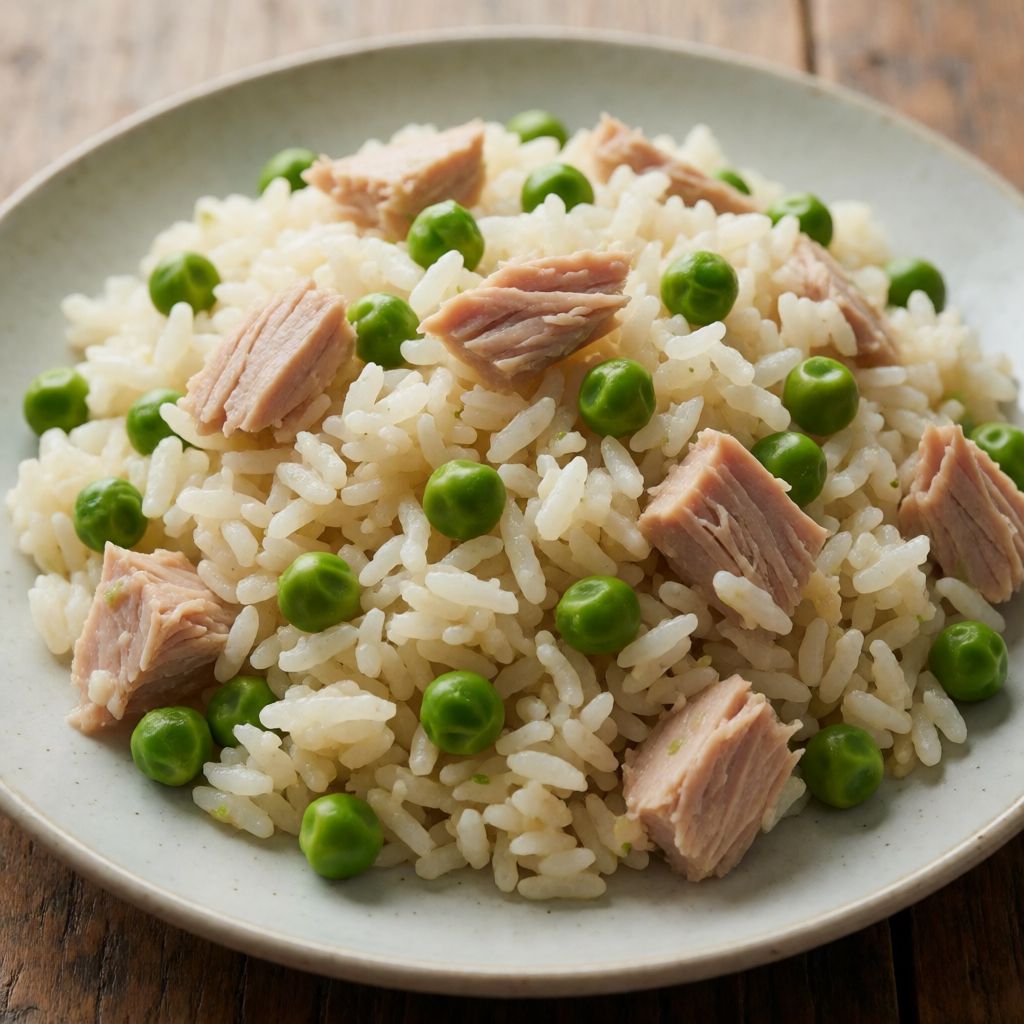
 AI photo
Tuna and Pea Rice Salad
A refreshing rice dish with tuna, peas and olive oil, lovely served cold or at room temperature.
Labels are worked out automatically from the ingredients and can be wrong. Check the packaging if it matters to you.
Ingredients
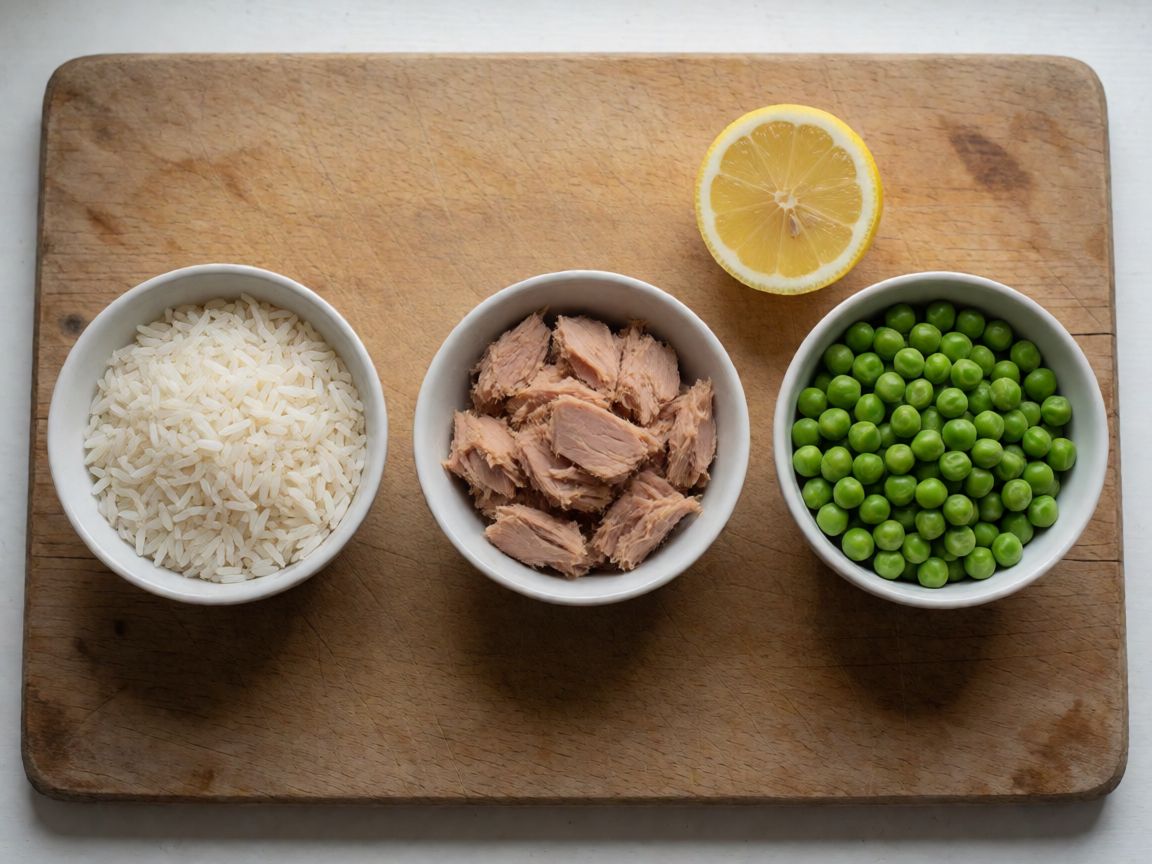
- 400 g Rice
- 200 g Tuna in olive oil drained
- 150 g Peas cooked
- Olive oil to taste
- Salt to taste
- 0.5 pcs Lemon juice juice of half a lemon






Steps
Cook the rice in plenty of salted water until tender.
Drain the rice into a colander and immediately rinse under cold water to stop the cooking and cool the grains.
Transfer the rice to a large bowl, dress with the olive oil, then add the peas and the tuna, having drained it from its oil.
Mix all the ingredients thoroughly and serve.
This is a cold rice salad, not a risotto and not a pilaf — and the whole dish stands or falls on you remembering that. You are not trying to get the rice to drink up a measured amount of liquid and become creamy. You are boiling it in a flood of water, like pasta, then throwing away everything it doesn't need. That one decision — rice as pasta, not rice as rice — is the mechanism behind every step that follows.
What decides whether it works is texture, and texture here means separation. Each grain has to stand on its own, cool, with a bit of bite left in the middle — bend, not snap, and definitely not collapse into paste. If the grains clump into a solid block, the salad reads as a cold stodgy side dish instead of something you'd actually choose to eat on a warm day. The cold rinse under the tap is not a formality; it's the thing stopping the rice from carrying on cooking in its own heat after you've drained it, and it washes off the loose surface starch that would otherwise glue grain to grain. Skip it and you'll be eating rice pudding with tuna in it.
Some say rinsing rice always throws away flavour and starch you paid for. No — that rule is for pilaf and risotto, where the starch on the surface is exactly what builds the sauce around the grain. Here you don't want a sauce around the grain. You want the grain, clean, cold, separate, dressed afterwards in oil it didn't cook in. Different dish, different physics, different rule.
Rice: don't reach for a sticky short-grain or pudding rice — it's built to hold water and turn soft, which is the opposite of what you need here. A long-grain that holds its shape when boiled hard is what you want; even a risotto rice will behave itself once you boil it in plenty of water and shock it cold, because that flood-and-rinse method strips away the surface starch that would otherwise make it clump. Cook it until a grain between your teeth gives in but still has a faint resistance at the centre — that bite is what tells you it's done, not a clock. The clock only tells you when to start checking.
Tuna in olive oil, drained: the oil it comes packed in has done its job already — it's kept the fish moist in the tin. Once you open the tin, that job is finished, and the oil is often plain and anonymous, sometimes a bit tired-tasting from sitting against metal. Draining it off and dressing the salad with your own oil means you control the flavour instead of the tin deciding for you. If all you've got is tuna in water or brine, drain that too and just be slightly more generous with the olive oil in the next step — you're replacing what you took out.
Peas, cooked: frozen peas are not a compromise here, they're arguably the better choice, because they're frozen within hours of picking and lose less sweetness than peas that sat in a lorry and then a shop. A couple of minutes in boiling water is all they need — you're looking for bright green and a gentle give, not the dull khaki of a pea that's been boiled to apology.
Olive oil, to taste: the brief here is simple — any oil with no smell of its own that still tastes of something good will do, which is a roundabout way of saying extra virgin olive oil, because its whole purpose in a cold dish like this is to carry flavour, not hide it. A flavourless vegetable oil will coat the rice fine but add nothing; you'd just be using oil as a lubricant rather than a seasoning.
Lemon juice, half a lemon: this is the one ingredient doing a job nothing else in the bowl can do. Oil and tuna are both rich and a bit flat on their own; the acid cuts through that, wakes the peas up, and stops the whole thing tasting like one long note. Taste before you add it all — a salad that's gone cold can taste duller than it is, and lemon is what brings it back.
A dish like this exists for a practical reason, not a romantic one: tinned tuna keeps in the cupboard for a year, rice keeps forever, and a bag of frozen peas sits in the freezer waiting. Put them together cold, and you've got something that travels to work in a box, needs no reheating, and doesn't mind sitting out at room temperature for a Sunday spread between the roast and the tea. That's not tradition for tradition's sake — that's just a sensible answer to the question of what to do with a cupboard and twenty minutes.