
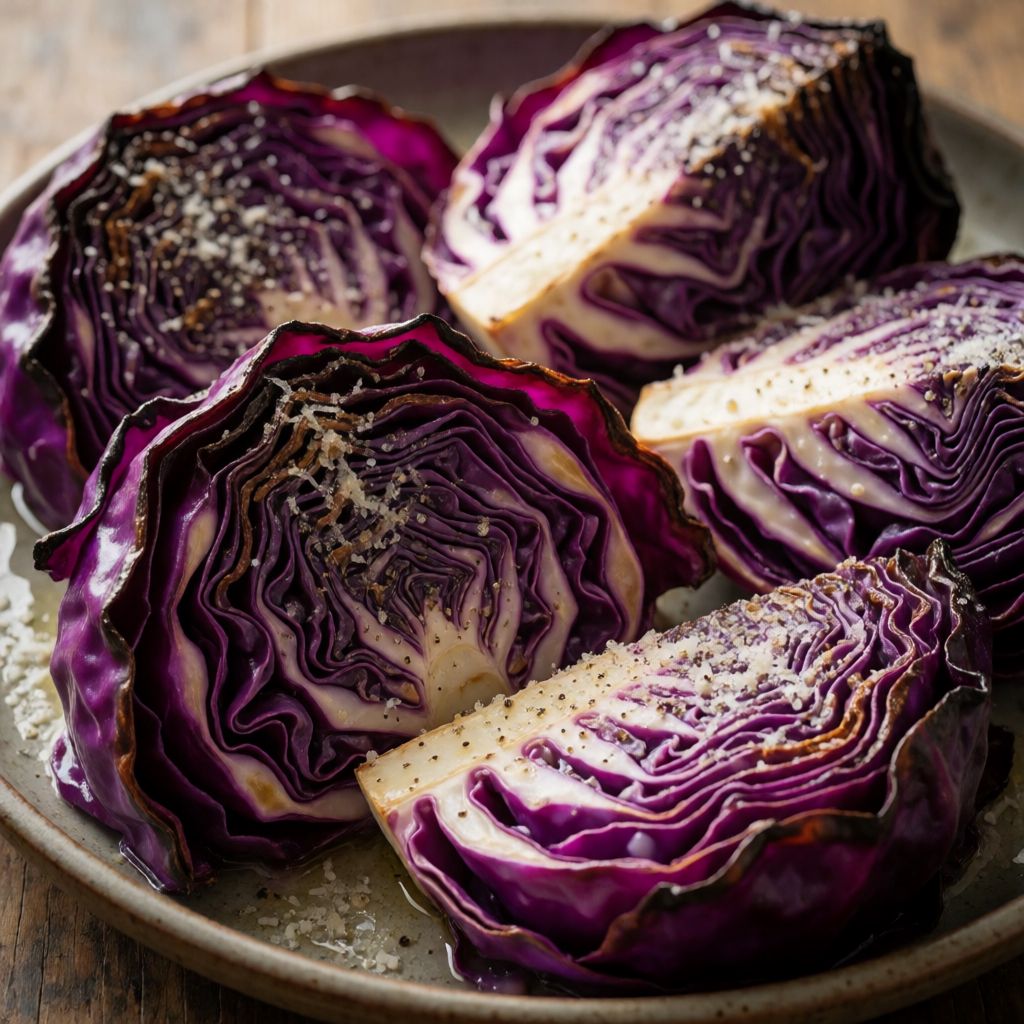
 AI photo
Roasted Red Cabbage
A simple side dish of thinly sliced red cabbage roasted until tender.
Labels are worked out automatically from the ingredients and can be wrong. Check the packaging if it matters to you.
Ingredients
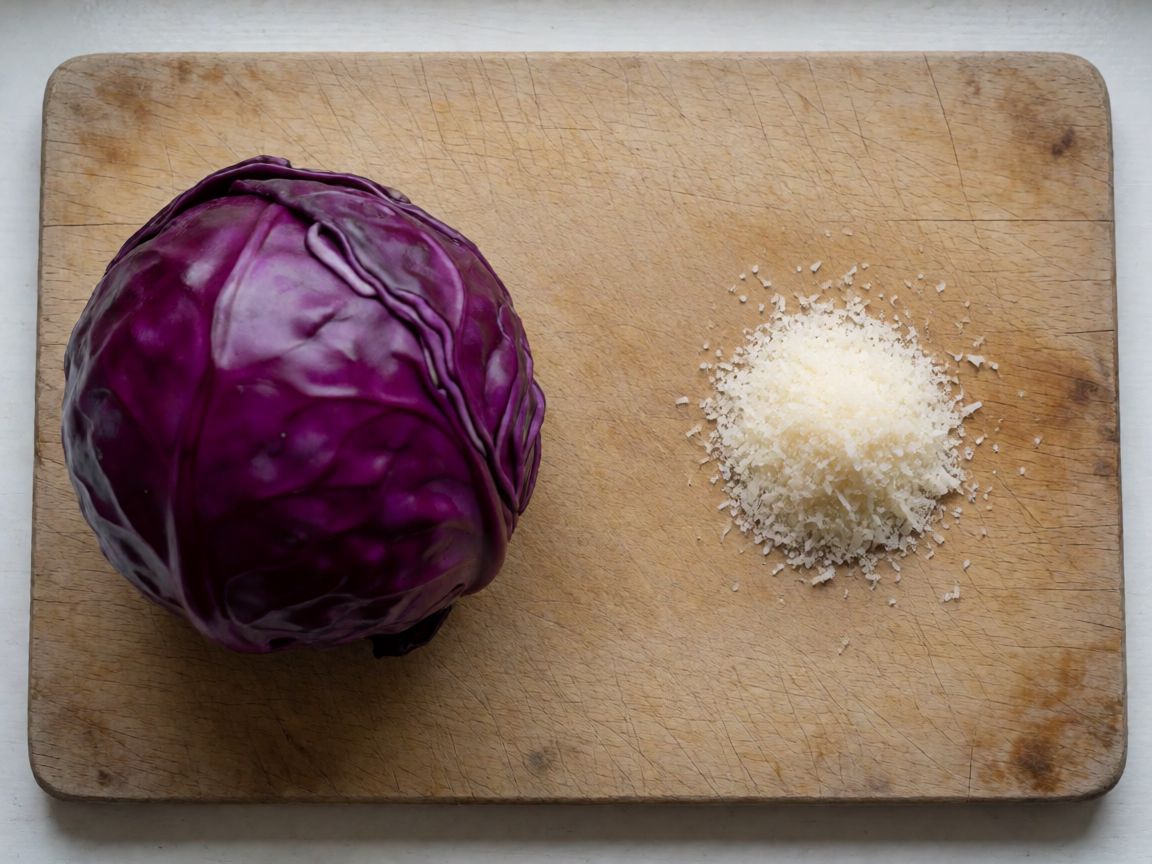
- 1 pcs Red cabbage
- Salt to taste
- Black pepper to taste
- Olive oil to taste
- Parmesan to taste, optional





Steps
Rinse the red cabbage under cold running water and remove any tough parts.
Using a sharp knife, slice the cabbage into very thin strips.
Preheat the oven to 200°C.
Line a baking tray with parchment paper, add the sliced cabbage, drizzle with olive oil, season with salt and pepper, and toss to combine.
Roast, stirring occasionally for even cooking.
20 minBefore serving, taste and adjust salt and pepper if needed. Sprinkle with Parmesan if desired.
This is cabbage treated like a vegetable that can take heat straight, with nothing between it and the hot metal of the tray. Red cabbage, sliced thin, roasted dry at 200°C — oil, salt, pepper, nothing else doing the work. The whole point is to let the oven do what boiling water never could: turn the leaf's bitterness into something closer to caramel, and limp ribbons into something with a crisp edge and a bit of chew left in the middle.
What decides whether it works is the slice. Thin strips give you maximum edge, and edge is where sugar meets dry heat and goes brown and sweet. Cut it thick and you get steamed cabbage with a fancier name — soft right through, no crunch, no sweetness worth mentioning. The knife does more here than the oven does.
The second thing that decides it is space on the tray. Pile the cabbage up and it steams in its own moisture before the heat ever gets to brown it — that's the wet, grey, slightly sulphurous result that makes people say roasted cabbage doesn't work. It works. Crowding doesn't. Spread it so most pieces touch metal or air, not each other.
Stir it, and stir more than once. A domestic oven isn't a kazan and it isn't a commercial convection oven either — it has an element, maybe top and bottom, and it has hot spots that don't move. Left alone, the cabbage nearest the back wall or the element browns while the rest barely colours. Stirring isn't fussing, it's correcting for the oven's unevenness, which no recipe card will ever admit your oven has.
Choose a cabbage that's heavy for its size and tight in the hand — loose, puffy heads have more air and less structure, and they collapse to nothing under heat. Red is chosen here mostly for colour and for a slightly higher natural bitterness than white, which caramelises into something more interesting than plain sweetness. White cabbage will roast the same way, by the same mechanism, if that's what's in the fridge — you just lose the colour and a shade of the bitter-sweet contrast.
Oil's job is to carry heat evenly over a dry surface and stop the thinnest strips scorching before the thicker ones cook — the criterion is any oil with no strong smell of its own, so the cabbage's own flavour carries. Olive oil does that and adds a little of its own besides, which is why it's named here; a bland sunflower or rapeseed oil does the physical job just as well if you'd rather the cabbage speak for itself.
Salt drawn onto raw cabbage pulls water out of it by osmosis — a small effect here, because the oven's heat is already going to force most of that water out as steam. Season before roasting mainly for even distribution, then taste again at the end, because a few minutes of concentrating sugar and salt together changes the balance more than you'd expect from a pinch.
Parmesan is garnish, not structure — leave it off and the mechanism of the dish doesn't change at all. If you want the salty, aged, slightly nutty note it brings, any hard aged cheese does the same job: Pecorino, Grana Padano, even a strong mature Cheddar grated fine, since it's being sprinkled on at the end rather than cooked into anything.
One cabbage this size is a side for four — reckon on it sitting next to a roast rather than carrying a plate on its own, which is exactly where it earns its place in a kitchen that already has the oven on for something bigger. That's the real argument for it over the stove-top braise: you're not lighting another ring, you're using heat you've already paid for.