
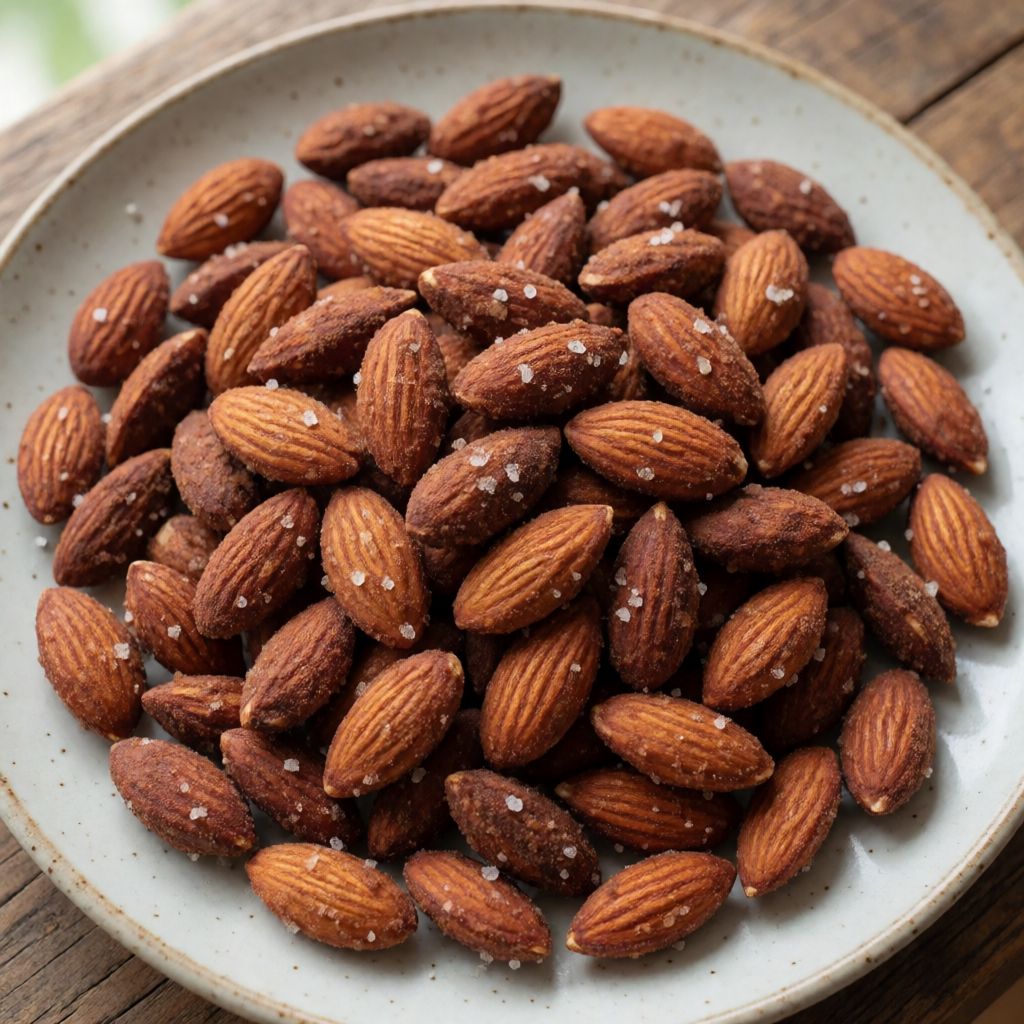
 AI photo
Salted Liquorice Almonds
A simple savoury snack: almonds soaked in salty liquorice water, then roasted until crisp.
Labels are worked out automatically from the ingredients and can be wrong. Check the packaging if it matters to you.
Ingredients




Steps
Rinse the almonds thoroughly under running water.
Pour boiling water over the almonds, then add the salt and liquorice powder. Leave for about 30 minutes, then drain the water.
30 minSpread the almonds on a baking tray lined with parchment and roast in a preheated oven at 180°C for 20 minutes.
20 min
What was changed
The oven temperature was adjusted to the nearest standard setting used in UK ovens.
This is not a recipe so much as a trick for getting salt and liquorice inside an almond, not just on it. The whole shape of the method — soak first, roast after — exists to solve one problem: salt and powder thrown onto a hot roasted nut just sit on the surface, and half of it ends up in the bottom of the bowl, not in your mouth.
Some say you season nuts by rolling them in salt once they're hot from the oven. No — because a roasted almond has nothing for salt to hold onto. Its skin is dry, its oil has already come to the surface and started to set. Loose crystals on a dry oily surface slide off the first time someone's hand goes into the bowl. The soak gets around that: warm salted water, with the liquorice dissolved in it, softens the almond's thin papery skin and lets the seasoning sit inside that skin's seams and ridges, not on top of it. Roasting then dries and fixes what's already there — it doesn't apply it.
The second, smaller measure of salt and liquorice, dusted on after roasting, is there for a different reason: the soak flavours quietly, from inside; the dusting hits the tongue first, loudly, because by then the nut has its own thin film of warm oil sweating out of it — and that oil is what makes the second dusting stick, the same way butter makes flour stick to a roasting tin.
Almonds: use raw, whole, skin-on almonds — not blanched, not already roasted, not already salted. The skin is doing real work here: it's the rough, slightly bitter layer that grips the seasoning and gives the finished nut its texture against the smooth fat of the almond itself. Blanched almonds, naked and pale, will take the soak less well and taste flatter for it — you've removed the one part of the nut built to hold onto flavour.
Liquorice powder is ground liquorice root — bitter-sweet, faintly medicinal, related to aniseed in the nose but a different compound entirely (glycyrrhizin, if you want the word for it), which is why it reads as both sweeter and darker than anise. The pairing of this with salt is a Nordic habit, not an accident of taste: salty liquorice sweets there were historically made cheap and shelf-stable with ammonium chloride salt, and the salt-and-liquorice combination simply migrated from the sweet shop to the snack bowl. This recipe uses the root powder for its flavour, not the ammonium salt, so don't go hunting for salmiak salt — plain liquorice root powder, sold for tea and baking, is the thing. There isn't a real substitute: nothing else gives that bitter-sweet undertone. If you genuinely have none, don't reach for star anise or fennel seed expecting the same thing — you'll get a spiced almond, pleasant enough, just not this one.
Salt should be a fine, ordinary table or fine sea salt, for a boring but important reason: it needs to dissolve completely in the soaking water, and later it needs to sit evenly on a dusting of oily warm nuts without rolling off the way flaky or coarse salt would. Save the flaky stuff for things you're not asking to dissolve.
Water is only ever a carrier here — pour it on boiling, over the almonds already sitting with the salt and liquorice, rather than putting the almonds into a pan of water and heating it. The point of using it boiling but off the heat is to soften the skin and dissolve the seasoning fast, without actually cooking the nut, which would start to turn it soft and lose the bite you're roasting towards afterwards.
The oven's job, at 180°C, is simply to drive off the water the almonds picked up in the soak and then, once they're dry, to toast the almond's own oil at the surface — that's where the roasted smell comes from, and it only starts once the water's gone, which is part of why the time given is a floor, not a fact: a slightly wetter batch, or a domestic oven running cool (and most do, by more than you'd think — trust your nose and eyes over the dial), will simply need longer before that toasting really begins. Shake the tray halfway if you can; a home oven's back corner runs hotter than its door, and nobody wants half the batch pale and half of it bitter from going too far.
On the serving size: 200g of almonds is not one portion by any normal measure — call it a full bowl for four to six people with drinks, or a modest contribution to the spread while a Sunday roast rests before carving. Treat the soak's thirty minutes as real time, not an inconvenience to shortcut — it's the one step doing the actual seasoning, and rushing it just gets you almonds that taste of roasting and very little else.