
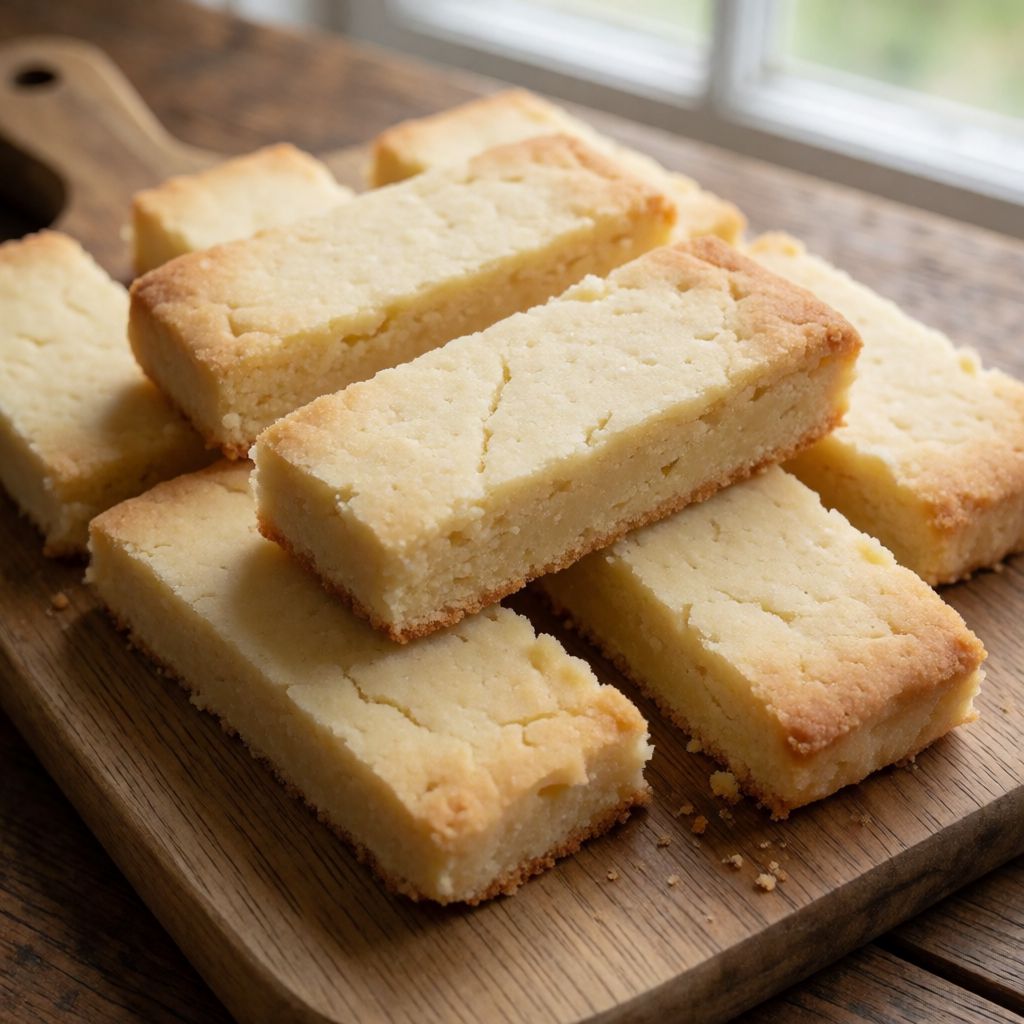
 AI photo
Shortbread
A classic buttery shortbread biscuit, crisp at the edges and short in texture.
Labels are worked out automatically from the ingredients and can be wrong. Check the packaging if it matters to you.
Ingredients
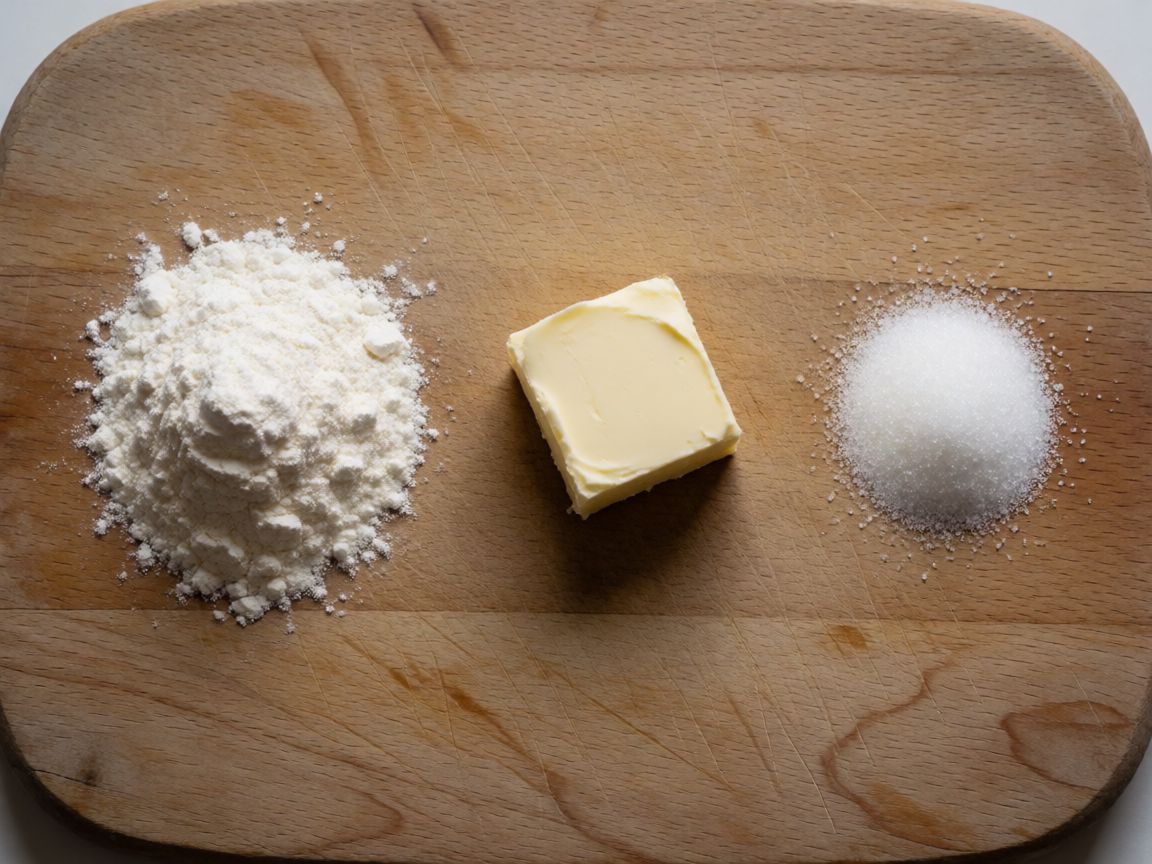
- 300 g Plain Flour
- 200 g Butter chilled
- 100 g Caster Sugar
- 1.25 tsp Salt




Steps
Cut the chilled butter into cubes and place it in the mixer bowl with the flour. Pulse until the mixture resembles fine, sandy crumbs.
Tip the mixture onto a work surface, add the salt and sugar. Quickly bring it together by hand into a smooth ball of dough.
Wrap the dough in cling film and chill in the fridge for at least 30 minutes.
30 minTake the dough out and place it between two sheets of baking paper. Roll out with a rolling pin to a thickness of about 1 cm.
Shape the biscuits into rectangles about 10x3 cm.
Using a toothpick or fork, prick two or three rows of small holes into each rectangle.
Chill the biscuits in the fridge for at least 30 minutes before baking.
30 minPreheat the oven to 180°C and bake the biscuits for 15-20 minutes, until golden.
18 minLet the biscuits cool completely before transferring them.
Shortbread isn't a biscuit in the cookie sense — no egg, no raising agent, next to no liquid in it at all. What holds the whole thing together is fat coating flour, and that's it. The name tells you the mechanism: "short" is an old baker's word for crumbly, because fat shortens the strands of gluten that would otherwise link up into something chewy and elastic. Pulse cold butter and flour together before sugar or salt go anywhere near it, and you coat every speck of flour in fat before it has a chance to grab the little moisture sitting in the butter and build gluten with it. Do that step in the wrong order — sugar and butter creamed first, flour folded in last, the way you'd make a cookie — and you get a cookie. Chewy at the edge, not short.
What actually decides whether this works is temperature of the fat, not the oven. Cold butter cubed, pulsed to crumbs, brought together fast by hand, then chilled twice before it ever sees heat — that's three separate chances to keep the fat solid. Warm butter smears into flour as a paste instead of sitting as tiny coated grains, and a paste bakes dense and greasy, spreading flat with no crisp edge, because there's no structure of fat-coated crumbs left to hold a shape. The 30 minutes in the fridge after shaping isn't there to season anything — it's there so the fat is still firm when the oven hits it, so the biscuit holds its rectangle instead of slumping before the crumb sets.
Flour here does nothing but provide the gluten you're trying to limit and the starch that sets once baked — there's no raising agent because shortbread doesn't rise, it sets, the way a custard sets rather than the way bread proofs. Plain flour is right because you don't want strong gluten fighting the fat for control. If you want a slightly sandier, more delicate crumb, Scottish bakers sometimes swap a little of the flour for rice flour or cornflour — not required here, just worth knowing why it works: less gluten-forming protein in the mix, more shortness.
Butter is two-thirds the weight of the flour here — 200 g against 300 g — which is a generous ratio even for this style of biscuit, and it's the whole reason the texture is rich rather than just crisp. It has to be proper dairy butter, cold, because the method depends on it being solid at the start and melting slowly and evenly in the oven. Margarine has a different melting curve and more water; oil has no structure to give at all — you can't crumb oil into flour, it just coats and slicks it. If you're ever without butter for a fat-based dough like this, the criterion is: solid at fridge temperature, melts gradually, carries almost no water. Nothing in a normal UK kitchen does that job as well as butter, which is part of why shortbread stayed a luxury biscuit for so long — in the centuries before refined wheat flour and white sugar were cheap, a biscuit built mostly from butter and flour was something you made for Christmas or a wedding, not a Tuesday. Oats were the everyday base; this is the version for when you could afford to waste good flour on something that wasn't bread.
Sugar is caster, not granulated, and that's not fussiness — in a dough with almost no liquid, coarse sugar crystals don't fully dissolve anywhere, and you end up biting into gritty specks instead of a smooth, faintly caramelised edge. Caster dissolves against what little moisture the butter offers and helps the surface colour properly in the oven rather than just drying out.
Salt at 1.25 teaspoons for 300 g of flour is more than a seasoning pinch, and that's deliberate — it's there to cut the richness of all that butter, the same logic as salting caramel. Leave it out and the biscuit tastes flat and one-note, all fat and sugar with nothing to push against.
On the oven: 180°C is the point where the fat renders and the sugars start to colour without the outside burning before the centre's structure has set — but dial settings on a home oven drift, sometimes by 10–15 degrees either way, so go by the biscuit, not the number. You're watching for an even pale gold, not a deep brown — shortbread that's gone dark has usually gone bitter at the edges while the middle's still pale, because a domestic oven's heat rarely sits as evenly as a professional one. And give it the full cooling time afterwards: warm shortbread is still soft and will crumble or bend in your hand because the fat hasn't gone fully solid again. Patience here isn't optional twice — once in the fridge, once on the cooling rack — it's doing structural work both times.