
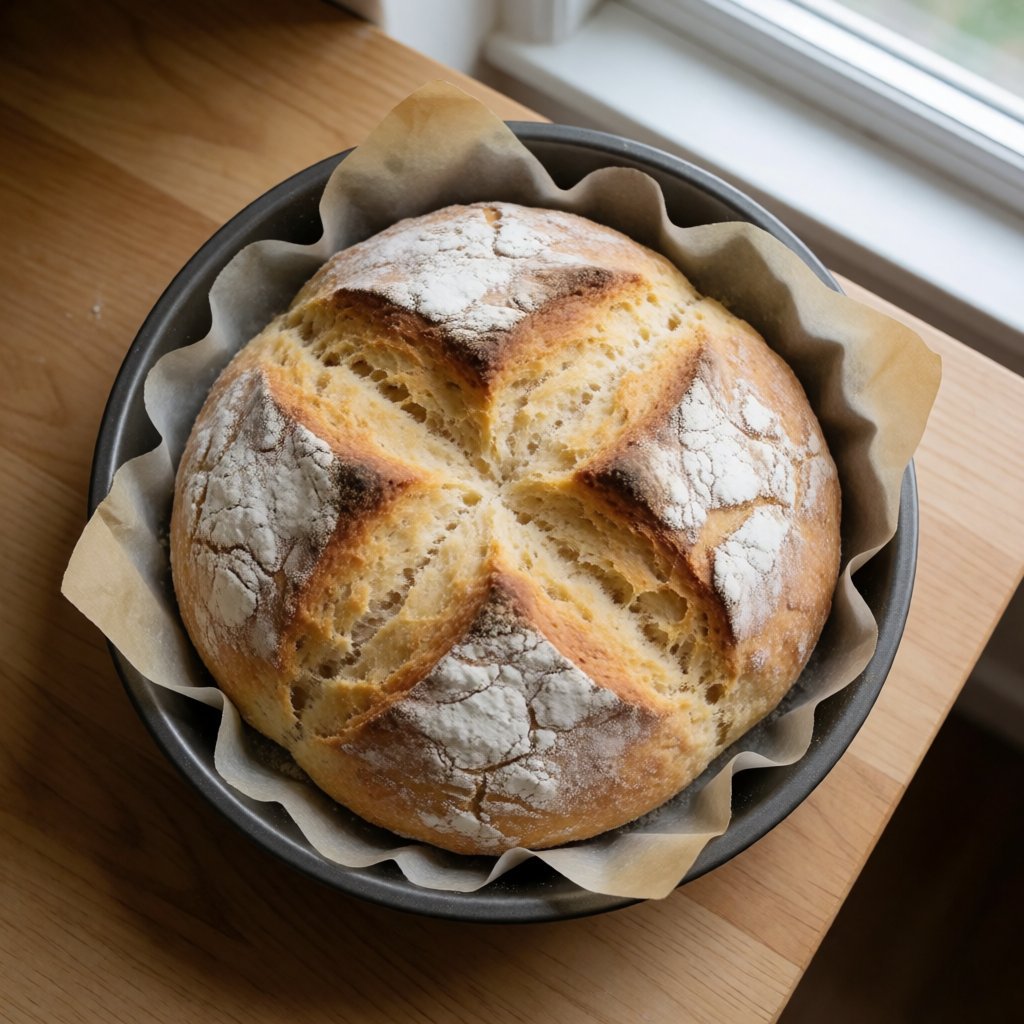
 AI photo
Kefir Soda Bread
A quick soda bread leavened with kefir instead of yeast, with a crisp crust and soft crumb.
Labels are worked out automatically from the ingredients and can be wrong. Check the packaging if it matters to you.
Ingredients
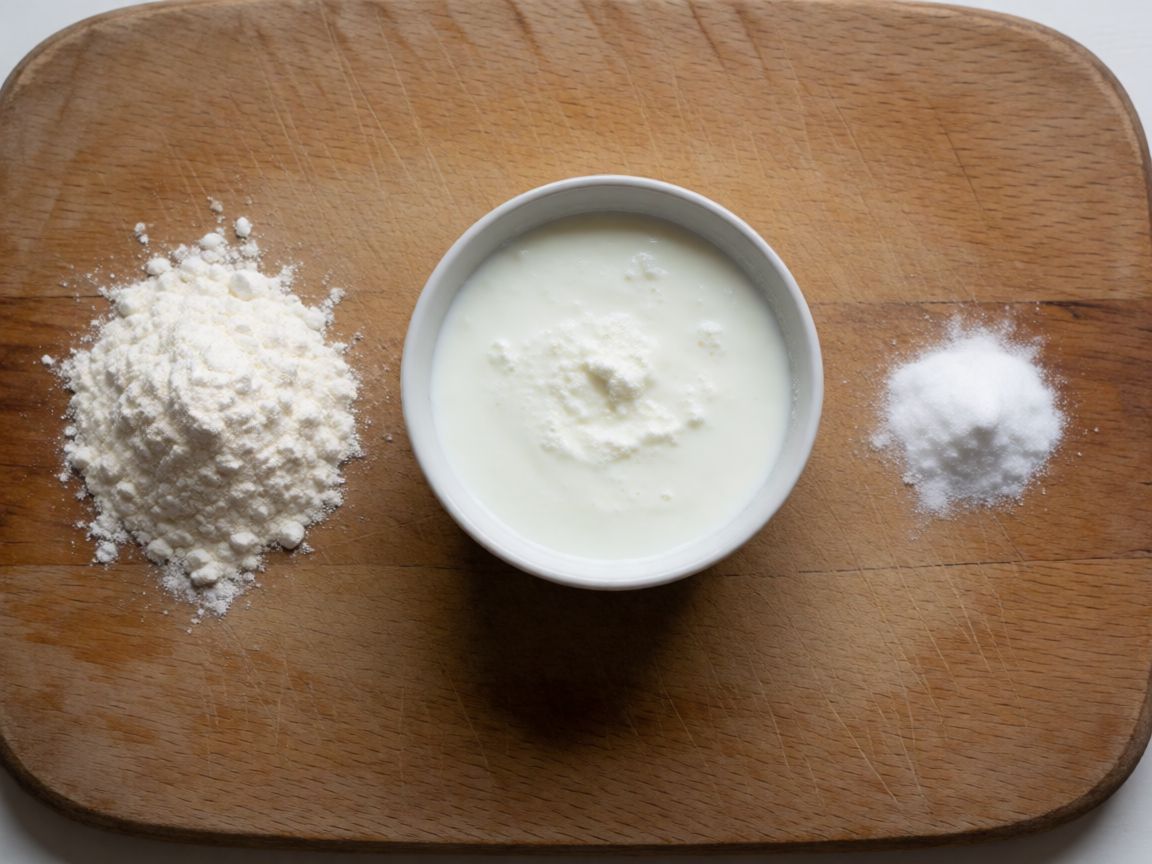
- 250 g Plain Flour
- 200 ml Kefir
- 0.5 tsp Bicarbonate of Soda
- 0.5 tsp Salt




Steps
Mix the dry ingredients, pour in the kefir, and quickly knead a sticky dough.
Shape into a round loaf and cut a cross into the top.
Place the loaf on a baking tray lined with baking paper and bake for 35 minutes.
35 minTake the loaf out and check by tapping the bottom: a hollow sound means it's done.
Forget what bread normally asks of you. This loaf has no yeast, no proving under a tea towel, no waiting for dough to double. The lift comes from a fight between two chemicals: bicarbonate of soda meets the lactic acid sitting in the kefir, and the moment they touch they throw off carbon dioxide — bubbles with no patience of their own, wanting out immediately. That's why the whole hands-on job is ten minutes: you're not growing anything, you're setting off a reaction and racing to trap the gas before it escapes.
What decides whether you get a loaf and not a flat disc is speed, not skill. The dough is sticky on purpose — don't knead it smooth the way you'd knead a yeast dough. Every extra minute of working does two unwanted things: it tightens gluten strands, which you don't want in a bread meant to be tender and a bit crumbly rather than chewy, and it lets the bubbles you've just made find their way out before the oven can seal them in. Mix until it holds together as one mass. Stop there.
Some say this is "the lazy bread, impossible to get wrong." No — there are two reliable ways to ruin it. Too much soda relative to the acid available to use it up, and you'll taste a bitter, almost soapy edge in the crumb, because unreacted bicarbonate is alkaline and your tongue knows it. Knead it like you're making a baguette, and you'll get a dense, rubbery middle instead of the open, slightly ragged crumb this loaf should have.
Plain flour, not strong bread flour, and that's not a shortcut — it's the point. Bread flour's tighter gluten network wants a long knead to become workable; this dough never gets one, so a high-gluten flour would just sit there gummy and tough. The weaker gluten in plain flour suits a dough that's handled for under a minute.
Kefir is doing one job: supplying the acid that the soda needs to react against. Buttermilk is the traditional partner here, for a plain economic reason — it was the thin, sour liquid left over after churning butter, and nobody with a dairy was going to pour it away. Kefir does the same chemistry with a different culture and a bit more fizz. If you have neither, sour ordinary milk yourself: a tablespoon of lemon juice or vinegar stirred in, left a few minutes to curdle slightly. The dairy's pedigree doesn't matter — the acidity does.
Half a teaspoon of bicarbonate of soda against 250g of flour isn't a rough number, it's a balance meant to be used up exactly by the acid in the kefir. Doubling it won't give you a taller loaf, because there's no extra acid to neutralise the extra soda — you'll just get that soapy aftertaste I mentioned, from alkaline bicarbonate sitting unreacted in the crumb.
Salt has one job here: taste. No yeast to slow down, no delicate fermentation balance to protect, so season it the way you'd season anything else.
The recipe gives you 35 minutes but no number for the oven, and I won't invent one. Go by this instead: the oven needs to already be at its working heat before the loaf goes in, not still climbing. A cold oven warming up around the bread gives the gas time to wander off before the crust sets hard enough to hold its shape — you lose the lift you worked to protect in the mixing bowl.
The hollow knock on the base is the right test precisely because this bread gives you no other honest signal — no thermometer reading, no obvious colour change deep inside. Sound tells you the crumb has set and there's no wet dough left in the middle. Baking paper on an ordinary tray is all you need; this loaf asks nothing of your oven that a normal flat kitchen doesn't already have. It makes one loaf, enough for two with butter at tea, or torn alongside a Sunday roast to go after the gravy.
·