
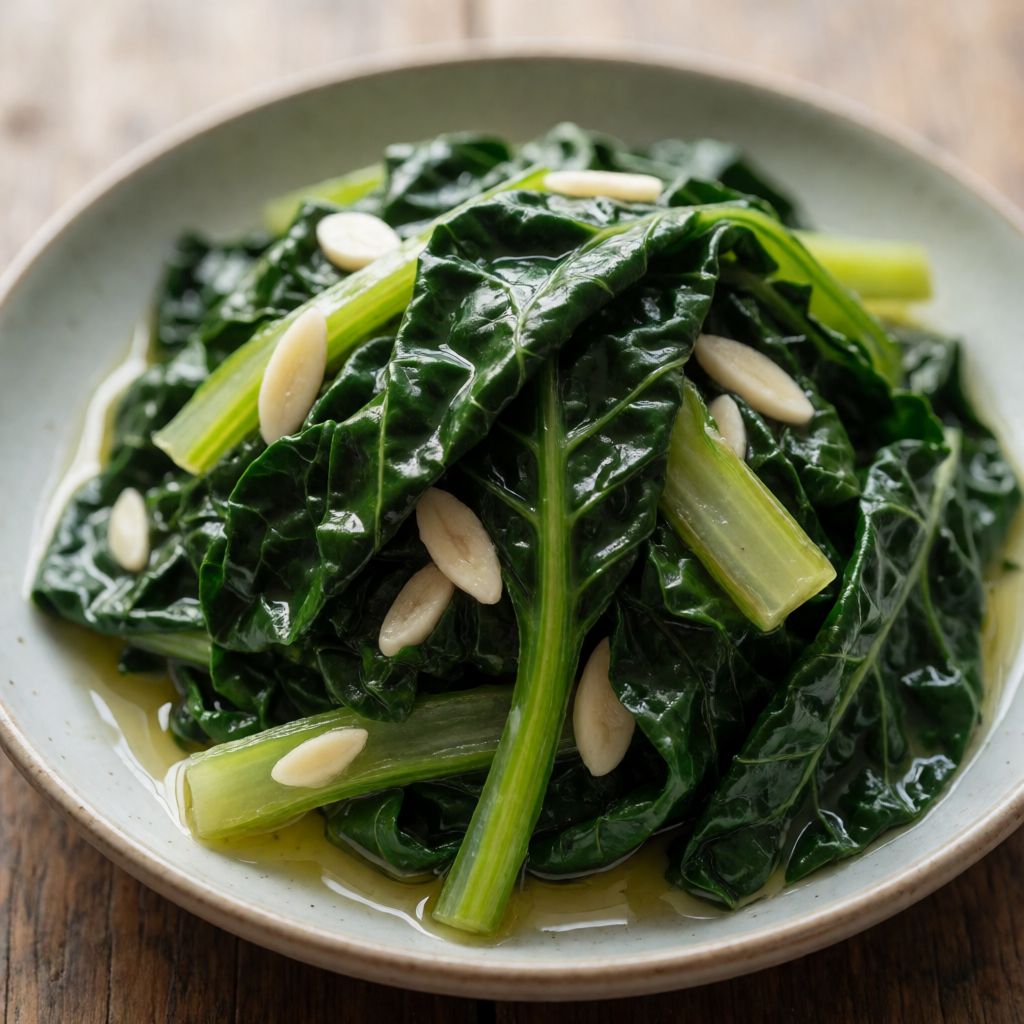
 AI photo
Steamed Swiss Chard
A simple side dish of steamed Swiss chard, finished with olive oil and garlic.
Labels are worked out automatically from the ingredients and can be wrong. Check the packaging if it matters to you.
Ingredients



Steps
Trim the base of the chard and separate the leaves one by one, discarding any damaged ones.
Soak the leaves in cold water with a little bicarbonate of soda for a few minutes to remove any soil, then rinse thoroughly.
Cut the leaves away from the stalks; halve any large leaves. Cut the stalks into pieces separately.
Steam the stalks in a steamer for at least 5 minutes.
5 minAdd the leaves and continue cooking for a further 15 minutes.
15 minCheck with a fork that the stalks have become tender.
Drain the cooked chard well in a colander.
Serve the chard as a side dish, dressed with olive oil and salt.
Chard is really two vegetables wearing one leaf. The rib down the middle is built like a thin stick of celery — fibrous, full of water-channels, happy to sit in heat for a while. The blade either side of it is thin as spinach, mostly water and green pigment, and gives up the fight in minutes. What decides whether this dish works is whether you respect that difference — cook the ribs first, let the blades join late — rather than throwing the whole leaf in at once and hoping for the best.
Some say you have to boil greens in a big pan of water to get them tender. No — because bulk water is exactly what you don't want here. Boiling pulls the minerals and the water-soluble vitamin out of the leaf and into water you're about to pour down the sink, and it dilutes whatever flavour the chard had to begin with. Steam cooks with vapour touching the leaf, not litres of water dissolving it, so what you end up tasting on the plate is chard, not chard-flavoured washing-up water.
Forget counting minutes as the main instruction — the clock only tells you the earliest point to check, not the finish line. The real test is the fork going into a stalk piece without a fight, the fibre having let go. Push past that point and the leaves, which cooked fine ten minutes ago, slide from bright green into a grey, collapsed sludge — not because steam is cruel to chard, but because you left it in after the job was already done. That's the one defect to watch for, and it's entirely avoidable: the moment the stalk gives, pull the lot off the heat.
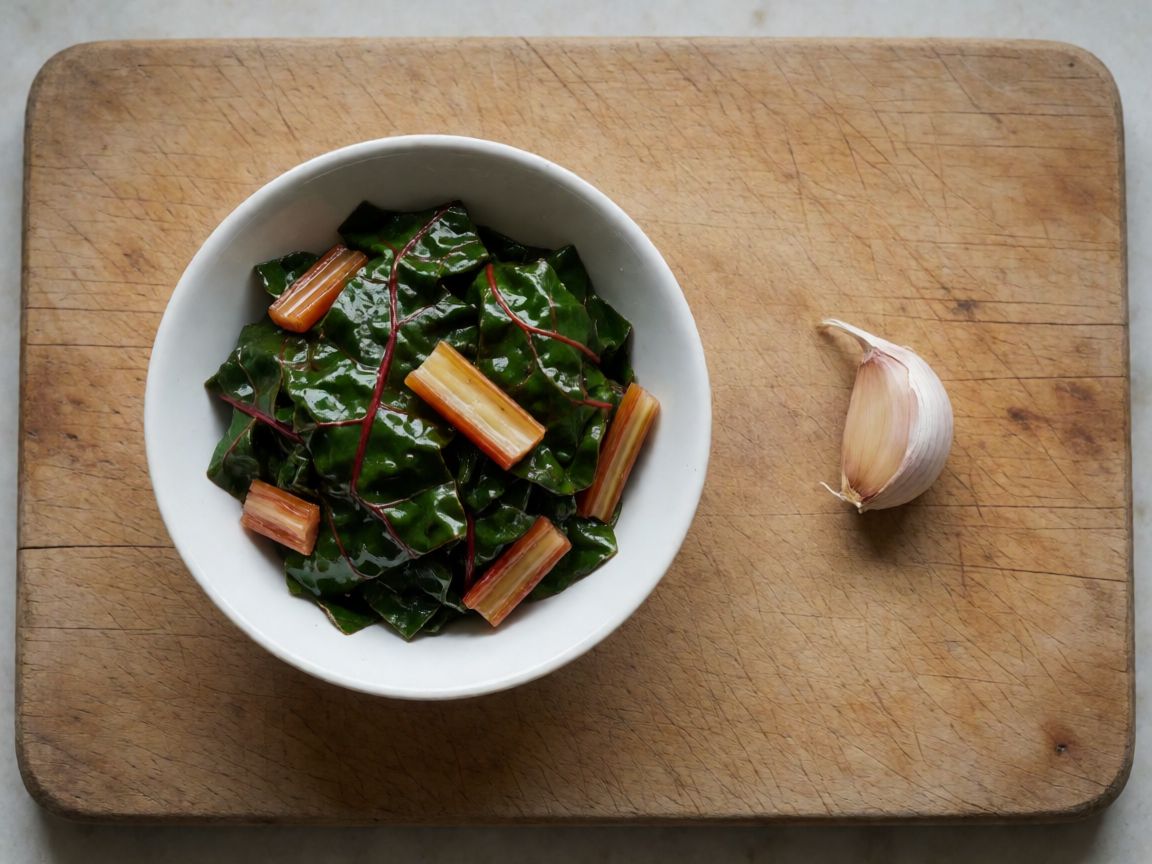
Swiss chard itself — 400 g for two is a generous side, not a starter's worth, and that's the honest proportion if this is sitting next to a Sunday roast instead of boiled spring greens, which it does perfectly well and more cheaply, since chard is a cut-and-come-again plant that keeps producing through a season while lettuce bolts and quits. Pick leaves with firm, unblemished ribs — a limp rib means it's been sitting in a bag too long and will never get properly tender no matter how long you steam it, because the problem there isn't lack of cooking, it's lack of freshness. White-ribbed and rainbow (red, yellow) varieties cook the same; the coloured ribs are sometimes a touch denser and might want an extra minute before the fork slides through.
The bicarbonate soak is for soil, full stop — chard grows low and its folded leaves trap grit the way nothing else in the veg aisle quite manages. There's a separate myth floating around that bicarb keeps greens vividly green because it's alkaline and chlorophyll likes that — true as chemistry, useless as advice, because the same alkalinity that holds the green also breaks down the leaf's structure and leaves it soft and flat-tasting if you soak it any longer than a few minutes for grit. Use it as a quick wash, not a colour trick, and rinse it off properly or you'll taste soda in the final dish.
Garlic, one clove, isn't cooked in this recipe — it goes into the oil at the end, crushed or finely sliced, against the residual warmth of the drained chard. That's deliberate: raw garlic sitting in warm fat releases its aroma gently; garlic cooked hard in oil tips past a point into bitterness once its sulphur compounds start breaking down under heat. If you've only got garlic powder, a small pinch stirred into the oil will do a job, just a quieter one — it won't have the sharp bite of the fresh clove.
Olive oil is the right choice because chard's flavour is mild and a touch earthy, and it wants a dressing oil with some character of its own rather than one that disappears — a decent extra virgin, the kind you'd use on a salad, not the cheapest bottle for frying. Any other oil with a flavour you actually like works on the same logic; what you're avoiding is a neutral, odourless oil, because here the oil isn't a cooking medium, it's doing half the seasoning.
Salt goes on at the end too, after draining, because salting wet chard before it's drained just seasons the water you're about to throw away.
On equipment: you don't need a proper steamer basket to get this right. A colander set into a pan with a couple of centimetres of simmering water, with a plate sat over the top instead of a lid, holds the steam in well enough — the point is trapping the vapour so it circulates round the leaves rather than escaping straight up, and a plate does that job almost as well as a lid does. What it won't do is speed anything up — the stalks still need their own time before the leaves go in, and that's patience, not a step you can shortcut by turning the heat up, since chard doesn't tenderise faster under harder heat, it just scorches at the edges of the colander while the middle stays raw.