
 AI photo
Stuffed Peppers with Beef Mince and Italian Sausage
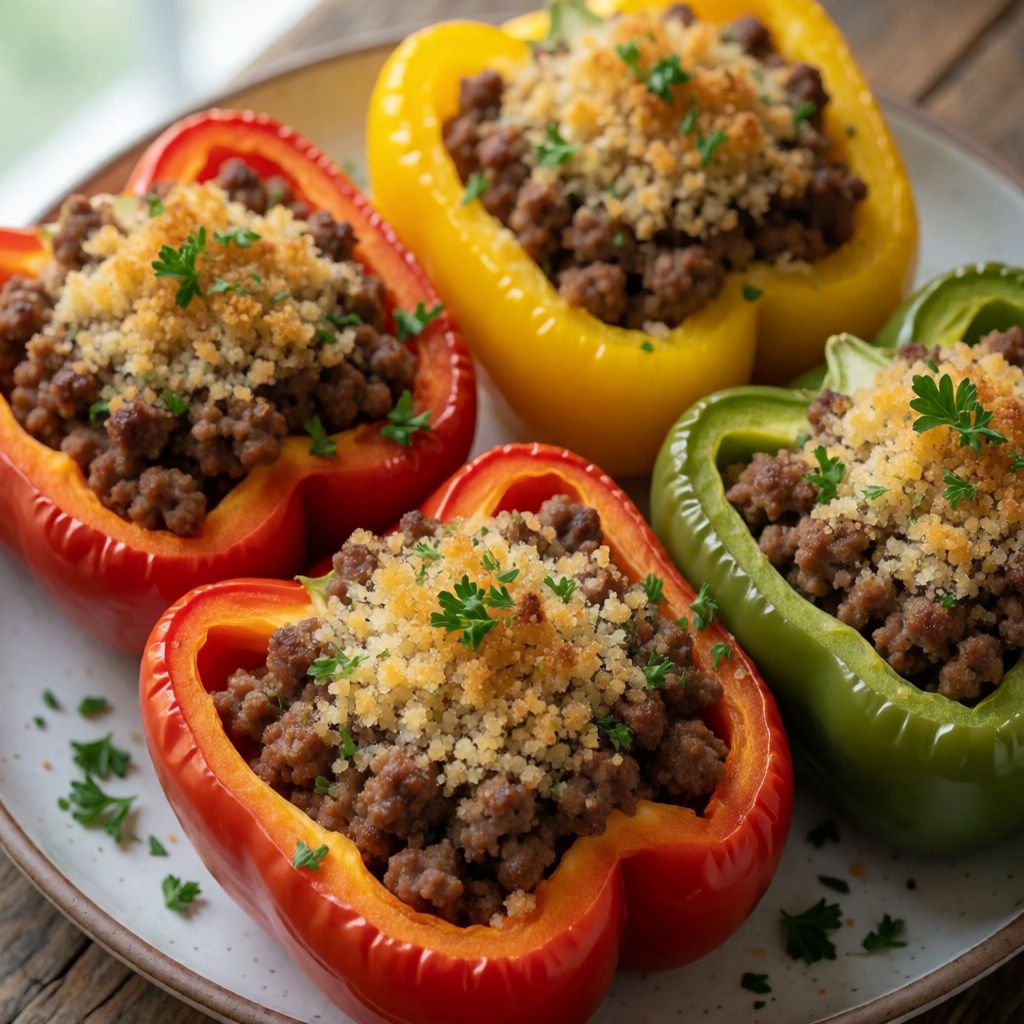
Peppers stuffed with beef mince and Italian sausage, baked until tender.
Labels are worked out automatically from the ingredients and can be wrong. Check the packaging if it matters to you.
Ingredients
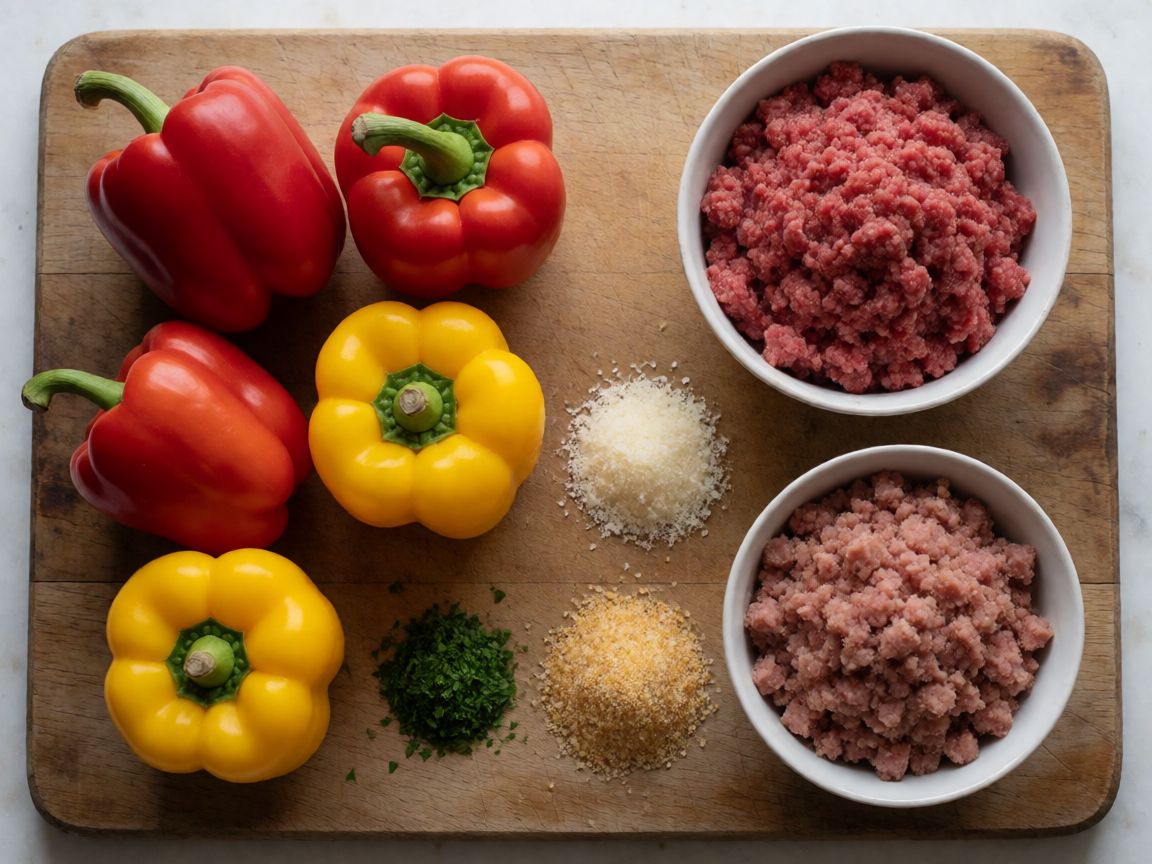
- 4 pcs Peppers red and yellow
- 400 g Beef Mince
- 200 g Italian Sausage
- 2 tbsp Parmesan
- 3 tbsp Breadcrumbs dried
- Parsley to taste
- Salt to taste
- Black Pepper to taste
- Olive Oil to taste









Steps
Wash the peppers and cut them in half. Remove the seeds and inner membranes, rinse and leave to drain.
Tip the beef mince into a large bowl. Add the Italian sausage, removing the casing and breaking it up with a fork.
Add the breadcrumbs, salt, black pepper, Parmesan and parsley to the filling.
Mix all the filling ingredients well.
Fill the pepper halves with the prepared meat mixture. Place them on a baking tray lined with baking paper.
Fill the remaining peppers until the filling is used up.
Drizzle the stuffed peppers with olive oil and bake at 190°C for at least 40–45 minutes.
45 min
This is a vessel dish. The pepper is its own ovenproof container - no kazan, no extra dish to wash, which is half the point of it. What decides whether it works is a timing problem: you've got two things cooking inside one object, on two different clocks. The pepper wall has to go from crunchy-raw to soft enough to cut with a fork, and at the same time the meat inside - denser, insulated by the pepper itself - has to go all the way through without drying into crumbly chalk. If the oven's too fierce, the outside of the pepper chars before the centre of the filling is cooked. Too gentle, and the pepper never collapses.
Some say peppers for stuffing should stand whole, upright, filled through the top like a jug through its neck. No - because the meat at the bottom of a deep cavity barely touches the tray, cooks slower than the top, and you waste half the vegetable on membrane pockets nobody eats anyway. Halving the pepper gives you a wide, shallow bowl: more surface touching the hot tray, more edges catching colour, and a filling layer thin enough to cook evenly without needing to be babysat.
Pepper first: red and yellow are riper fruit than green, which is simply the same pepper picked before it finished changing colour. Riper means more sugar, thinner bitterness, and - useful to you here - a slightly softer wall that gets to "fork-tender" inside the time this recipe gives it. A green pepper will work, but it's tougher and grassier and will likely want longer in the oven before it slumps the way you're looking for. If that's what's in the fridge, use it - just don't expect it on the same clock.
Beef mince on its own, especially the leaner end of what UK supermarkets sell, runs the risk of drying out in an oven this long - there's not enough fat in it to keep basting itself from the inside. The Italian sausage fixes two problems at once: it adds fat, and it arrives pre-seasoned, usually with fennel, garlic, sometimes chilli or paprika, so you're not guessing at a spice mix from scratch. Pull the casing off before you use it - that casing is a collagen skin meant to hold sausage shape on a butcher's hook, and left in, it curls and toughens under heat instead of blending into the mince. Break it up properly with a fork so you've got one texture, not pockets of sausage sitting inside pockets of mince.
The breadcrumb's job, as above, is absorption - so the test for a substitute is simple: any dry crumb with no strong flavour of its own. Panko, grated stale bread, even crushed crackers in a pinch, all do the same work. Parmesan's job is salt, fat, and a savoury depth that a plain mince mix doesn't have on its own - so swap it for any hard, aged cheese that melts into the fat rather than going stringy: pecorino, grana padano, a mature cheddar if that's what's in the fridge, understanding the flavour shifts even if the mechanism doesn't.
The olive oil drizzled over the top before baking isn't there for flavour so much as to stop the exposed rim of the pepper and the surface of the filling from drying out and tightening into a skin before the inside's done. Any oil with no smell of its own will do this job - you don't need extra virgin here, its aroma would just cook off and be wasted.
A word on the oven, because this is where a domestic kitchen actually differs from a professional one. Don't trust the dial blindly - most home ovens, especially fan ovens, run a touch hotter than they claim, and older static ovens often have a hot back corner that'll catch whatever's nearest it first. 190°C is a target, not a guarantee; go by the pepper's own behaviour - the slump, the colour at the rim - over the numbers on the display.
And give the mixing stage its due time. This isn't a step to rush through on the way to the oven - letting the meat, crumb, cheese and herbs sit together and come to one texture for a minute before you fill the peppers means the crumb has actually started drawing in moisture rather than sitting as dry grit in the middle of a bite. Patience here costs you almost nothing and saves you a filling that's wet in one spot and dry in the next.