
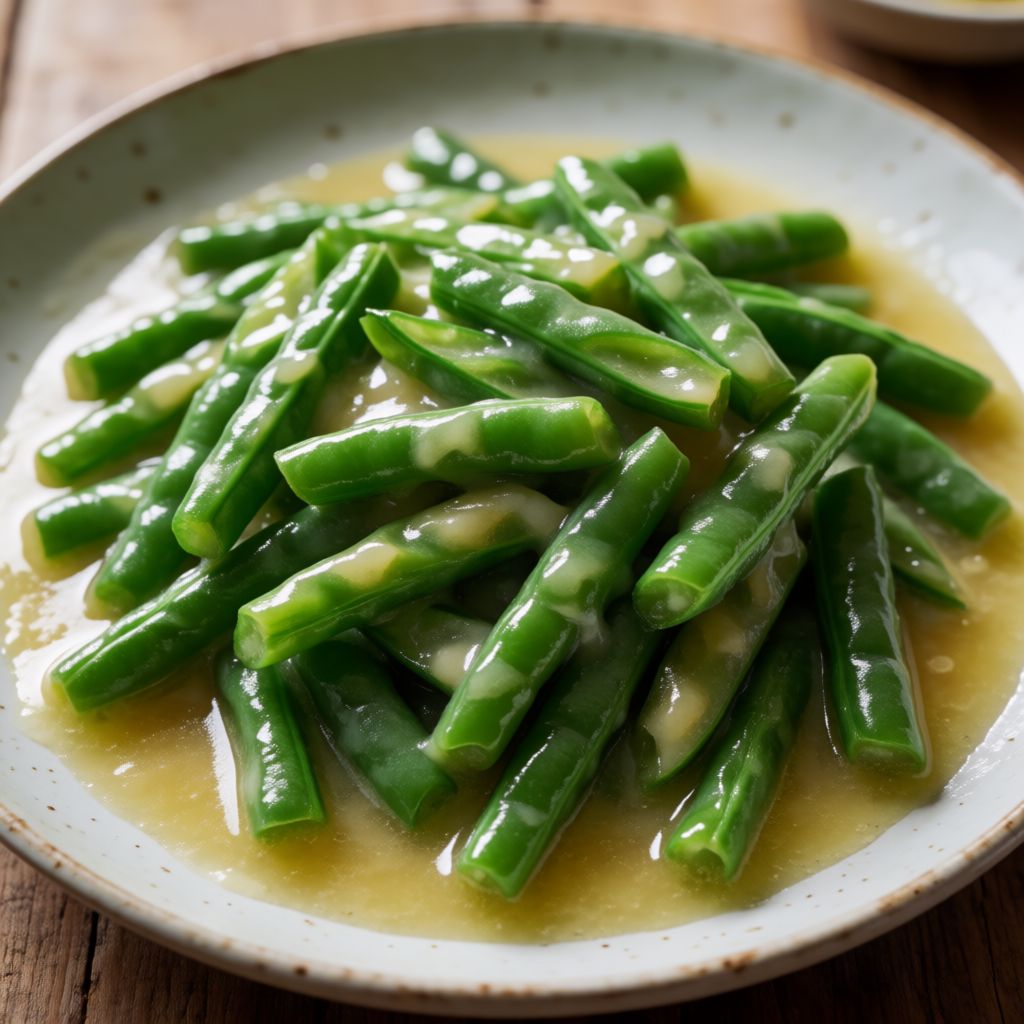
 AI photo
Sweet and Sour Green Beans
A simple side dish of tender green beans tossed in a sweet-and-sour egg yolk sauce.
Labels are worked out automatically from the ingredients and can be wrong. Check the packaging if it matters to you.
Ingredients
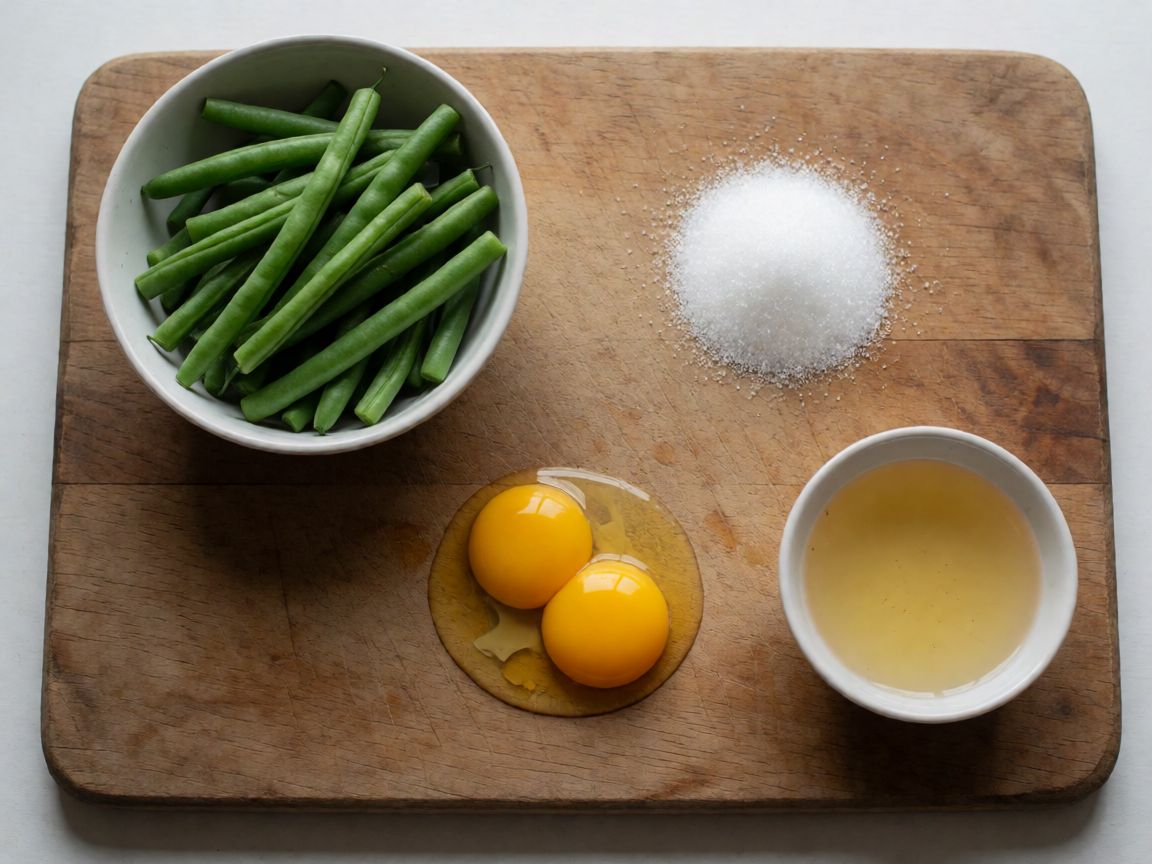
- 600 g Green Beans
- 60 g Sugar
- 2 pcs Egg Yolks
- 2 tbsp Vinegar
- Salt to taste





Steps
Thoroughly wash the green beans under running water, trim the ends and remove any tough strings.
Bring water with a pinch of salt to the boil and cook the beans until tender.
15 minDrain the cooked beans in a colander, transfer to a deep bowl and leave to cool.
In a small saucepan, combine the egg yolks, sugar, vinegar and two tablespoons of water.
Stir and cook the sauce over low heat until it thickens to a pleasant sweet-sour consistency.
Toss the cooled beans with the sauce and serve.
This is a dressed vegetable dish, not a stir-fry: beans are cooked plain in water, then coated in a sauce that is really a thin egg-yolk custard pulled sweet and sour. The whole dish stands or falls on that sauce. Get the yolks right and you have something silky, almost like a savoury lemon curd clinging to green beans. Get them wrong and you have scrambled egg bits floating in vinegar water — edible, but not what you wanted.
The beans themselves ask only one thing: don't overthink doneness by the clock. A bean that's ready bends without snapping cleanly, goes from that squeaky raw crunch to a soft give under your teeth. Fifteen minutes is where to start checking, not where to stop the timer blind. Pull one out, bite it, decide.
The real skill is in the little saucepan with the yolks. Low heat here isn't a suggestion, it's the mechanism itself — egg yolk thickens by its proteins slowly tightening as they warm, somewhere well under boiling. Push the heat up to get there faster and you don't get a smooth sauce sooner, you get curds, because the proteins seize before they've had time to tighten evenly. Some say you need to boil the sauce down to thicken it properly — no, because boiling is exactly what turns a sauce into scrambled egg with vinegar in it. You thicken this one by patience, not by heat.
Cooling the beans before they meet the sauce matters for the same reason. Hot beans carry enough heat to finish cooking that yolk sauce the moment they touch it — you'd be adding the egg to a pan that's still, in effect, on the stove.
Green beans: buy them young if you can — thinner pods, snap cleanly when you bend one in the shop, no visible bulge from the seeds inside. Old beans have tough strings running the length of the pod and a leathery skin; trimming the ends won't fix that, so if you feel a string when you snap one, run a small knife down the seam and pull it out, or just buy different beans next time. In a UK greengrocer's or supermarket, year-round beans are usually fine for this — you don't need the fat, stringy garden kind.
Salt in the cooking water isn't there to flavour the beans much — in fifteen minutes of boiling, not a lot gets in. It's there to stop the water tasting dead and to help keep the beans a cleaner green rather than a dull khaki, since very soft, unsalted, over-boiled water lets the chlorophyll break down faster. Don't oversalt it — the sauce is the seasoned part of this dish, the beans are the quiet background.
Egg yolks are the whole engine of the sauce. They thicken by coagulating gently, and they also carry fat and lecithin, which is what gives the sauce its slight sheen and cling rather than a watery vinegar-sugar syrup. There's no real substitute that does both jobs — a cornflour slurry would thicken, but you'd lose the silkiness and get a glossy starch gloop instead, a different dish wearing this one's name. If you're nervous about scrambling them, do the step over a bowl set in a pan of just-simmering water rather than straight on the hob's flame — a domestic ring has hot spots and poor low-end control, and a water bath buys you a wider margin before the yolks panic.
Sugar and vinegar are doing the balancing act, and the ratio here — 60g sugar to two tablespoons of vinegar across 600g beans — gives you a sauce that leans sweet with a clear sour edge behind it, not a mouth-puckering dressing. Any vinegar with a clean, uncomplicated sharpness works: malt vinegar will do if that's what's in the cupboard (very British, very at home with a Sunday roast table), cider vinegar is milder and rounder, white wine vinegar sits somewhere between. Avoid anything heavily flavoured like balsamic — it'll fight the egg instead of sitting behind it.
The two tablespoons of water in the sauce aren't padding — they slow the whole thickening process down, giving you a wider window to catch the texture before it overshoots into curd territory. If you want a thicker sauce, don't add more yolk or turn up the heat — just give it more time at the same gentle warmth, stirring the whole while so no one patch of the pan gets ahead of the rest.
This kind of sweet-sour egg dressing has old, practical roots — a way of making vegetables feel like more than boiled vegetables without needing butter or cream, both historically dearer than an egg. It also quietly used up yolks left over once whites went into something else — a meringue for pudding, say — rather than tipping them down the sink. Worth remembering next time there's a carton of egg whites in the fridge with no obvious use: somewhere, a dish like this is the answer to the other half of the egg.