
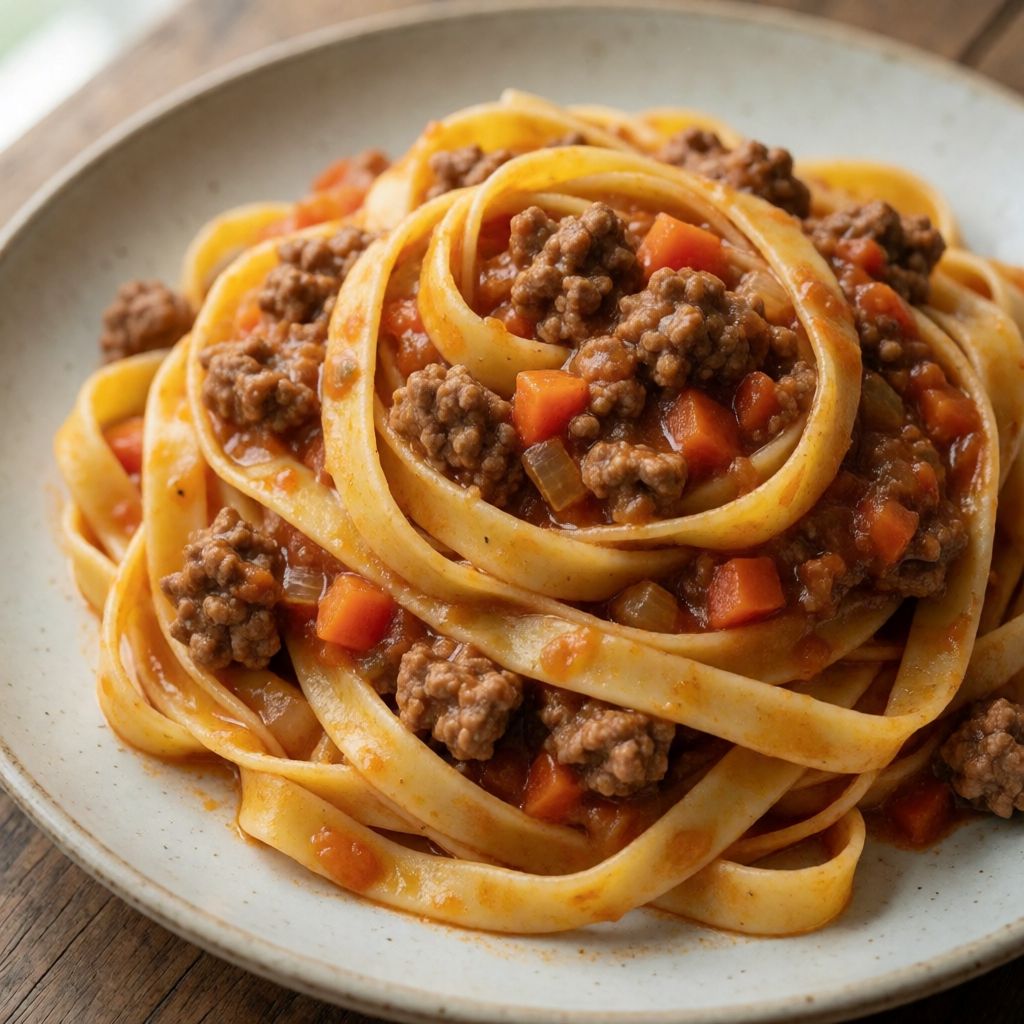
 AI photo
Peasant-Style Tagliatelle with Meat Ragù
A comforting peasant-style tagliatelle with a rich meat ragù, simmered with wine and tomatoes.
Labels are worked out automatically from the ingredients and can be wrong. Check the packaging if it matters to you.
Ingredients
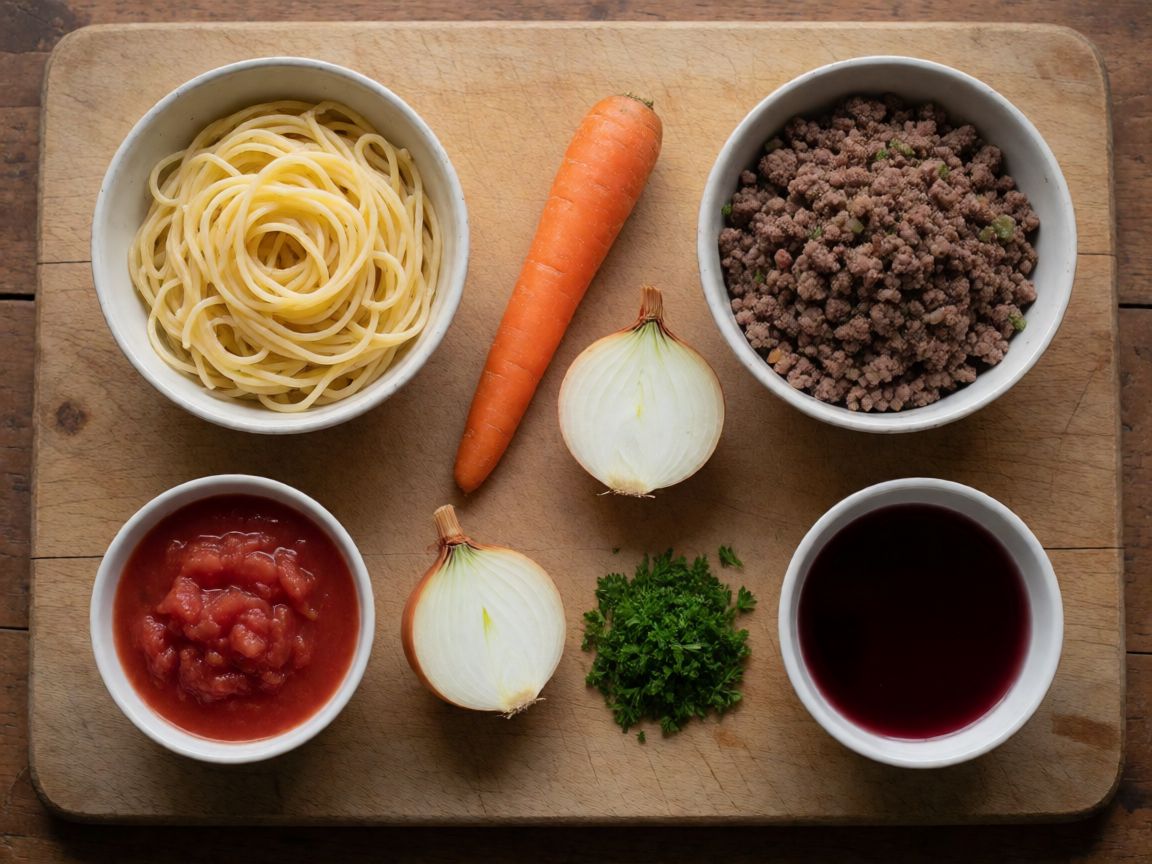
- 400 g Tagliatelle
- 500 g Mixed beef and pork mince
- 1 pcs Carrot
- 0.5 pcs Onion
- Parsley to taste
- 400 g Tinned chopped tomatoes
- 8 tbsp Red wine
- Salt to taste
- Black pepper to taste
- Olive oil for frying










Steps
Heat the olive oil in a frying pan and sauté finely chopped onion, carrot and a little parsley for a few minutes.
Increase the heat, add the mince and break it up with a wooden spoon. Fry until it turns a lighter colour; the meat should reach an internal temperature of 71°C.
Pour in the red wine, season with salt and pepper to taste. Cook, stirring occasionally, for 15 minutes.
15 minAdd the tinned chopped tomatoes and continue cooking on low heat, covered, for another 15-20 minutes, adding a little water if the sauce becomes too thick.
Bring a pot of water to the boil, salt it, and cook the tagliatelle according to the time on the packet.
Drain the pasta and transfer it to the pan with the sauce, stirring gently so it coats well. Sprinkle with grated Parmesan if you like, and serve.
This is Sunday-roast country's answer to ragù — not the restaurant Bolognese with its hours of simmering, but the version a family makes on a Tuesday because there's mince in the fridge and tagliatelle in the cupboard. Vegetables and a little meat stretched long and slow until the pan gives you more flavour than the shopping list promised. That's the whole economics of it: ragù was built to make a small amount of meat taste like a lot, by cooking it next to vegetables that bring their own sugar and water to the party.
What decides whether it works has nothing to do with the clock on the packet. It's whether the mince actually browns — properly changes colour, catches a little at the edges — before the wine goes in. Tip it into a pan that isn't hot enough, or crowd it, and it steams in its own juice instead: grey, loose, tasting of nothing but boiled protein. The heat under step two needs to be high enough that the meat hisses, not simmers.
The second thing that decides it is patience during the tomato stage. Fifteen to twenty minutes isn't a number you're allowed to shorten because you're hungry — it's the time the acid in tinned tomatoes needs to soften into something you'd actually want to eat, and for the fat from the meat to find its way into the sauce rather than sitting on top of it. You'll know it's there when the sauce coats the back of a spoon instead of running off it, and tastes rounder than it did ten minutes before — less sharp, more like itself.
Onion and carrot go in first, cut small, because they need a head start the mince doesn't — raw onion is harsh, raw carrot is woody, and a few minutes in warm oil before the meat arrives softens both and starts them sweetening instead of just cooking through. Parsley added at this stage isn't there for colour at the end; it's there to perfume the fat while it's still hot enough to carry a smell. Any vegetable oil without a smell of its own would do the sautéing job — sunflower, rapeseed — but olive oil brings its own flavour to a dish that has very little else going on besides meat and tomato, so it earns its place here rather than being decoration.
The mince is beef and pork together because they do different jobs: beef gives the ragù body and a savoury backbone, pork brings fat and a sweetness that keeps the whole thing from tasting lean and dutiful. If you've only got beef, use a mince with a bit more fat in it, or add an extra spoon of oil — a ragù that's too lean dries out during the long simmer and you end up adding water just to keep it liquid, which thins the flavour along with the texture. The 71°C the recipe quotes is a food-safety number, not a cooking instruction — what you're actually watching for is the meat losing every trace of pink and stopping its release of red juice into the pan. That's your real signal, no thermometer needed.
The wine isn't there to get anyone tipsy over dinner — eight tablespoons is barely a glass. It's there to deglaze whatever's caught on the base of the pan, and to bring acidity and a little sugar that balances the tomato later. No wine in the house is not a disaster: a splash of vinegar loosened with water, or just stock, will do the acid job, though you lose some of the roundness wine gives. Let it bubble down properly for those fifteen minutes before the tomatoes arrive — rushing this is how you end up with a sauce that tastes faintly of raw alcohol, which nobody wants with their tagliatelle.
Tinned chopped tomatoes are the right choice here, not a lesser one. In a British kitchen in February, fresh tomatoes are watery and barely red; tinned tomatoes were already ripe and cooked down when they went into the can, so they give you consistent acid and body every single time. This is also why the covered simmer matters so much on a domestic hob — you haven't got the open flame and wide shallow kazan that lets sauce reduce by evaporation alone, so a lid (a plate balanced over the pan does the job if you haven't a proper one) traps the steam and lets the sauce thicken by cooking down the tomato itself rather than by just losing water to the air. Watch it, though: covered means it can also catch at the bottom on a smaller domestic ring, so a splash of water when it looks too thick isn't cheating, it's just managing a pan that isn't built like a professional stove's.
Tagliatelle, flat and slightly rough-edged if it's a decent dried one, holds a meat sauce better than a smooth round pasta because the ribbon shape gives the sauce more surface to cling to — this is also why you toss the drained pasta into the pan with the sauce rather than pouring sauce over a plated pile. A spoonful of the pasta's own starchy cooking water, added at that point if the sauce looks tight, will help it coat rather than pool. Parmesan at the end is yours to add or skip; it's a finishing note, not a structural ingredient, and the ragù will stand without it — which is worth knowing on a week when you've already spent enough on mince and wine.