
 AI photo
Taralli
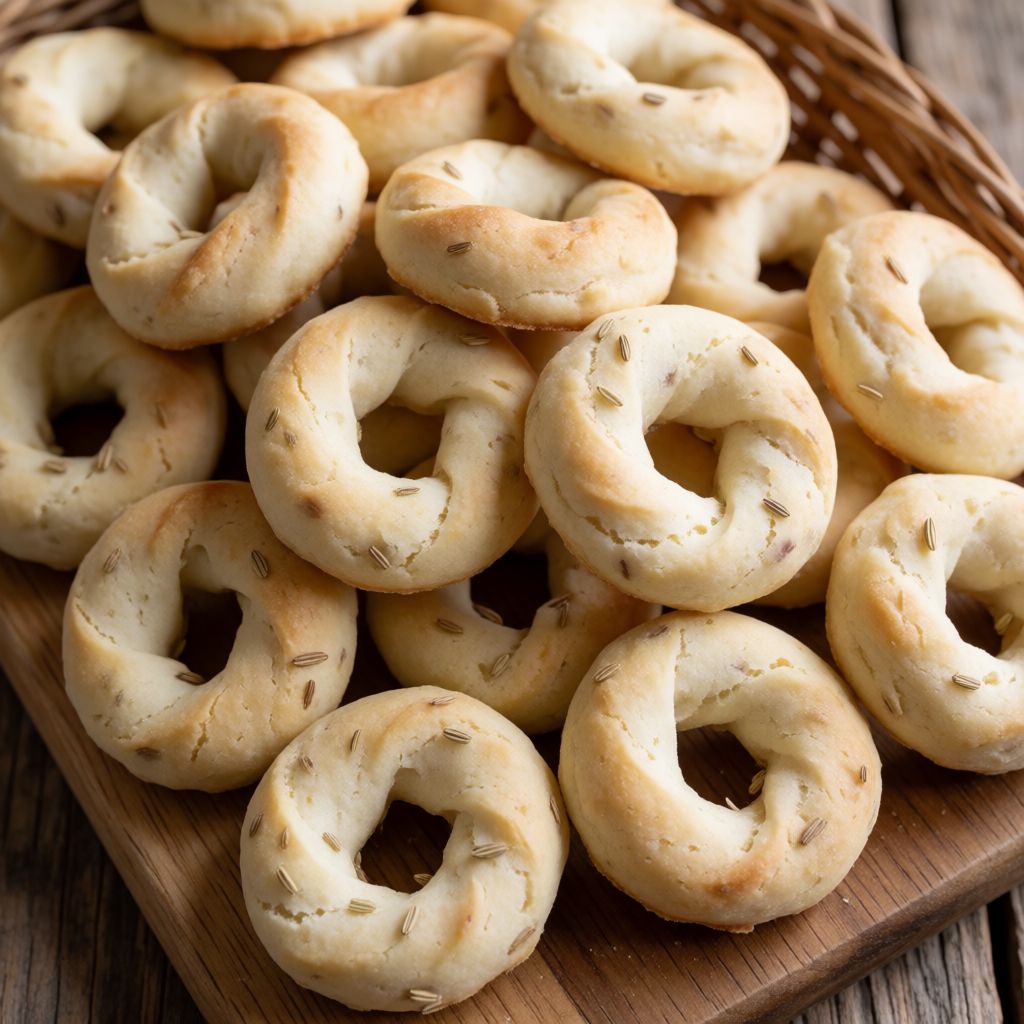
Crunchy Italian taralli flavoured with fennel seeds, a traditional savoury snack to enjoy with drinks or antipasti.
Labels are worked out automatically from the ingredients and can be wrong. Check the packaging if it matters to you.
Ingredients
- 500 g Plain flour
- 80 g Olive oil
- 80 g White wine
- 180 g Water
- 7 g Salt
- 1 tbsp Fennel seeds Used in place of wild fennel for the same aniseed flavour.






Steps
Make the dough by combining the flour with the olive oil, white wine and water. Add the salt and flavour with the fennel seeds. Start kneading.
Knead the dough for a long time, by hand or in a stand mixer, until it becomes very smooth and even.
Wrap the dough in plastic film and let it rest.
30 minDivide the dough into pieces weighing about 30-35 g.
Shape each piece into a rope about one and a half centimetres thick.
Join the ends together, pinching them to form a taralli ring.
Bring a pot of water to the boil.
Boil the taralli, about 10 at a time, and place them on a clean kitchen towel once they float to the surface.
Let them dry on the towel.
60 minTransfer the taralli to a rack and bake in an oven preheated to 220°C.
30 minRemove from the oven, let cool slightly and serve.
What was changed
Fresh wild fennel is not commonly sold in the UK, so this recipe uses Fennel seeds instead, which gives the same aniseed flavour.
Taralli are not bread. There's no yeast in that list, no egg, no butter — just flour, oil, wine, water and salt, kneaded hard and shaped into small rings the size of a bracelet. That lean dough is the whole point: this is a street snack from Puglia, meant to sit in a jar or a paper bag for weeks without going soft or mouldy. No dairy, no egg — nothing in it to spoil. Poor man's food, in the honest sense: cheap ingredients, long shelf life, built to be sold by the fistful and eaten walking.
What decides whether they come out right is the double cook, and it isn't decoration — each stage fixes a different fault. You boil the rings first, not to cook them through (a ring that thin cooks through in the oven anyway) but to gelatinise the surface starch into a thin skin. That skin is what lets the taralli go hard and glassy later instead of staying soft and bready. Skip the boil and bake straight away, and you get a biscuit, not a taralli — the inside dries before the outside sets, and you lose the snap.
Then comes the part people rush: drying on a towel for the better part of an hour. That's not resting for the sake of it — it's getting rid of the surface water the boiling left behind. Put a wet ring straight into a 220°C oven and the water flashes to steam before the crust can form, and you get a pale, leathery ring instead of one that cracks clean when you bite it. The oven's job, after that, is just to finish drying and colour the surface fast, before the fennel oil in the dough can cook off and turn bitter.
On the flour: plain flour is right here, not strong bread flour, because you're not relying on a long yeast rise to need a big gluten network. The long hand-kneading in step 2 does the gluten's job instead — it's what keeps the ring from splitting apart in the boiling water. Knead until the dough stops tearing and starts stretching like a rubber band; that's the real cue, not a stopwatch.
Olive oil is doing double duty — it's the fat (there's no butter, no egg yolk, nothing else to carry richness) and it's a flavour in its own right, which is unusual; normally I'd tell you to use an oil with no character of its own, but here the opposite is true. Puglia is olive country, and the oil is meant to taste of something. Use a decent, not over-aggressive olive oil — a very bitter, very green one will fight the fennel. If you genuinely have none, any other flavourful fat that's liquid at room temperature will get you a taralli, just not this one.
Wine serves two jobs: a little acid to help the dough relax and roll out smoothly, and a flavour note under the fennel. Dry white, nothing sweet — sugar has no business here. No wine in the house? Water with a small splash of vinegar does the acid's job, though you'll lose the aroma; that's a fair trade for a weeknight, not for a dinner you've promised someone.
Fennel seed stands in for wild fennel, which most kitchens outside southern Italy simply don't have growing by the roadside — the note tells you why, and it's the right call. Crush the seeds a little between your fingers or with the flat of a knife before mixing them in; whole seeds sit inert in the dough, crushed ones release their oil into it.
In a UK kitchen, boil the rings in a wide pan rather than a proper pot if that's what you've got — ten at a time needs room to float free, not crowd. A clean tea towel laid flat on the worktop does the drying job that a marble slab would do in Puglia; just don't use one that's been through a fabric conditioner, the taralli will pick up the scent. And when you move them from the drying towel to the oven, a wire cooling rack set over a tray gives the hot air room to get underneath — a flat baking sheet traps steam against the base and you'll get one soft side.
Patience is the actual ingredient people skip. Thirty minutes resting the dough, an hour drying the rings — neither looks like cooking, so it's tempting to shortcut both. Don't. The whole mechanism depends on water leaving the dough in the right order: first enough to let it hold a shape, then enough to let it crisp clean through.