
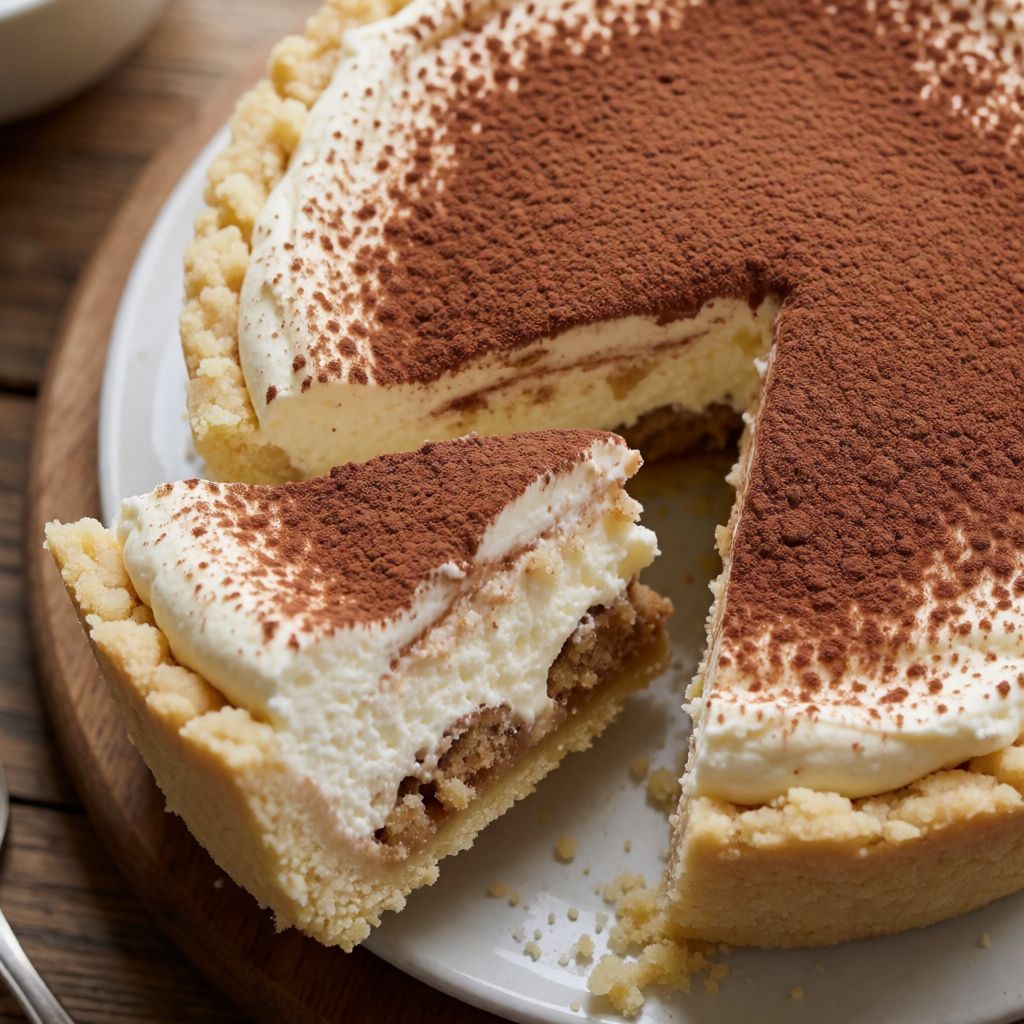
 AI photo
Crumbly Tiramisu Pie
A crumbly, baked pie with a buttery sponge-finger crust and a creamy mascarpone-coffee filling.
Labels are worked out automatically from the ingredients and can be wrong. Check the packaging if it matters to you.
Ingredients
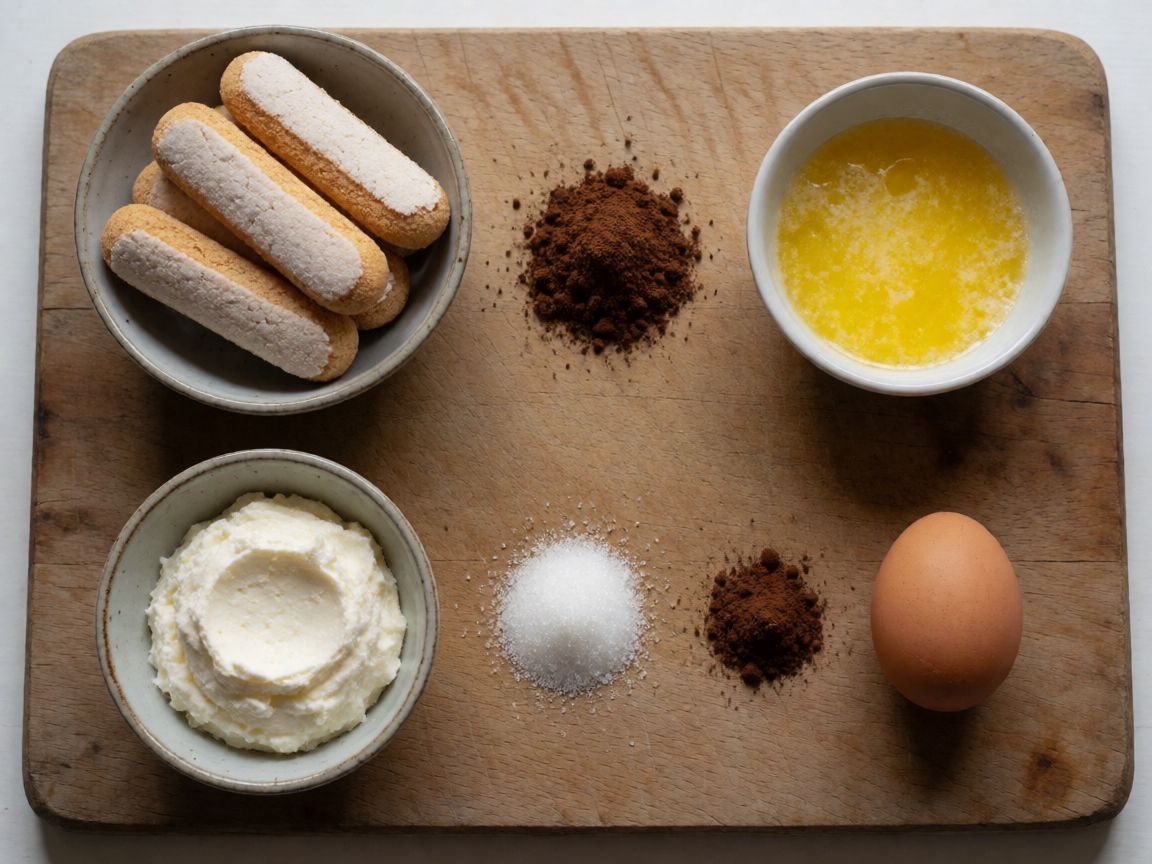
- 400 g Sponge finger biscuits
- 150 g Butter melted
- 30 g Strong brewed coffee
- 250 g Mascarpone
- 130 g Sugar
- 1 pcs Egg
- 50 g Strong brewed coffee






Steps
Blitz the sponge finger biscuits in a blender, add the melted butter and coffee, then work the mixture by hand for a few minutes until crumbly.
Press two-thirds of the crumbly mixture into a 22cm springform tin, smoothing it out to form a base and sides.
Put the tin in the fridge.
30 minBeat the mascarpone with an electric mixer, add the sugar, beat in the egg, pour in the coffee and mix until smooth.
Spread the mascarpone cream over the base and smooth with a spatula.
Scatter the remaining crumbly mixture over the top and bake in a preheated fan oven at 170°C.
38 minLet the pie cool before removing it from the tin and serving.
Call this what it is: a cheesecake wearing a tiramisu's clothes. The flavour — coffee, mascarpone, sponge finger — comes from one dessert; the method — crumb base, custard filling, oven — comes from the other. What decides whether it holds together as a slice, not a ladle of mush, is the ratio of crumb to custard and how gently that custard sets.
The crumb isn't just crushed biscuit — it's biscuit, butter and coffee worked by hand until the fat coats every crumb like wet sand. That's the whole trick of a pressable base: fat, not sugar, is the glue. Thirty minutes in the fridge afterwards isn't dead time, it's the butter going from soft to solid again, so the shell holds its shape when you pour liquid custard into it instead of sliding down the sides of the tin.
The filling has only one egg to 250g of mascarpone — barely enough to set it at all. That's deliberate: this isn't a New York cheesecake, dense and sliceable cold, it's something closer to a baked custard that firms as it cools. At 170°C in a fan oven, gentle enough that the egg thickens without scrambling, you're watching for a middle that still gives like a set jelly when the tin is nudged — not a wave of liquid, but not a drum-skin either. If it's gone solid and risen at the edges before that point, the oven's run hotter than the dial says; every fan oven does its own thing, and this is where you trust your eyes over the timer.
Sponge fingers (savoiardi) are chosen because they're dry and low in fat themselves — blitzed, they turn to a fine crumb that drinks the butter and coffee evenly rather than clumping. Digestives will do the job structurally, but they bring their own wheaty-malty flavour that fights the coffee instead of carrying it; if that's what's in the cupboard, use them and just accept a different pie. The criterion for the substitute is simple: a biscuit dry enough to turn to sand in a blender, not one so sugary or fatty it turns to paste.
The butter is there to bind, not to flavour — melted so it coats every crumb rather than sitting in lumps. Any fat that's solid when cold and liquid when warm does this job; butter just tastes like a kitchen should. Margarine works at a pinch but sets softer, so expect a shell with a looser bite.
Mascarpone is a fresh, very high-fat soft cheese with almost no tang of its own — that neutrality is exactly why tiramisu recipes lean on coffee and sugar to do the talking. If you can't get it, cream cheese loosened with a spoon of double cream gets you close in texture, though it brings a tang mascarpone doesn't have, so the coffee will have to fight a little harder.
The coffee does two separate jobs here and that's why it's split: thirty grams go into the crumb for flavour and a touch of moisture so the base presses rather than crumbles apart; fifty grams go into the custard, loosening it just enough to beat smooth without drowning the egg's ability to set it. Use it strong and already cold, brewed well ahead rather than rushed hot into the mixer — hot liquid straight into egg and sugar is how you get a scrambled streak instead of a custard.
The egg and sugar aren't there to sweeten in the obvious sense — 130g against 250g mascarpone is restrained for a dessert this size — they're there to give the custard just enough backbone to hold a slice shape once it's cool. This is also why the pie needs patience after the oven: cut it warm and the filling, barely set to begin with, will slump rather than stand. Let it cool fully, in the tin, before you even think about the springform clip.
Twenty-two centimetres and six people is a fair match — the pie is rich enough that a wedge goes a long way, closer to how you'd portion a dense chocolate tart than a sponge cake. There's no water bath here, no foil-wrapped tin sitting in a roasting tray — this is a domestic oven and a springform tin, and the dish is built to forgive that. The crumb lid on top isn't decoration either: it gives you a dry, toasted contrast against the soft custard underneath, and it hides the small cracks a one-egg custard is prone to as it cools — no shame in that, cheesecakes crack, that's not a verdict on your cooking, it's just egg protein pulling tight as it chills.