
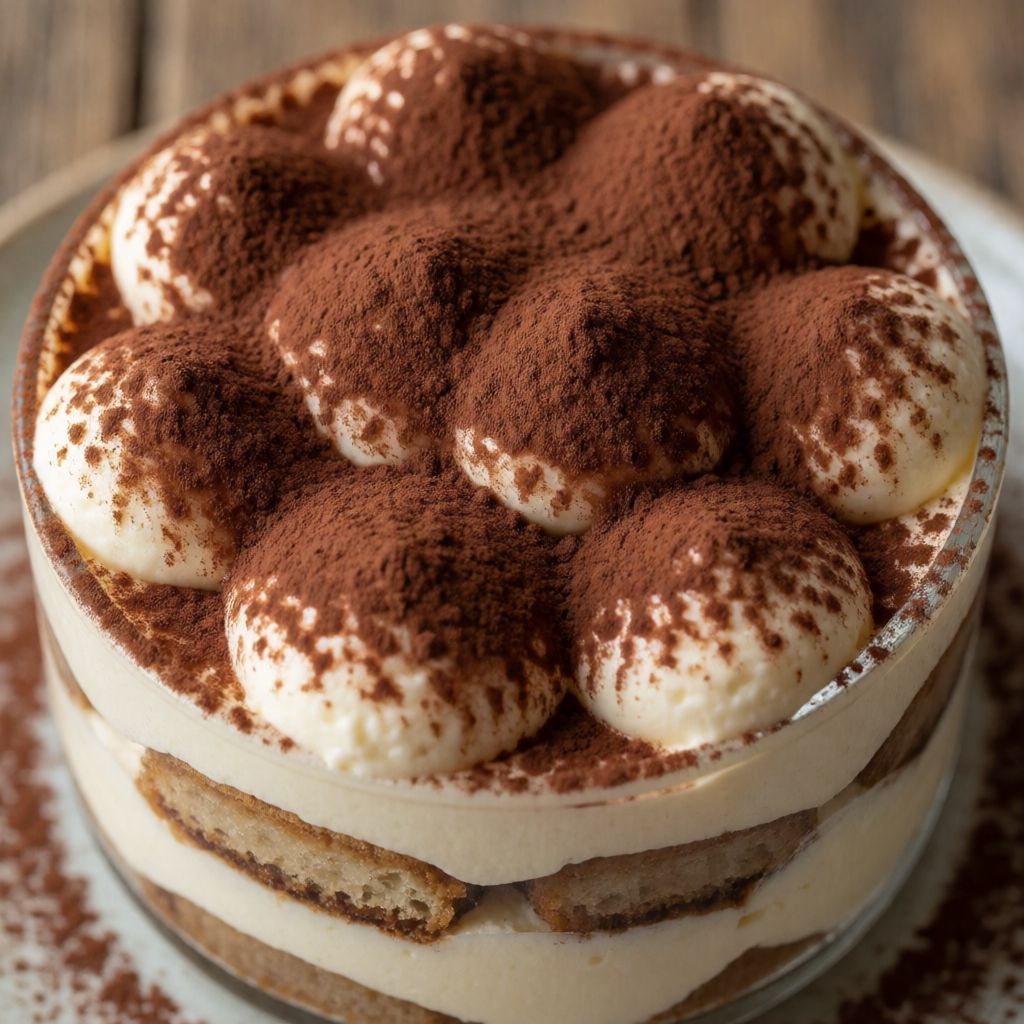
 AI photo
Eggless Tiramisu
A classic Italian dessert made without eggs, layering mascarpone cream with coffee-soaked sponge fingers and cocoa.
Labels are worked out automatically from the ingredients and can be wrong. Check the packaging if it matters to you.
Ingredients
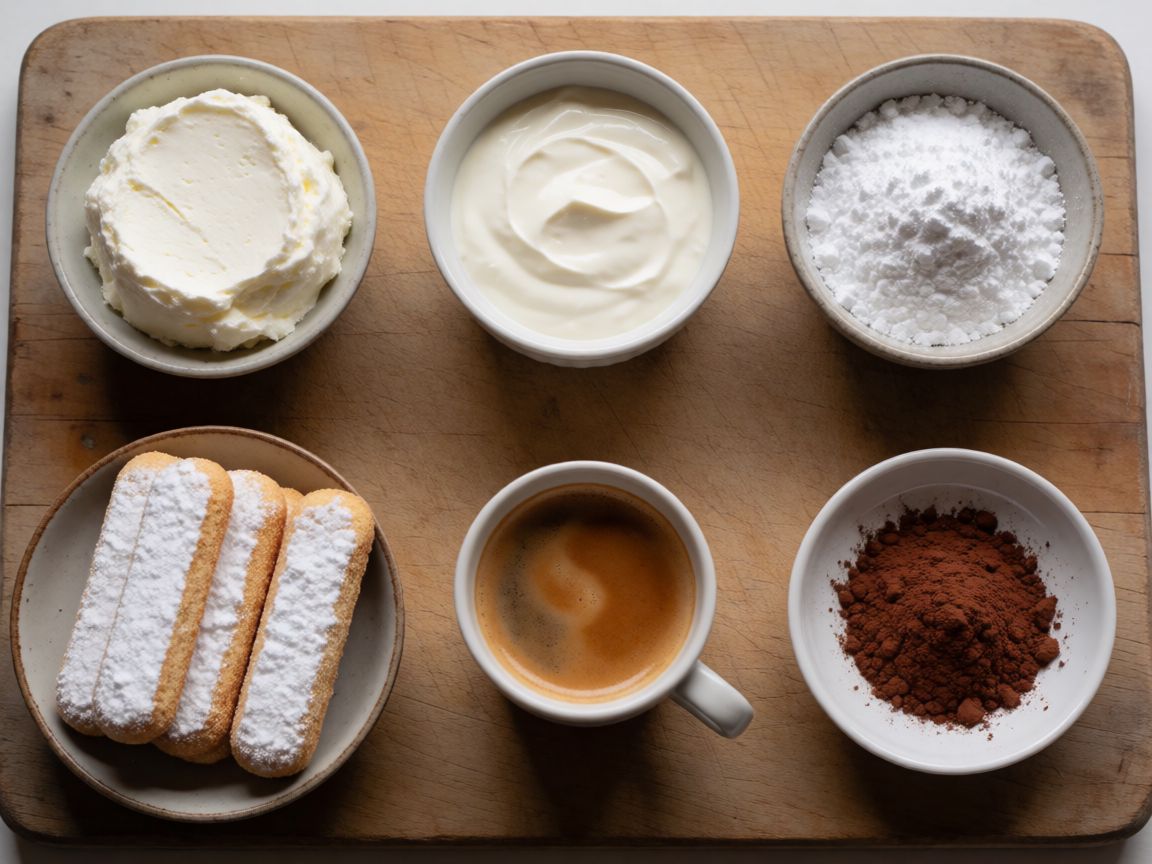
- 250 g Mascarpone
- 200 ml Double cream plain double cream works well here
- 50 g Icing sugar
- Savoiardi biscuits (sponge fingers) to taste
- Coffee to taste
- Cocoa powder to taste



Steps
Brew the coffee without sugar, pour it into a bowl and leave to cool.
Whip the cream with the icing sugar until thick and billowy.
Soften the mascarpone, then fold in the whipped cream gently with a spatula.
Spoon a little of the cream mixture into the bottom of individual serving glasses (or a baking dish).
Quickly dip the savoiardi biscuits into the coffee and arrange the first layer.
Add another layer of cream and keep alternating biscuits and cream.
Finish with a layer of cream, smoothing the top neatly with the back of a spoon.
Chill the tiramisu in the fridge until ready to serve.
Just before serving, dust the top with cocoa powder.
This is tiramisu built on two whisked fats instead of whisked eggs. Classic tiramisu gets its lightness from egg whites and its richness from egg yolk beaten with sugar — the eggless version does both jobs with cream: whipped cream carries the air, mascarpone carries the richness. You lose the faint eggy note raw yolk gives, you gain a dessert you can hand to anyone at the table without wondering who's pregnant or elderly in the room.
Some say tiramisu without egg "isn't real tiramisu." No — the egg there is doing a job, not supplying a taste you'd miss. Zabaglione exists to aerate and bind; whipped cream does the same work with less drama and less risk, since raw egg is the one part of the original that can actually make someone ill.
What decides whether it works is how long the biscuit sits in the coffee, and how stiff you whip the cream. Dunk too long and the sponge finger turns to paste and the layers blur into one soft mush — a quick dip, in and out, wets the surface and leaves the crumb to finish softening slowly, in the fridge, over hours, not seconds. Whip the cream too far and when you later fold in mascarpone the fats fight each other and the texture goes grainy instead of silky — you want cream that holds a soft shape when the whisk comes out, not cream standing in rigid peaks.
There's no cooking here, which is why the method says zero minutes — the fridge does the work a stove would do in another dessert. That's the ingredient most people skip: patience. Rush the chill and you get something that tastes fine in theory and slides apart on the spoon.
Four portions, and whether you set it in a shared dish or four small glasses changes the mechanism, not just the look. In one dish, the middle layer is insulated by cream all around it, so it needs longer to actually chill and set through; in individual glasses, the cold reaches every layer evenly and faster, because there's less mass between the fridge air and the biscuit. Worth knowing, too: "tiramisù" means "pick me up" — coffee and sugar stacked for a jolt of energy, nothing mystical about the name at all.
Mascarpone is just cream that's been cultured and thickened — very high fat, no fibre of its own holding it together, so straight from the fridge it's a stiff, cold paste. Fold that cold and stiff into airy whipped cream and you get lumps — little islands of mascarpone sitting in thin cream, because the two won't merge without you crushing the air out of the cream trying to force it. Bring the mascarpone to a soft, spoonable state first, or work it loose with a spoon, so it folds in rather than has to be beaten in. No mascarpone to hand — any full-fat soft cheese with nothing added for texture will stand in, loosened with an extra spoonful of cream, because the whole job is a high enough fat content to carry richness without weeping when it's chilled.
Double cream, at around 48% fat, is the stand-in for egg white here — it's what holds the air. Whip it only until it holds a soft shape when you lift the whisk out; past that point the fat globules clump, and once you fold in more fat as mascarpone, it turns grainy instead of smooth, and no amount of folding brings it back. A lower-fat cream will whip but hold less air and sag faster once the mascarpone's weight goes in — usable, just softer in the end. Icing sugar rather than caster, because it's ground fine enough with a touch of starch to dissolve into cold cream without leaving grit behind.
No sugar in the coffee, because the sweetness is already sitting in the cream — sweeten both and the whole thing tips sugary instead of balanced; the coffee's bitterness is doing real work cutting through all that fat. It needs to be stronger than you'd drink with your tea, because the biscuit only gets a couple of seconds' contact and has to carry the whole flavour of coffee into every layer from that brief dip. A cafetière pushed a bit harder than usual, or a couple of shots of strong instant, both do the job — no machine required.
Savoiardi are dry and open-structured on purpose, and that dryness is what lets them take up liquid fast without collapsing — it's stored shelf life, not a flaw to work around. Any genuinely dry, open-crumbed sponge biscuit will substitute; a soft fresh sponge cake won't, because it's already wet enough to fall apart the moment coffee touches it, with no dry structure left to hold its shape through the dip.
Dust the cocoa only right before serving — cocoa pulls moisture off the cream surface, and dusted too early it goes from a dry dark layer to a damp smear by the time you cut in. The hours in the fridge aren't dead time either: that's where coffee actually moves through the biscuit until it's evenly soft all the way through, and where the cream firms enough to hold a cut edge instead of sliding sideways on the spoon.