
 AI photo
Tortellini in Cheese Sauce
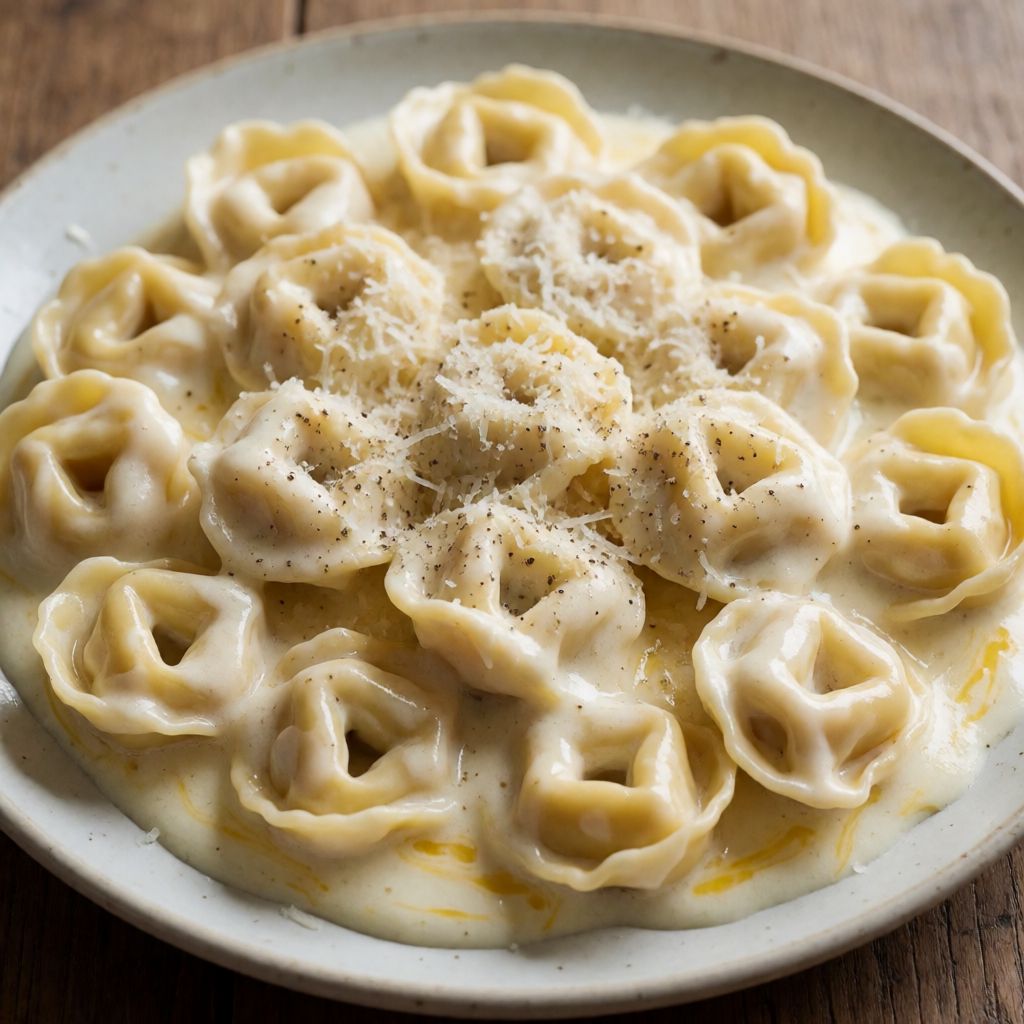
Creamy tortellini in a three-cheese sauce, finished under high heat for a golden crust.
Labels are worked out automatically from the ingredients and can be wrong. Check the packaging if it matters to you.
Ingredients








Steps
Bring salted water to the boil and cook the tortellini.
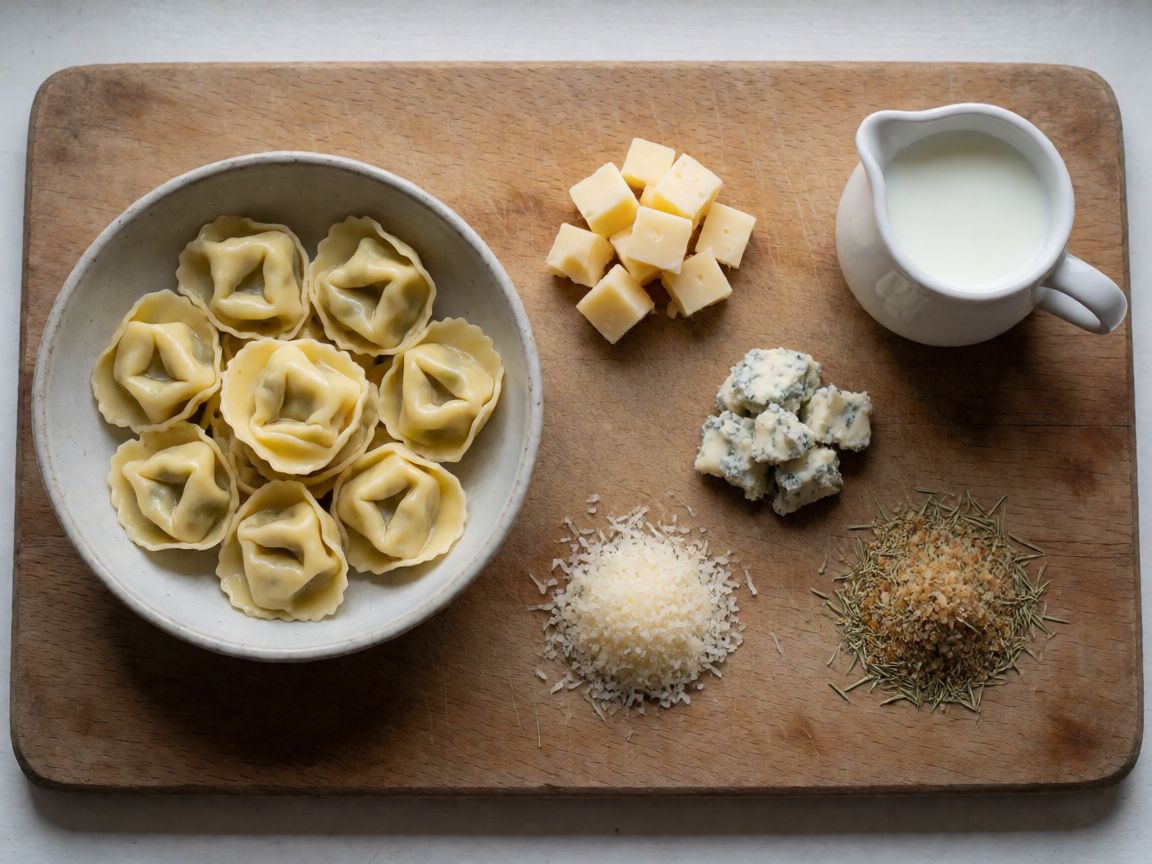
Pour the milk into a frying pan, add the diced Gorgonzola, Fontina and Emmental, and melt over low heat until smooth.
Transfer the cooked tortellini into the pan with the sauce and fry briefly, stirring gently.
Generously sprinkle with grated Parmesan and a few of the rosemary breadcrumbs, then drizzle with olive oil.
Place the pan in an oven preheated to 250°C (its highest setting) for 2 minutes, until the tortellini turn golden.
2 minDivide between plates and serve straight away.
What was changed
The original recipe only said to use the oven's 'maximum temperature' without a number, so in this was set to 250°C, a typical highest setting for a home oven.
Forget that this is "pasta with cheese sauce" — it's the other way round. You're making a cheese sauce, and tortellini happens to be the vessel that carries it to your mouth without a spoon. The sauce is the whole argument of the dish: four cheeses with different fat and moisture, melted into milk until they behave as one liquid instead of four stubborn solids plus a puddle of grease.
Two heats decide whether it works, and they're opposites on purpose. On the hob, low and patient — because cheese protein and cheese fat are not friends under pressure, and if you rush them with high heat they separate: fat floats off, protein tightens into little rubbery beads, and what you get is a split, greasy mess instead of a sauce. That's the actual reason "low heat" appears here, not ritual, not gentleness for its own sake — it's preventing a specific failure.
Then, right at the end, the opposite: a short, violent blast of top heat in the oven, hot enough to brown the surface before the pasta underneath has time to dry out. This isn't cooking the tortellini further — they're already done. It's browning, nothing more: sugars and proteins on the crumb and the Parmesan catching colour and smell in a couple of minutes, no longer, because past that point the sauce below starts to split all over again from the heat soaking through.
Tortellini: cook them to tender, not to the clock on the bag — fresh ones go soft fast, frozen ones take longer, and the only honest test is biting one, not counting minutes. The timing on a packet is a floor, never a verdict.
The cheeses aren't interchangeable, because they're not doing the same job. Emmental and Fontina are proper Alpine melters — enough moisture and fat, young unaggressive protein, so they slide into liquid without a fight. Gorgonzola Dolce is soft and wet by nature; it brings the tang and most of the salt, and melts almost on its own. Parmesan is the odd one out — hard, dry, aged for months, its protein locked tight. It will never melt into a smooth sauce; thrown in with the others it just goes stringy and sulks. That's why it's grated and added late, as a topping, not diced in with the rest. If you've only got one good melting cheese in the fridge, use more of it and less of everything else — the ratio matters more than having all four.
Milk is there to carry the fat and keep the cheese proteins from clumping into their own separate islands — think of it as the thing that makes a sauce out of what would otherwise just be melted cheese sitting in its own grease. If you're short, a splash of the tortellini's cooking water does a similar job and adds a bit of starch besides, which helps the sauce cling rather than pool. Cream works too, but you'll get something richer and heavier, which isn't always the point.
The pinch of salt is almost a trap — three salty cheeses are already doing most of that work, so the salt here is really for the pasta water, where it belongs, not an extra seasoning on top of an already assertive sauce. Taste before you reach for more.
Rosemary breadcrumbs aren't decoration. Under all that soft, melting richness you need one thing with bite, and dry crumb under a hot oven does that — fresh, damp breadcrumb would just dissolve into the sauce and vanish, so dry ones, properly dry, not merely stale. The rosemary's resin cuts through the fat the way a squeeze of lemon would, except it survives the oven's heat without going bitter.
One honest domestic note: this dish wants a pan that can go into an oven at its hottest setting, and plenty of ordinary frying pans have a handle that will melt, scorch your hand, or simply isn't rated for it. If yours isn't oven-safe, tip everything into a gratin dish before the broiler stage — cheaper than replacing a pan, and nobody at the table will know the difference once it's browned and in front of them.