
 AI photo
Tuscan Chickpea Cecina
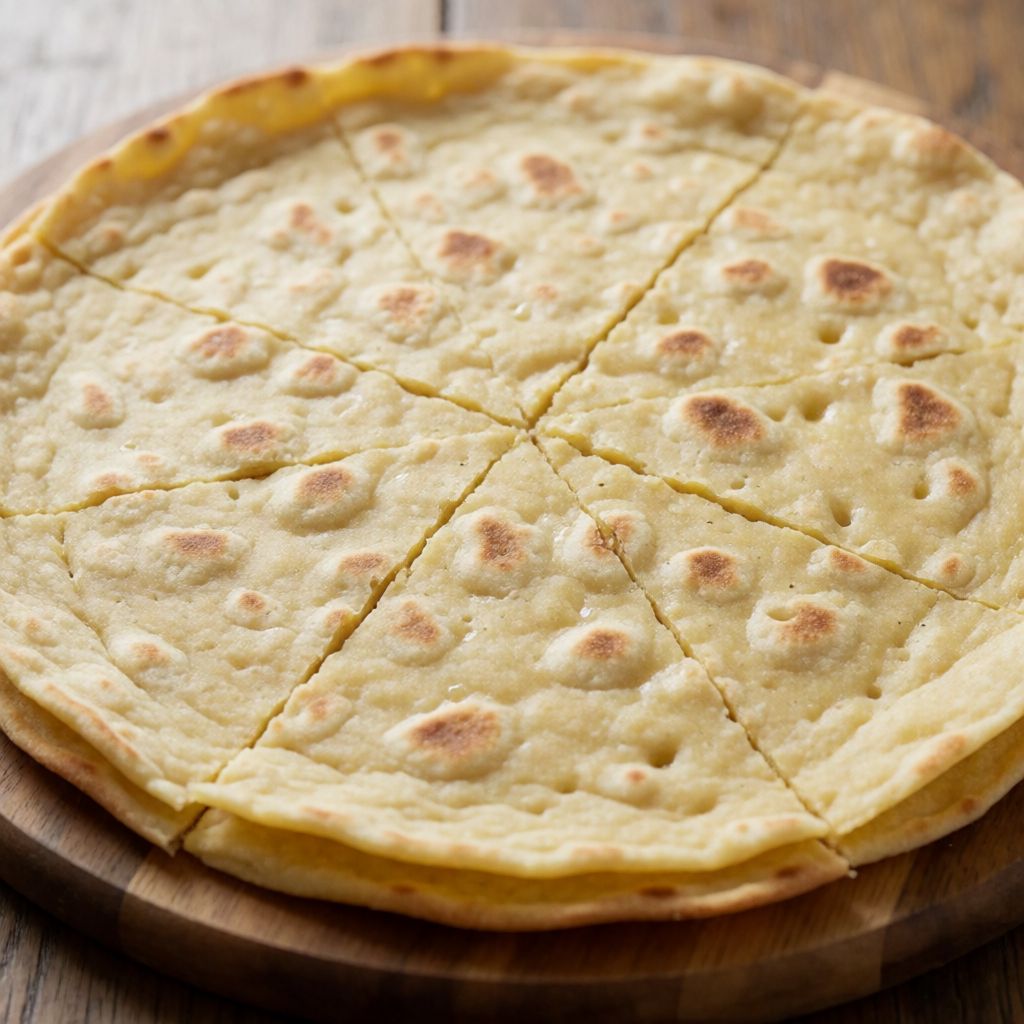
A simple Tuscan chickpea flour cecina, baked until crisp on top and tender inside, traditionally served with red wine.
Labels are worked out automatically from the ingredients and can be wrong. Check the packaging if it matters to you.
Ingredients
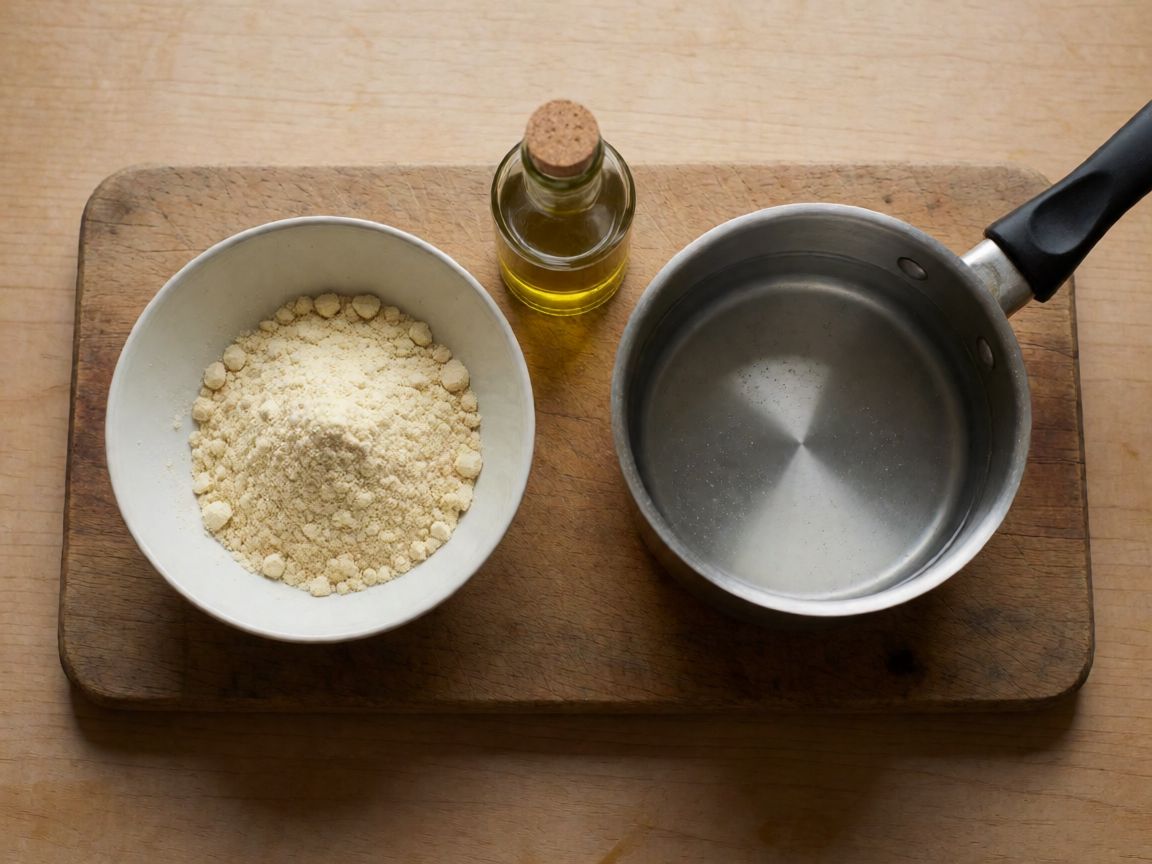
- 1.5 l Water
- 400 g Chickpea flour
- 4 tbsp Olive oil
- 1 pinch Salt




Steps
Tip the chickpea flour into a large bowl and make a well in the centre.
Gradually pour the water into the well, stirring slowly and drawing in the flour from the edges.
Mix the batter thoroughly, add the salt and leave it to rest in the bowl.
If foam forms on the surface, skim it off with a spoon.
Pour the olive oil into the batter and stir well.
Grease a baking tray with olive oil and pour in the batter in an even layer about 5 mm thick.
Put the tray in an oven preheated to 250°C and bake for 18–20 minutes.
20 minAfter 45 minutes the cecina will be ready — crisp on top and tender inside.
Serve the cecina warm with a glass of red wine.
This is not bread, whatever it looks like once it's out of the oven. Cecina — the Tuscan cousin of Ligurian farinata — is a batter of chickpea flour and water, poured thin and baked hot until the top sets into a shell and the inside stays soft, almost custardy. No yeast, no gluten, nothing to make it rise. It gets its structure from heat alone, the way a pancake does, not the way a loaf does. Some call it a flatbread — no, because there's nothing in it that can trap gas or hold a crumb. It's a poured thing, not a kneaded one.
What decides whether it works is three things, and none of them is a stopwatch. First, the ratio of water to flour — here it's roughly four parts water to one part flour by weight, thin enough to pour like a crepe batter, because chickpea flour without gluten needs that slack to hydrate properly instead of clumping into grit. Second, the thickness of the layer on the tray — about 5 mm, no more, because a thicker pool never gets through to the middle before the top scorches; a thin one cooks almost all at once, crisping at the edges while the centre just sets. Third, the heat itself — this wants a screaming-hot oven, because cecina is really a race between the surface browning and the middle drying out, and only a fierce, fast heat lets the surface win that race without the middle losing its own.
Chickpea flour is the whole dish, so buy it fresh and buy it specifically — it goes rancid faster than wheat flour because of the fat it carries, and a stale bag tastes faintly bitter under the nuttiness you actually want. There's no honest substitute: wheat flour would need gluten development and a completely different water ratio, and you'd end up with something closer to a crepe than a cecina. If chickpea flour isn't on your shelf, it's in the world-food aisle or any shop selling Indian ingredients as gram flour — same thing, same mechanism.
Water is doing more than dissolving — it's the thing that turns a dry powder into a pourable batter that can spread 5 mm across a tray on its own, without you pushing it with a spatula. Too little and it won't spread, it'll sit in a stubborn mound and bake unevenly; too much and it never sets, it stays wet in the middle under a dry crust. The 1.5 litres to 400 g here gives you something between single and double cream — if your batter pours thicker than that, loosen it; thinner, and it won't hold a layer.
Olive oil does two separate jobs and both matter. The oil stirred into the batter carries flavour through the whole thing and helps the surface crisp rather than just dry out — chickpea flour alone bakes almost leathery, the oil is what gives it that blistered, almost fried character on top. The oil on the tray is a release agent and a contact fryer in miniature: without it the bottom sticks and tears when you try to lift the cecina, and you lose the crisp underside entirely. Use an oil with real character here, because this dish has almost no other seasoning to carry it — a flavourless oil leaves it bland. If you must substitute, any oil that can take high, fast heat without smoking will do the structural job, but you'll be baking something plainer.
Salt is just salt — a pinch, dissolved into the batter rather than sprinkled on top, so it's even through the whole thing rather than sitting in patches. Any table or fine sea salt behaves the same here; this isn't a dish where the mineral character of a fancy salt will come through.
For the tray: you almost certainly already own the right thing if you do a Sunday roast — a solid metal roasting tin with a flat base is exactly what this wants, something that won't warp at 250°C and that distributes heat evenly rather than scorching one corner. Be honest with your oven, though: many British domestic ovens run cooler than their dial says, especially if it's not a commercial-grade or a proper pizza oven, and fan ovens bake faster and drier than static ones. So treat 250°C and the given minutes as where to start, not where to stop watching — the real sign of done is the top turning from pale batter-yellow to gold with dark, blistered leopard-spots, and the edges pulling cleanly away from the tray rather than clinging wet.
There's a story behind chickpea batters like this one, and it's economics, not folklore: chickpeas were the cheap flour of the Mediterranean coast, grown where wheat struggled, and a thin batter baked fast in a wood-fired oven used almost no fuel and no skill beyond pouring straight. Ligurian legend even has it born by accident, from chickpea sacks soaked by seawater on a storm-battered ship and baked by hungry sailors in the sun on their shields — a good story, whether or not it's exactly true, because it explains why this dish asks for almost nothing and almost no patience except the one kind that actually matters: letting the batter rest long enough to hydrate before it ever sees heat.