
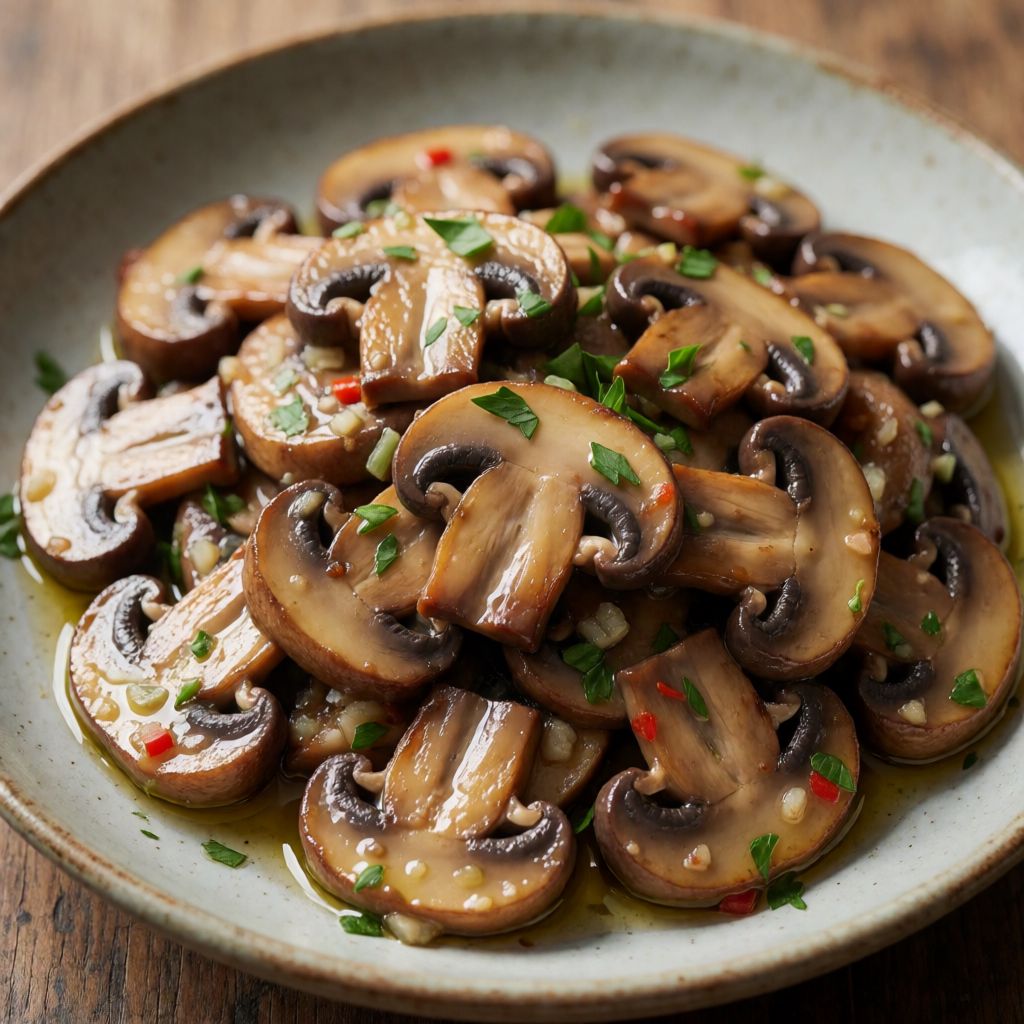
 AI photo
Mushrooms Trifolati
A quick Italian-style dish of mushrooms sautéed with garlic, olive oil and parsley.
Labels are worked out automatically from the ingredients and can be wrong. Check the packaging if it matters to you.
Ingredients




Steps
Clean the mushrooms with a brush, wipe with a damp cloth and slice them about 3 millimetres thick.
In a non-stick pan, fry a clove of garlic in olive oil until golden.
Remove the garlic from the pan and add the mushrooms.
Cover with a lid and cook over low heat, stirring occasionally.
8 minHalfway through cooking add salt to taste, finely chopped parsley and chilli pepper if desired.
If desired, add a little more fresh parsley.
Serve immediately.
Trifolati looks simple — mushrooms, garlic, oil, parsley — but the whole dish stands or falls on one thing: how you handle the water hiding inside the mushroom. A button mushroom is close to ninety percent water. Fry it wrong and that water floods the pan in the first thirty seconds, and instead of frying you get boiling — grey, rubbery, flavourless discs sitting in their own runoff. Fry it right and the water comes out slowly, reduces, and what's left behind concentrates and browns. Same ingredients, two completely different dishes.
The name tells you where this came from. "Trifolato" means "in the manner of truffle" — tartufo. Truffle was too expensive and too fragile to do much to: you shaved it thin, warmed it gently in oil with garlic and parsley, and let it speak. When truffle wasn't on the table, cooks kept the method and pointed it at the mushroom instead. So the dish you're making is a technique wearing the ghost of a luxury ingredient's name — not magic, just an old thrift.
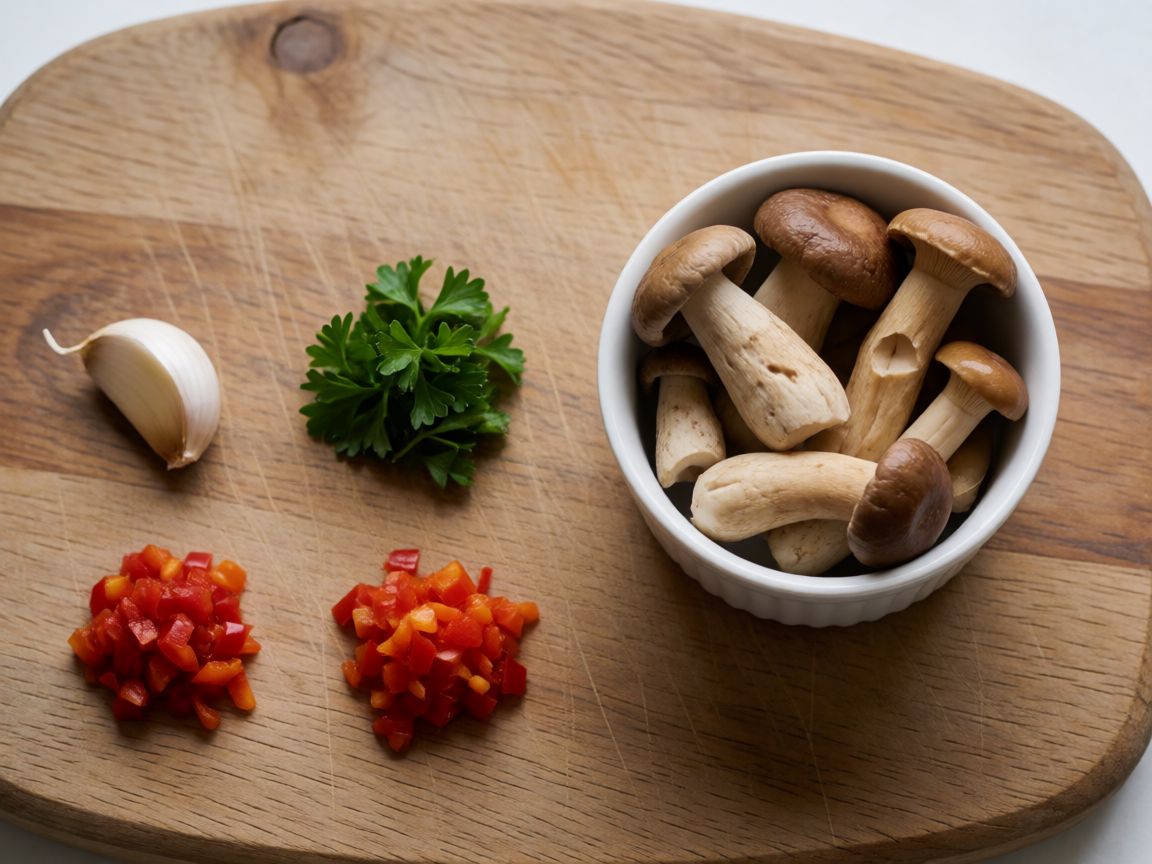
Mushrooms — button is the honest, everyday choice, and the one you'll find pre-packed in most supermarkets. If you want more flavour for the same fuss, chestnut mushrooms (the brown ones, same shape, closed cap) have a deeper, slightly nutty taste and hold their shape a little better under heat — a straight swap, no change to the method. Porcini or other wild mushrooms are the dish in its original, more expensive clothes: more aroma, less water, which actually makes the pan stage faster and more forgiving. Don't buy pre-sliced punnets if you can help it — you lose control of the thickness, and thickness is the one variable this whole dish rides on.
Cleaning: a brush and a damp cloth, not a soak. The old warning that "mushrooms are sponges and must never touch water" is overstated — a quick rinse won't ruin them — but a soak will, because now you've added water to a vegetable whose whole cooking problem is already too much internal water. Wipe them, don't drown them, and you've removed one more way for the pan to end up simmering instead of frying.
Garlic: one clove, bruised or sliced, fried until gold and pulled back out. If you leave it in, by the time the mushrooms are done it's been in hot oil for the better part of ten minutes and gone from gold to bitter-brown. You're not trying to eat the garlic here — you're perfuming the fat it sits in, which then touches every slice of mushroom in the pan.
Olive oil is traditional because this is an Italian dish and olive oil is what an Italian kitchen reaches for, nothing more mystical than that. The actual requirement is any oil with no smell of its own that can take the heat of a quick fry — a light olive oil, a sunflower oil, a plain vegetable oil will all do the job of carrying heat and garlic to the mushroom. A strongly flavoured extra-virgin will fight the mushroom rather than support it; save that one for drizzling raw, at the end, if you want a last layer of flavour.
Salt goes in halfway through, not at the start, for the same reason the lid matters: salt pulls water out of a cell by osmosis, fast, on contact. Salt the mushrooms before they've started sweating on their own and you force the issue early, flooding the pan before anything has had a chance to take colour. Wait until they're already releasing moisture, then salt, and you're working with the mushroom's own timing instead of against it.
Parsley in two moves — once stirred through partway, once scattered fresh at the end. Cooked parsley goes soft and a bit grassy-muted; raw parsley is sharp and bright. Adding it twice means you get both, instead of one flat note the whole way through. Chilli, if you use it, is there for warmth on the tongue, nothing structural — flakes stirred in with the parsley, or a thin ring of fresh chilli if that's what's in the cupboard. And patience belongs on this ingredient list too: rushing the lid-off stage to force colour before the water's gone is the single fastest way to end up with mushrooms that are both wet and tough at once.