
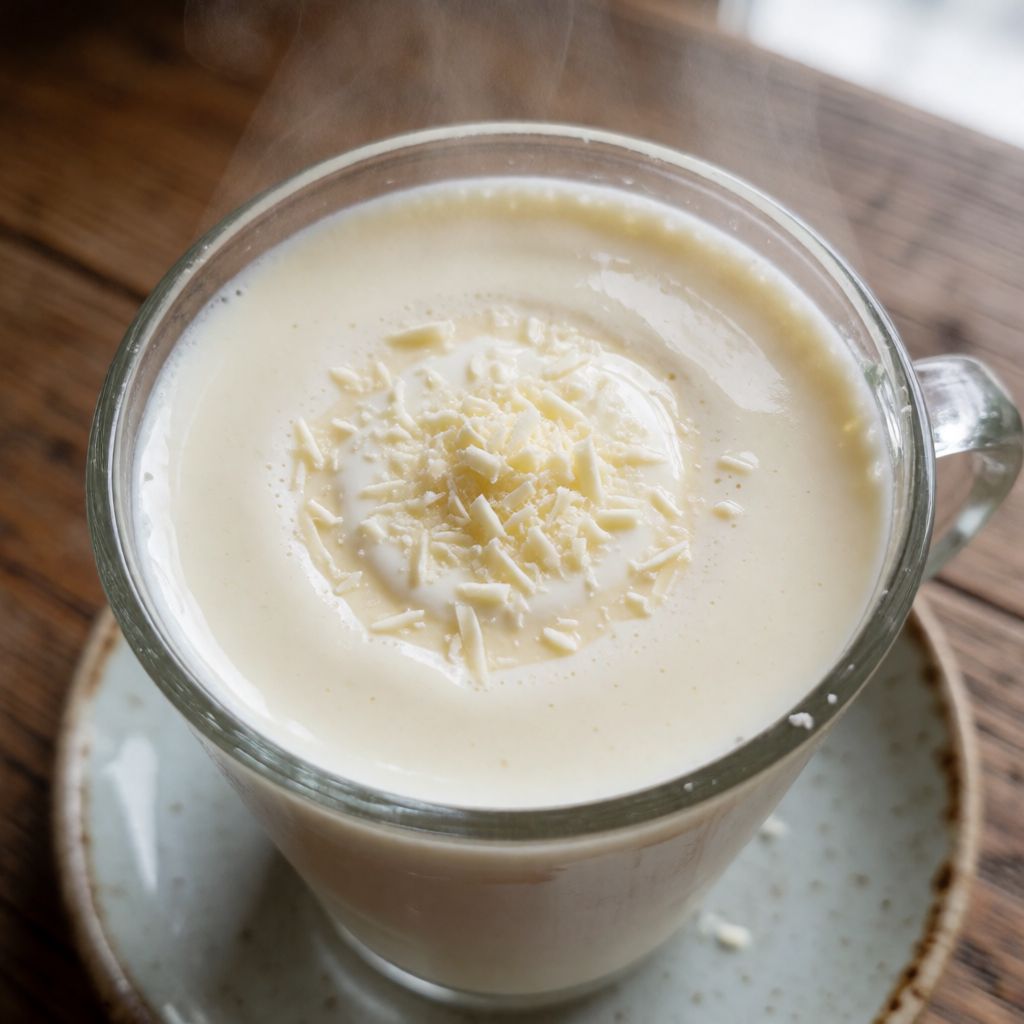
 AI photo
White Hot Chocolate
A warm, creamy drink made by melting white chocolate into milk and lightly thickening it with starch.
Labels are worked out automatically from the ingredients and can be wrong. Check the packaging if it matters to you.
Ingredients
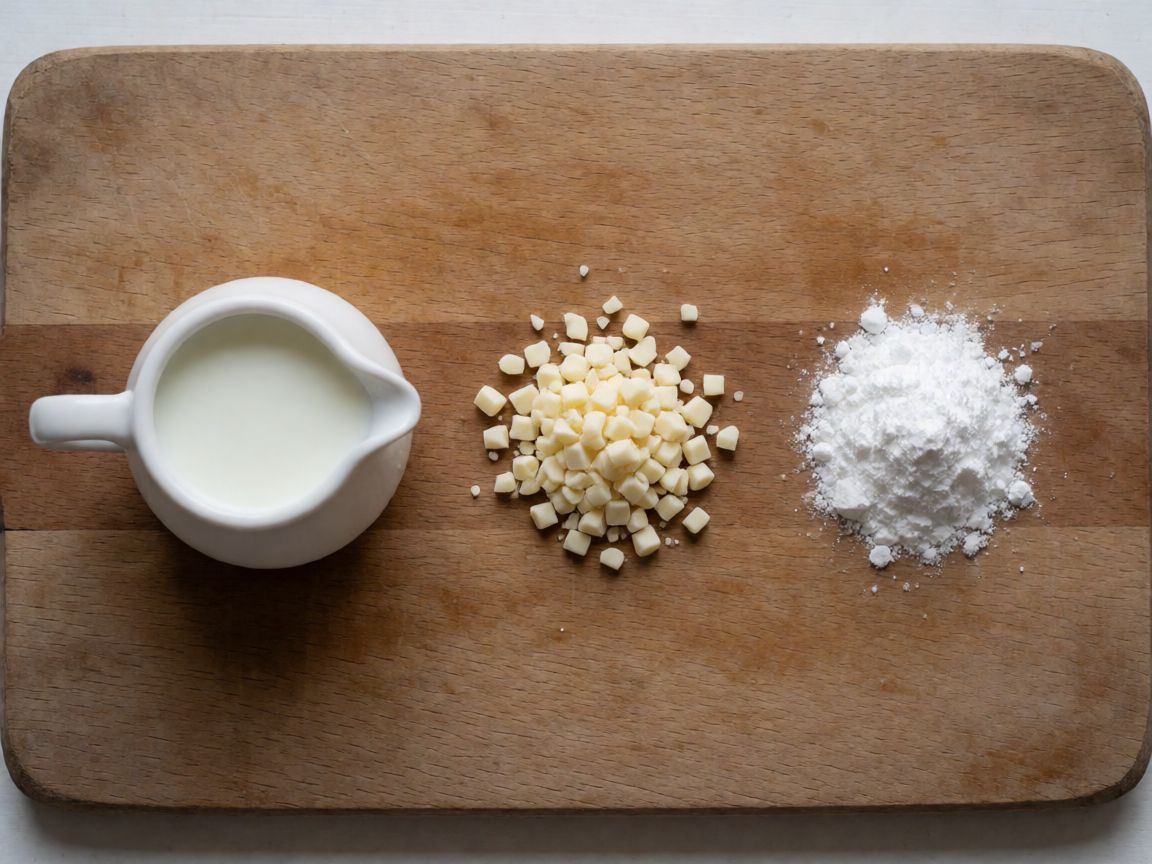
- 250 ml Milk
- 80 g White chocolate chopped into small pieces
- 10 g Potato starch


Steps
Pour the milk into a heavy-bottomed saucepan and warm it gently over low heat.
3 minAdd the chopped white chocolate and whisk until it melts completely.
4 minStir in the potato starch and keep stirring until the mixture thickens.
2 minPour the hot chocolate into a cup and serve immediately.
1 min
Call it what it is: warm milk thickened into a pourable custard, flavoured with white chocolate. White chocolate isn't chocolate in the strict sense — no cocoa solids, just cocoa butter, sugar, milk powder. That's why it stays pale, and why on its own it can't do what this recipe asks of it. The body of the drink comes from the potato starch gelatinising in the heat, not from the chocolate.
Some say just melt chocolate into milk and that's hot chocolate — no, because without the starch you get sweetened milk, thin, running straight off the spoon. The chocolate gives flavour and a bit of fat; the thickness is a separate job, and it's the starch's.
What decides whether this works is heat discipline, nothing else. White chocolate scorches at a lower point than dark chocolate does — it's mostly sugar and milk solids, both of which burn easily, and there's no cocoa mass to buffer them the way there is in a dark bar. Push the heat and the fat splits away from the rest: you end up with grainy flecks floating in thin milk instead of one smooth drink. Low heat and constant whisking isn't fussiness, it's the only thing standing between you and a scorched pan and a split mixture.
Doneness is by feel, not by the clock. When the mixture coats the back of a spoon the way a custard does, and the whisk leaves a trail that holds for a second before it closes over, it's ready. The ten minutes on the recipe is a floor — it tells you the minimum patience required, not a deadline to hit.
Milk: use full-fat, the same jug you'd pour into your tea. The fat carries flavour and gives the starch something to thicken around; skimmed milk makes the drink thinner and the starch has to work harder for a worse result. This is a one-mug recipe, enough for one person, not something you scale up for a table without rethinking the pan.
White chocolate: understand it first as economics, not confectionery magic. Cocoa butter was always the valuable half of the cocoa bean. Dark chocolate uses the solids as well as the butter; white chocolate is a way of using the butter on its own without wasting it — a by-product turned into a product. There's no old tradition behind "white hot chocolate": it's a modern drink built to use a modern ingredient, nothing to be solemn about. When buying it, check the fat on the label — cocoa butter should be the only fat listed. A bar padded with "vegetable fat" won't melt evenly; it splits and turns grainy no matter how gently you heat it, and that fault gets blamed on the cook when it's really the bar.
Potato starch: its only job is to thicken without adding its own taste. Any starch that gelatinises under heat and stays flavourless will do — cornstarch, arrowroot, rice starch, take your pick. Potato starch suits a stovetop mug like this one because it sets at a gentler heat than cornstarch does, so the pan can stay low the whole time and you never need the hard simmer that would scorch the chocolate you've only just coaxed into melting.
Why you keep whisking the entire time — it's stopping two separate failures, not one. Stop while the chocolate is melting, and one patch of the pan running hotter than the rest will split the fat from the sugar and milk solids before you notice. Stop the moment the starch goes in, and it hits a hot spot and sets into a lump before it's had the chance to spread through the whole cupful. A heavy-bottomed pan earns its keep here because it spreads heat sideways instead of letting one ring under the flame do all the work — ordinary hobs, gas or electric, are less even than they feel, and a thin pan exposes exactly that.
Patience is the real ingredient in this list, even though it only costs you ten minutes. Rushing the melt — turning the heat up because nothing seems to be happening yet — is the single most common way this goes wrong.
Drink it the moment it's poured. The starch keeps setting as it cools, and a skin forms on top within a minute or two, much the same as on a mug of milky tea left standing too long. If you want it pourable for longer, you're arguing with the chemistry, not improving the recipe.