
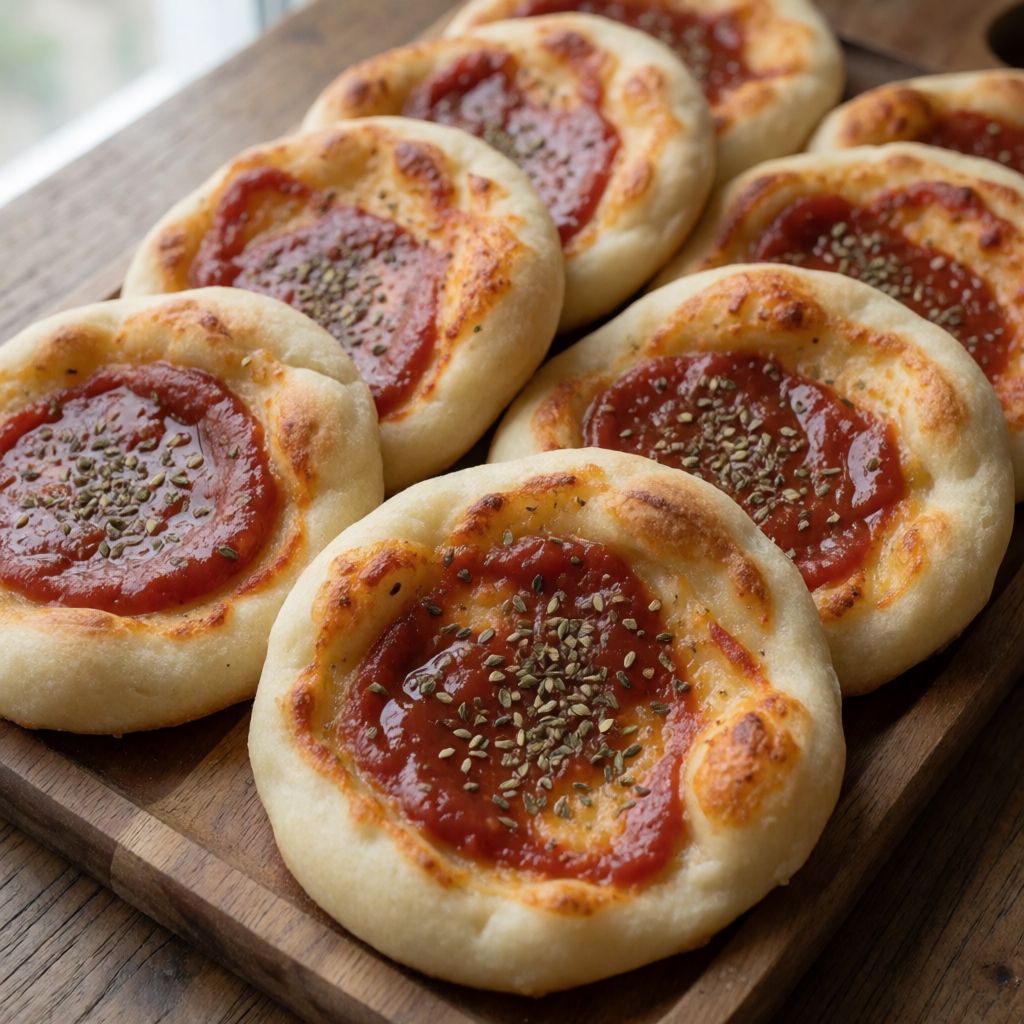
 AI photo
Yogurt Dough Pizzettes
Soft mini pizza bases made from a quick yogurt dough, topped with tomato, oregano and olive oil.
Labels are worked out automatically from the ingredients and can be wrong. Check the packaging if it matters to you.
Ingredients
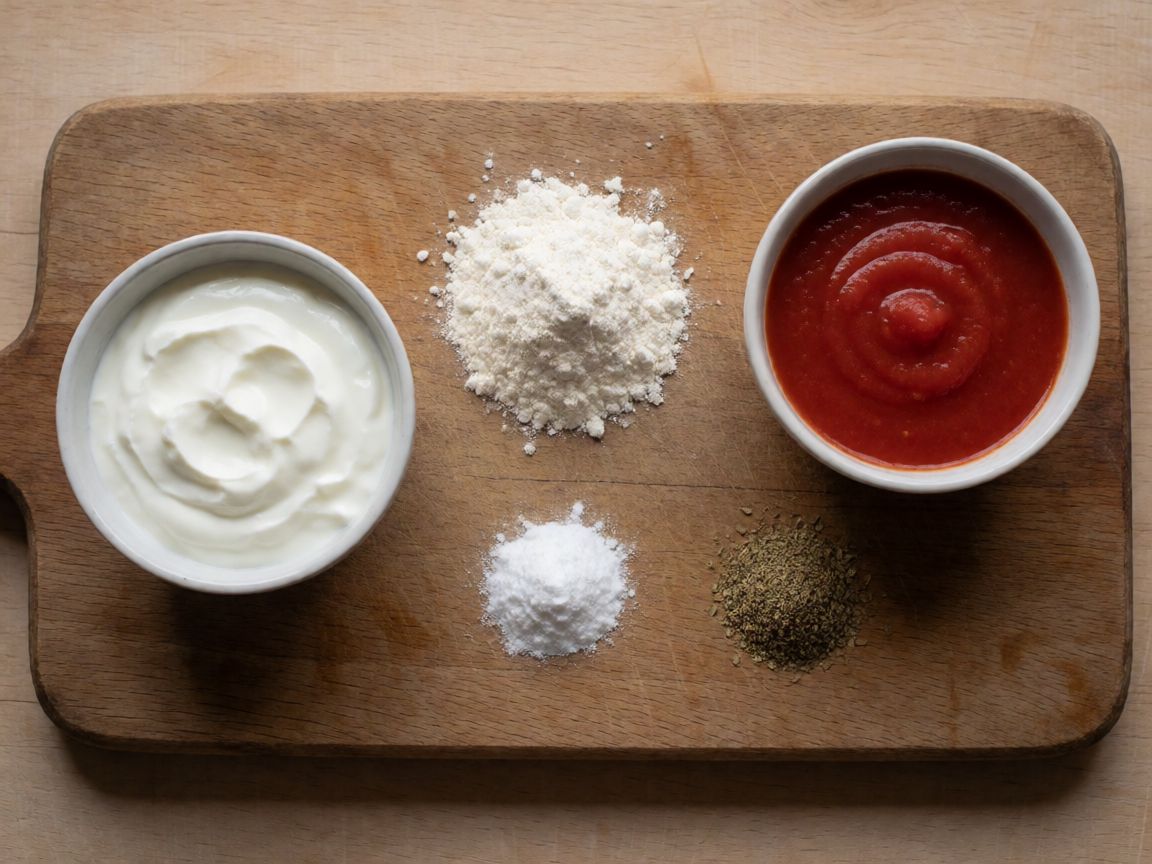
- 170 g Greek yogurt
- 130 g Plain flour
- 5 g Baking powder unflavoured, for savoury bakes
- 0.5 tsp Salt
- Tomato passata to taste
- Oregano to taste
- Olive oil to taste







Steps
Preheat the oven to 200°C.
Put the Greek yogurt in a large bowl, sift in the flour and baking powder, then add the salt. Mix to a smooth, light dough.
Turn the dough onto a lightly floured surface and roll it out with a rolling pin to a thickness of about 5 millimetres.
Using a round cutter, cut out circles about 5–6 cm in diameter from the dough.
Line a baking tray with parchment paper and place the pizzettes on it.
Season the tomato passata with salt, oregano and a splash of olive oil, then spread it over the pizzettes.
Drizzle the topped pizzettes with a little more olive oil.
Bake at 200°C.
14 min
These aren't pizza, whatever the name says. They're a flatbread wearing pizza's clothes, and the lift under that tomato comes from chemistry, not from time. Yogurt's acid meets baking powder and starts fizzing the moment they touch — no yeast sitting in an airing cupboard for an hour, no "knock it back and prove again." That's the whole trick, and it's why you can start this at four and be eating by half past.
Two things decide whether it works. First, how little you touch the dough. The lift is already dosed into the mix like medicine — mix it just past "together" and stop. Knead it the way you'd knead bread and you build gluten that clamps down on the very bubbles the baking powder is trying to raise. This is closer kin to a scone than to a loaf, and scone logic applies: rough hands ruin it.
Second, thickness against heat. Roll it thinner than about 5mm and it can't hold the weight of wet tomato without going limp and tearing when you lift it. Roll it thicker and the centre stays gummy, raw-tasting, under the sauce before the edges are even coloured. The oven has to be properly at 200°C, not still climbing, because this dough has no time on its side — it must set its crumb before the gas escapes and before the passata's moisture soaks all the way through. Some say a yeastless dough with no rest "isn't real pizza dough" — no, because it was never trying to be. It's nearer a savoury scone that happens to carry tomato. Judge it against that, and a Tuesday-evening tray of these, four ingredients, no proving drawer, wins outright.
Greek yogurt is doing structural work, not just flavour work. It's strained, so it's thick — low in whey, high in protein and fat — and that thickness is what lets it hydrate the flour into a dough you can roll, rather than a batter you'd need to pour. Ordinary live yogurt from the fridge is wetter; use it straight and your circles spread back out from under the cutter instead of holding their shape. Fix it either by tipping it into a sieve for twenty minutes to let some whey run off, or by adding a little extra flour to compensate. The real criterion for a substitute is simple: anything thick, soured and acidic enough to react with baking powder — skyr, labneh, well-drained natural yogurt — will do the same job.
Plain flour, not strong or bread flour, because strength here is the enemy. You're not building a gluten net to trap yeast's slow bubbles over an hour; you're giving baking powder's quick, violent fizz just enough structure to hold its shape for fourteen minutes. Strong flour fights that lift and you get something tough and flat for no gain.
The baking powder is specified "unflavoured, for savoury bakes" because some own-brand UK tins aimed at cakes carry a faint vanilla note folded in — fine under sponge, wrong under tomato and oregano. Any plain double-acting baking powder is correct. Bicarbonate of soda alone won't reliably do this job; it needs a measured acid partner, and yogurt's acidity on its own isn't a tested substitute here — don't guess with it unless you've tried it once first and are prepared for it to go wrong.
Salt in the dough isn't only seasoning — half a teaspoon is enough to firm up the small amount of gluten that does form, giving the base backbone so it can be picked up by hand rather than drooping. The passata gets seasoned separately, with its own salt and oregano and oil, because tomato has its own sweetness and acidity to correct, and whatever's left in the dough won't reach it. Passata is chosen for being smooth — no seed, no skin, no chunk — because chunky topping takes longer to cook down and leaves the base underneath still wet when the top looks done. Tinned chopped tomatoes, blitzed or pushed through a sieve, will stand in fine.
Oregano stays dried here on purpose — fresh would just scorch and turn bitter in the time this spends at 200°C. Olive oil is doing flavour work, not just moisture: its slight bitterness plays against the cooked sweetness of the tomato in a way a neutral oil won't. You don't need your good finishing bottle for this — it's baked, not eaten raw off the spoon — any everyday olive oil, not extra virgin, does the job without wasting the expensive stuff.
A last practical note, since no one tells you this part: these don't keep like a proper yeasted dough would. The gas that lifted them is gone for good once baked, and the crumb firms as it cools, so eat them the day you make them, warm if you can manage it. There's a bit of history worth knowing underneath all this — the long rest that real pizza and bread doughs demand isn't tradition for tradition's sake, it's yeast needing real time to multiply and produce gas slowly, something bakers before refrigeration and reliable commercial yeast had no way to rush. Baking powder sidesteps that whole biology with straight chemistry, the same trick British kitchens already use for scones and soda bread. Nothing is being cheated here — it's just a different, and much older, family of quick bread wearing a pizza's topping.