
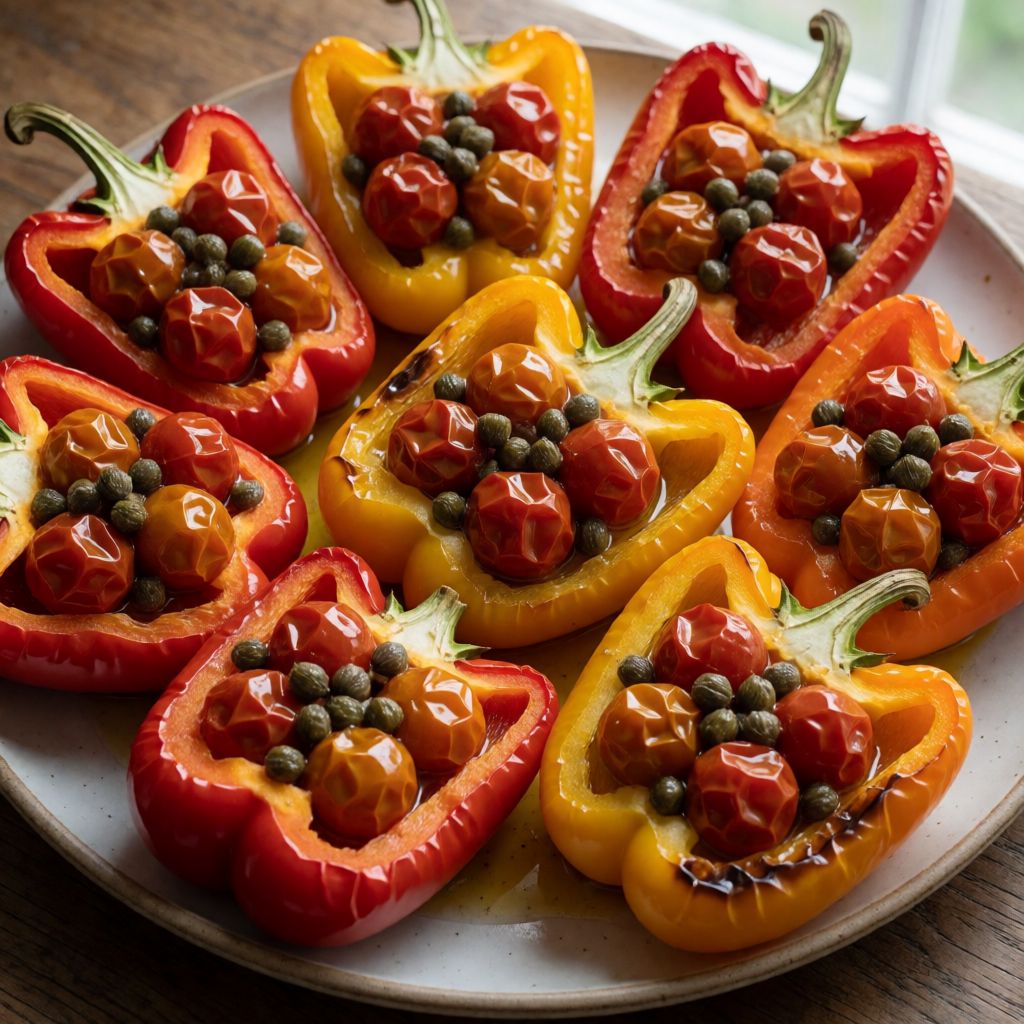
 AI photo
Roasted Peppers with Cherry Tomato, Caper and Anchovy Topping
Peppers roasted whole, peeled and cut into strips, topped with a savoury mix of cherry tomatoes, capers, breadcrumbs and anchovies.
Labels are worked out automatically from the ingredients and can be wrong. Check the packaging if it matters to you.
Ingredients
- 4-6 pcs Bell Peppers
- Salt to taste
- Olive Oil to taste
- Basil to taste, or parsley
- 150 g Cherry Tomatoes
- 10 pcs Capers
- 4 tbsp Breadcrumbs dried
- 10 pcs Anchovies





Steps
Wash the peppers whole, pat dry and brush generously with olive oil.
Roast whole in a preheated oven at 190°C, turning halfway through, until the skins start to change colour.
35 minWhile still hot, place the peppers in a paper bag, seal tightly and let them cool.
Once cooled, peel off the skins, remove the core and seeds, and cut the peppers into strips.
Dress the pepper strips with olive oil, salt and basil to taste.
Chop the cherry tomatoes, place in a bowl, add the capers, breadcrumbs and chopped anchovies.
Mix thoroughly until the filling is even.
Spoon the mixture onto the sliced peppers and bake at 190°C until piping hot, reaching about 63°C in the centre.
5 minRemove from the oven and season with extra spices to taste.
What was changed
The ingredient list was corrected: Cherry Tomatoes is used for the topping instead of the fruit cherry, as the filling requires tomatoes.
This is a two-stage dish, and that's the whole trick of it: first you roast the pepper itself until its skin gives up, then you build a second, sharper flavour on top and only warm it through. Two different cooking jobs, two different purposes. The pepper roast is about sweetness and char. The topping is about salt, acid and crumb. Mix them too early and you get soup in a pepper skin — do them in order and you get something layered.
What decides whether this works is the skin. You roast whole peppers at 190°C not to cook the flesh through — a pepper is thin-walled, it cooks in minutes — but to blister the skin until it separates from what's underneath. You're watching for the skin to start changing colour, maybe lift in patches, go slightly leathery. That's the cue, not a clock. Pull it too early, skin fused to flesh, and peeling turns into surgery, tearing strips of good pepper away with the peel.
Some say you should peel roasted peppers under a running tap. Don't. Water rinses away the little pool of sweet, oily juice sitting right under the skin — the best part, frankly — and you're left with wet, pale strips. The paper bag does the same softening job without washing anything away: it traps the steam the hot pepper is already giving off, and that trapped steam finishes loosening the skin while the juice stays put. This only works because the bag is sealed and the pepper is hot. A cold pepper in a bag does nothing.
Peppers: buy the thick-walled, blocky kind — the ones that stand up on a flat bottom. That wall of flesh is what you're roasting for; a thin-skinned, floppy pepper collapses into rag before the skin even blisters properly. Any colour works, though red and yellow are already sweeter going in, having had longer on the plant, so they caramelise further with less bitterness than green.
Olive oil on the skin isn't dressing at this stage, it's a heat-transfer trick — a thin film of oil sits closer to the hot air than bare wet skin does, and chars a touch more evenly. Any oil with no smell of its own and a reasonable smoke point will do the same physical job; olive oil just adds its own faint bitterness to the char, which happens to suit this dish. Don't reach for anything cold-pressed and strongly flavoured — you'll taste the oil before you taste the pepper.
Anchovies are there to vanish, not to be found. Chopped fine and mixed into warm-ish olive oil and breadcrumbs, they break down into something closer to a seasoning paste than discrete fish — that's the only reason to use anchovy rather than, say, a whole sardine: it melts, it doesn't sit. If you don't eat fish, finely chopped black olives give you a similar salt-and-savour lift, though the flavour sits more fruity than marine; a scrape of miso does the umami job too, oddly well, if you've got it in from some other recipe and don't want it going stale.
Capers are acid and sharpness, nothing more complicated than that — a small sour interruption so the topping doesn't read as one flat salty note next to sweet roasted pepper. If you're out, a few chopped gherkins or even a squeeze of lemon at the end covers the same ground, though you lose the little pop of texture capers give you.
Breadcrumbs are not padding. Cherry tomatoes, chopped raw, let go of a fair bit of water as soon as they're cut and salted, and that water needs somewhere to go — otherwise it runs straight off the pepper and you're left with a wet, sliding topping and a puddle on the tray. Dry breadcrumbs soak that liquid up and hold it in place long enough for the quick second bake to set everything. Stale bread grated on a box grater does exactly the same job, and is the more honest, less wasteful route anyway — breadcrumbs exist in most kitchen traditions because bread goes hard before it goes bad, and someone worked out what to do with it.
If your oven's already hot from a Sunday roast and cooling down, this is a sensible second thing to put in — the peppers don't need the oven at its peak, just steadily warm, and a paper bag from the greengrocer's or the bottom of the fruit bowl works better here than a plastic one, which traps too much heat and can leave the skin tasting faintly of itself.