
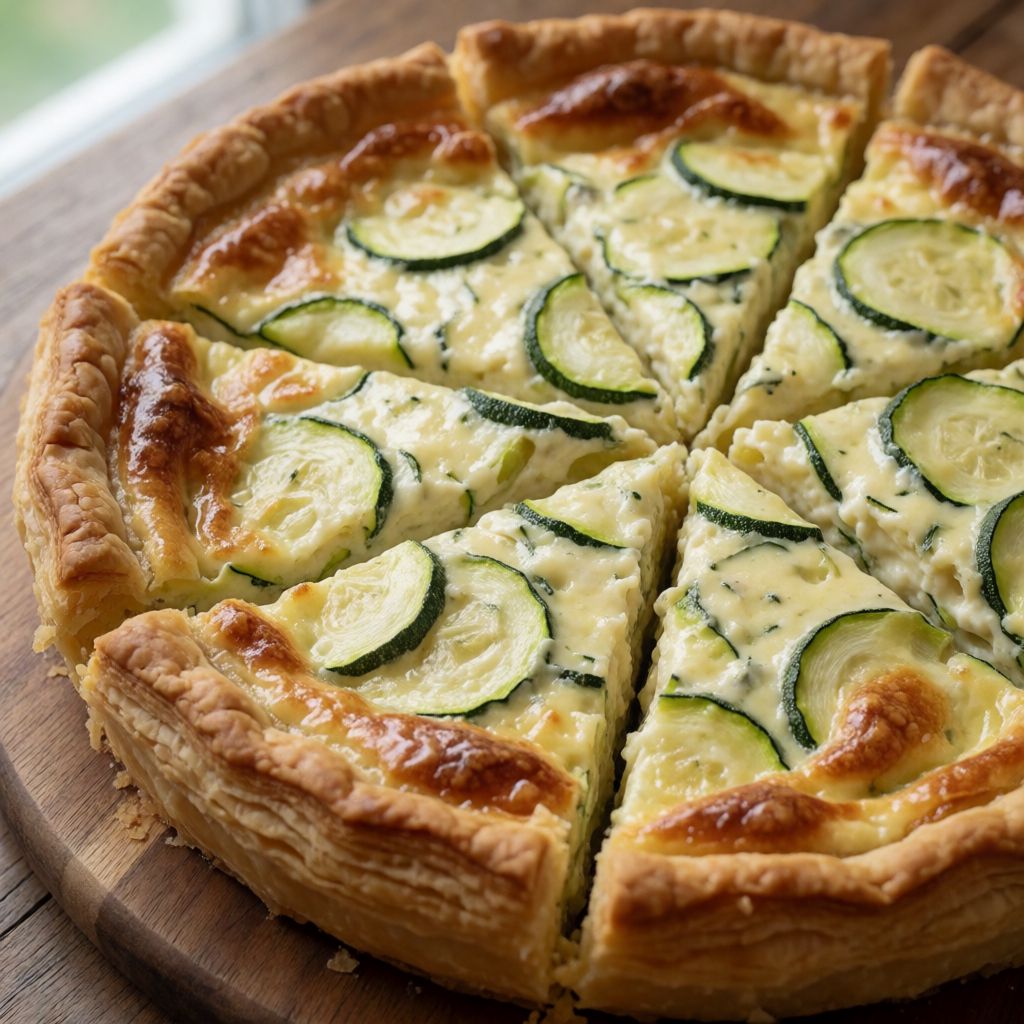
 AI photo
Quick Courgette and Ricotta Pie
A quick courgette and ricotta pie, ready in about half an hour.
Labels are worked out automatically from the ingredients and can be wrong. Check the packaging if it matters to you.
Ingredients






Steps
Cut the courgettes into thin rounds, put them in a bowl, add the ricotta, whole eggs, Parmesan and a little salt. Mix well.
Line a tin with baking paper, lay in the puff pastry, then pour in the filling.
Bake in an oven preheated to 180°C for about 20 minutes.
20 min
This isn't a quiche and it isn't a tart in the French sense — it's closer to a savoury flan. Raw courgette goes straight into an egg-and-cheese custard, uncooked, and the whole thing sets together in the oven. The puff pastry underneath is a case, not an engineering feat; its job is to hold a shape, nothing more.
What decides whether this works is water. Courgette is close to 95% water, and if you don't deal with that before it goes near the oven, you get a soggy base carrying a bowl of pale, split custard. The fix isn't clever — a little salt on the sliced rounds, a few minutes resting on a paper napkin (your flat doesn't have a press, a napkin does the job), and most of that water never reaches the pastry at all.
The second thing that decides it: does the custard set before the courgette floods it. At 180°C the egg proteins tighten and trap the cheese — go from liquid to sliceable — in roughly the time the pastry folds underneath need to dry and lift. If your oven runs cool, which plenty of older British ovens quietly do, the custard stays loose while the base goes soft and raw-tasting instead of crisp. Know your oven, not the dial.
Some say puff pastry like this needs blind baking first, or the base won't cook through. No — because this filling is shallow and sets fast, more like a thick omelette than a custard tart that bakes for an hour. Twenty minutes at a true 180°C is enough heat reaching through to lift and dry the folds without a soggy crust forming underneath. Blind baking solves a problem this pie doesn't have.
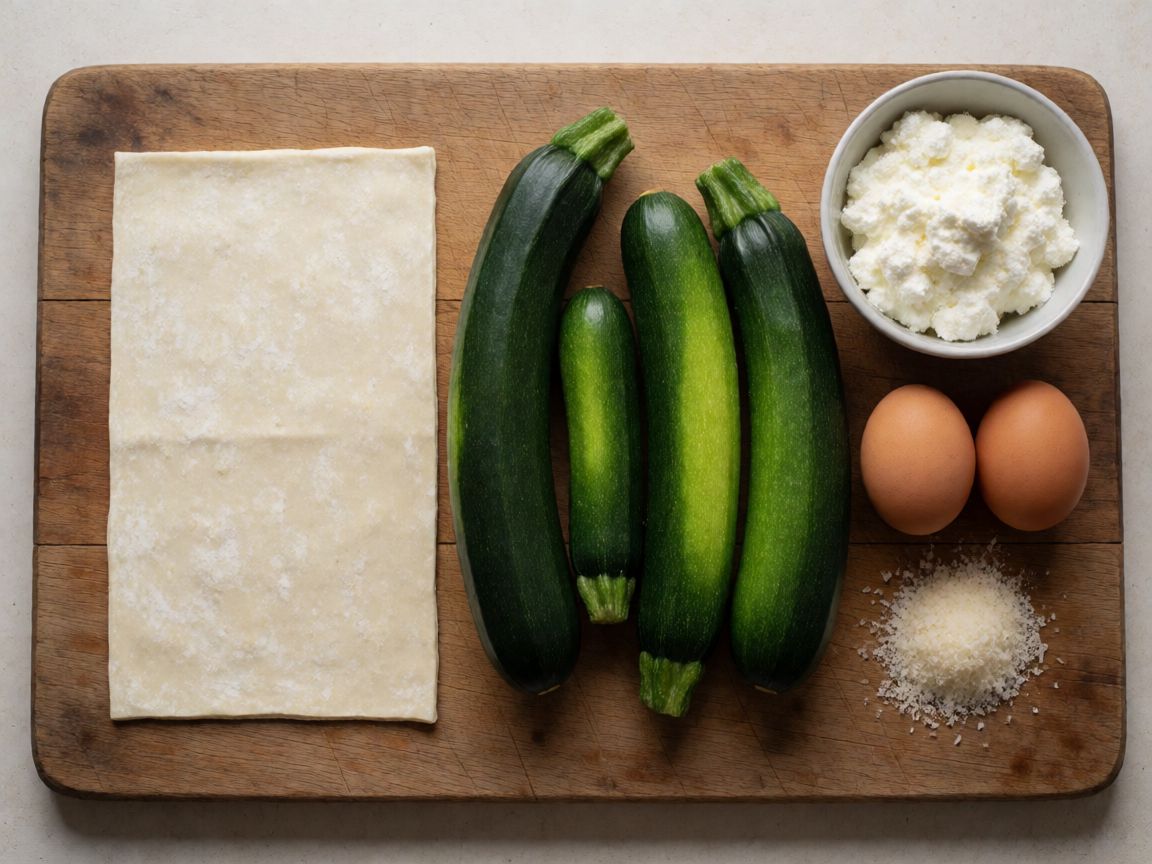
Courgette: slice it thin and even, so it softens at the same rate all the way through — a thick chunk next to a thin one means some pieces are still raw crunch while the rest is mush. Salt it lightly as soon as it's cut and let it sit a few minutes before mixing in; that draws out the worst of the water, which is the actual cause of a watery, pastry-sogging pie, not the oven and not the pastry brand. Any firm summer squash behaves the same way and can stand in.
Ricotta: you want the dry-curd kind that holds a shape on a spoon, not the loose, wet tub sold for desserts. Press a spoonful — if liquid pools, drain it in a sieve for ten minutes first, or it adds back the water you just removed from the courgette. No ricotta in the cupboard — drained cottage cheese works, or a curd cheese, or mascarpone cut with a splash of milk if it's too stiff to loosen.
Eggs and Parmesan do two different jobs that look like one. The eggs are the actual binder — their protein is what sets the custard solid. The Parmesan adds more protein and fat to that same setting, plus salt and flavour, which is why it sits in such a generous 8 tablespoons for only 250g of cheese underneath it. Any hard, aged cheese that grates fine and melts into grains rather than strings will do the same — pecorino works, but it's saltier, so ease back on the added salt if you use it.
Puff pastry bought ready-made is not a shortcut you need to apologise for. Proper laminated puff — butter folded through dough dozens of times — is a half-day's work meant for bakeries with cold rooms and time to spare; buying it chilled from a shop is simply what everyone with a Sunday roast to get on with actually does. The pie's point is the custard and the courgette, not whether you folded the butter yourself.
Salt: taste before you add much. Ricotta and Parmesan both carry salt already, and it's easy to oversalt a filling that looks plain in the bowl. Add a little, mix, taste the raw mixture — it should taste slightly under-seasoned raw, because baking concentrates it.
For the tin, any shallow dish with a rim does the job — a flan dish, a loose-bottomed tart tin, even a baking tray with sides if that's what you've got, lined with paper so you can lift the whole thing out. And once it's out of the oven, give it five minutes before cutting. The custard is still finishing its set in that resting heat; cut it straight away and it runs instead of slicing. That wait is as much an ingredient as the eggs.