
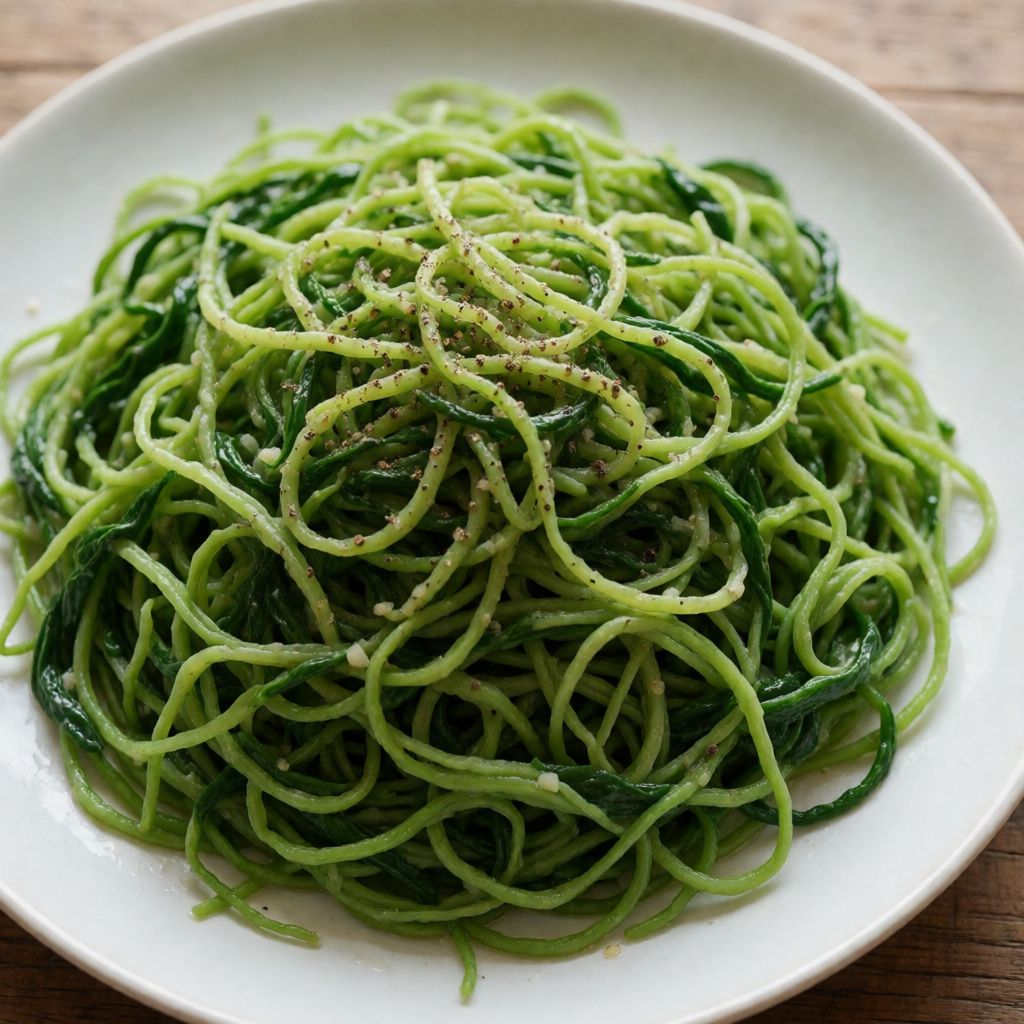
 AI photo
Agretti with Lemon
A simple side of blanched agretti tossed with lemon, olive oil and a touch of garlic.
Labels are worked out automatically from the ingredients and can be wrong. Check the packaging if it matters to you.
Ingredients
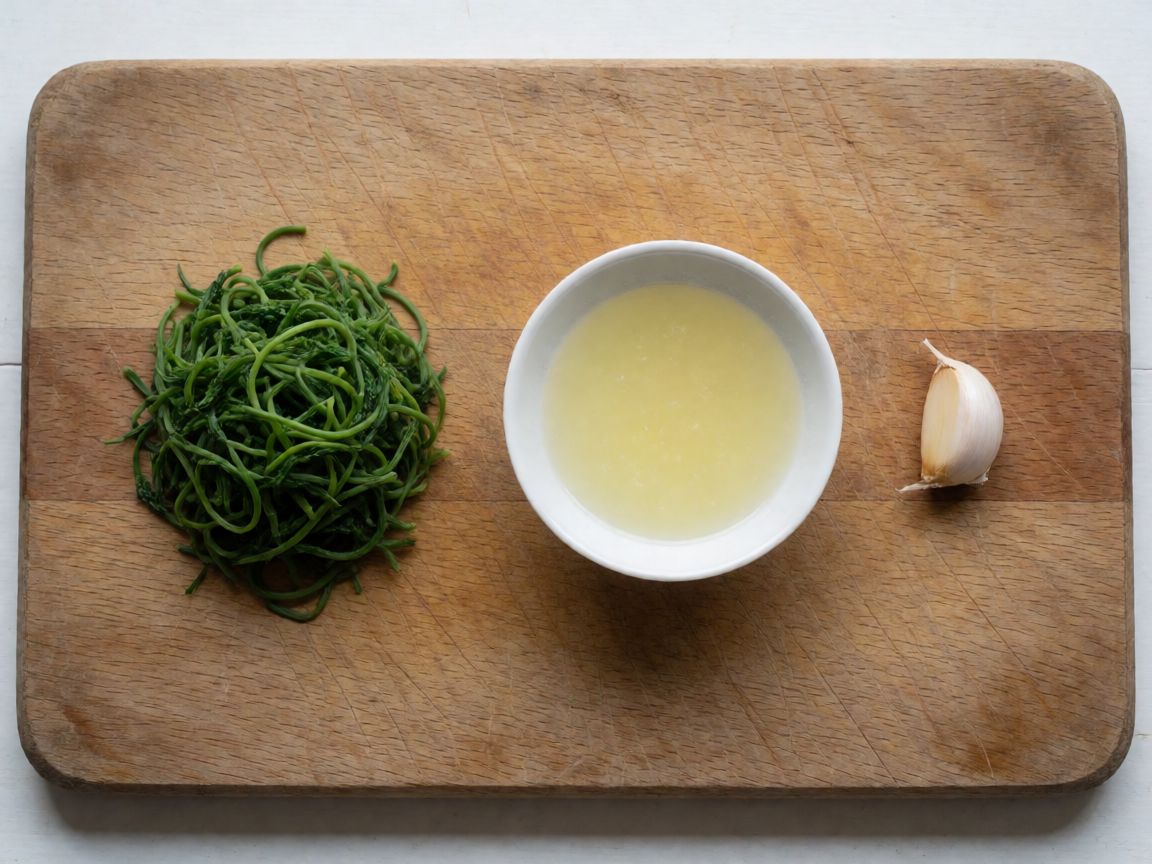
- 500 g Agretti
- 1 pcs Lemon Juice juice of 1 lemon
- Salt to taste
- Black Pepper to taste
- Olive Oil to taste
- 1 clove Garlic optional






Steps
Prepare the dressing: mix the salt, black pepper, olive oil and lemon juice.
If using garlic, finely chop it.
Wash the agretti, bring a pot of water to the boil and dip the leaves into the boiling water for a couple of minutes.
2 minDrain the water and let the agretti cool.
Drizzle the agretti with the prepared dressing, toss well and serve.
Agretti is a strange little vegetable to meet for the first time: thin, wiry, almost like green shoelaces, with a taste that sits somewhere between spinach and sour grass. It grows on salty, sandy ground along the Mediterranean coast — the Italian name comes from "agro", sour, and that's exactly the flavour you're working with before the lemon even arrives. The whole dish is a two-minute dip in boiling water and a dressing. Nothing hides behind a sauce here, so what decides whether it works is restraint: don't overcook it, don't dress it hot, don't drown it in oil.
The strands look tougher than they are. That's the trap. People see wiry, grass-like stems and assume they need a proper boil to soften — no, because agretti is a young, tender shoot, not a mature stalk. A couple of minutes in rolling water is the ceiling, not the starting point. You're watching for the colour to lift from dull green to bright, and for the strands to go from stiff to just pliant — they should still have a faint squeak when you bite, not go limp. Past that point the colour drops to a tired khaki and the texture turns stringy and slick, which is the actual reason overcooked agretti gets a reputation for being slimy — not the vegetable's fault, the pot's.
Cooling before dressing isn't a formality. Hot agretti tossed straight into oil and lemon keeps cooking in its own heat and the acid turns the chlorophyll drab on top of that — you'd lose the one thing this dish has going for it, which is colour and bite. Let it sit, let the heat walk off, then dress.
Agretti itself is the hard part in a British kitchen — it's a coastal Italian foraged-then-cultivated green, mostly seen in spring, often around Easter, which is no coincidence: in Lazio it turns up as the contorno next to roast lamb on exactly the kind of table where you'd put a Sunday roast. It was a poor man's vegetable for a long time, picked wild off salty flats, and the lemon-and-oil dressing is poor man's cooking logic too: when the ingredient already has flavour, you don't build a sauce, you just get out of its way. If you can't find it — and outside specialist Italian greengrocers in the UK, you likely won't — look for something thin, slightly saline-sour, and crisp after a brief blanch. Marsh samphire is the closest relative by family and by growing conditions, though it leans saltier rather than sour, so cut back the added salt if you use it. Thin asparagus tips or young spinach stalks will give you the right texture without the right flavour; they're a shape substitute, not a taste one, so lean harder on the lemon.
Lemon juice is doing two jobs: it's the sour note the vegetable is named for, reinforcing rather than masking, and it's the acid that keeps the green sharp-tasting instead of flat. Use a whole lemon's juice, not bottled concentrate — bottled juice has a flat, slightly metallic sourness that doesn't lift the way fresh does.
Olive oil here wants to be mild rather than aggressively bitter — a peppery, high-polyphenol extra virgin will fight the lemon instead of carrying it. If your only bottle is a sharp one, use a little less and let the lemon lead. The criterion, if you're substituting: any oil with a clean, round taste of its own that won't argue with citrus — a light olive oil, or in a pinch a neutral rapeseed oil, though you'll lose the fruitiness that makes this dressing Italian rather than generic.
Garlic is marked optional for a reason: agretti is already sharp from the lemon and slightly bitter-sour on its own, and raw garlic adds a third sharp edge to a dish that only has two. If you do use it, chop it fine enough that it distributes rather than hitting as one bite — it's there for background perfume, not for heat.
Salt and pepper are seasoning in the plain sense, nothing structural, but add the salt to the dressing rather than directly onto the hot vegetable — straight onto hot, just-drained agretti it draws out water fast and you end up with a puddle at the bottom of the bowl rather than a dressed salad.
On equipment: you don't need anything special, just a pot wide enough that the strands aren't all crushed into one tangle, and enough water that it stays at a proper boil when the agretti goes in — a pot that's too crowded or too shallow will drop in temperature the moment you add the greens, and then you're simmering slowly instead of blanching fast, which is exactly the slow-heat route that turns the texture limp. A domestic hob can get a wide pot to a rolling boil without trouble; the only patience required is washing the grit out at the base of the strands before any of this starts, and resisting the two-minute mark once the colour tells you it's ready.