
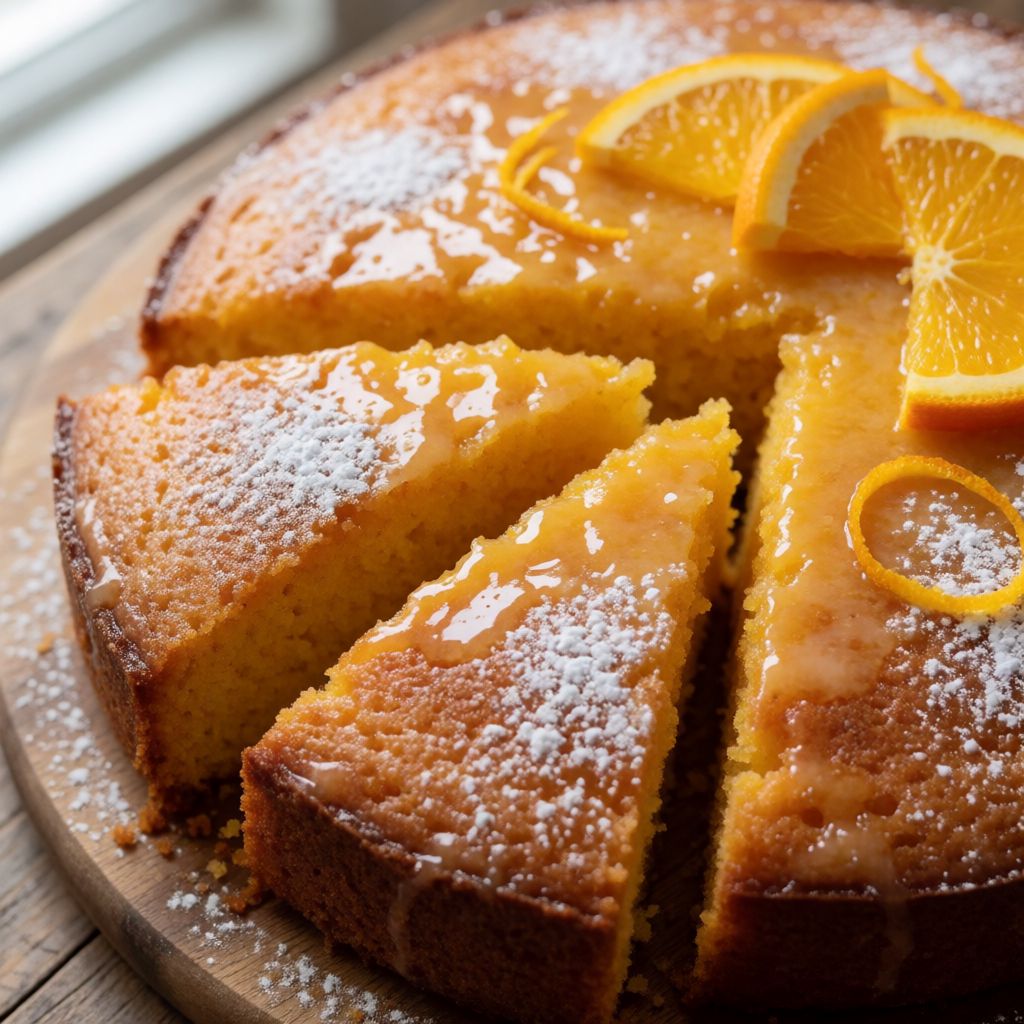
 AI photo
Eggless Orange Cake
A moist orange cake made without eggs, flavoured with fresh orange juice and zest.
Labels are worked out automatically from the ingredients and can be wrong. Check the packaging if it matters to you.
Ingredients
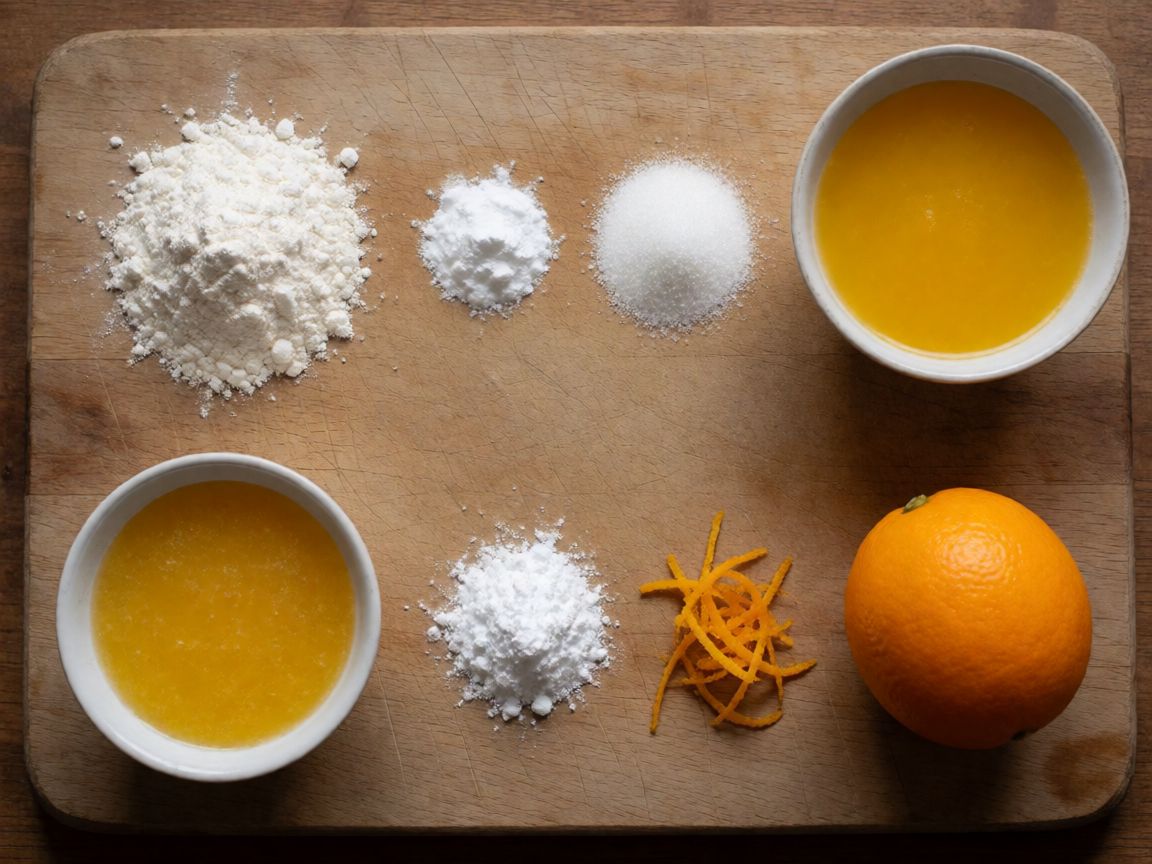
- 420 g Plain flour
- 15 g Baking powder
- 200 g Caster sugar
- 150 ml Vegetable oil
- 500 ml Orange juice
- 1 pcs Orange zest only
- 1 pinch Icing sugar to taste, for dusting







Steps
Wash the oranges, grate the zest without the white pith, then cut in half and squeeze out the juice.
Sift the flour into a large bowl and mix with the sugar and baking powder.
Add the oil and orange juice, beating with a mixer until smooth and fluffy.
Stir in the orange zest and mix well.
Pour the batter into a 26 cm tin, lightly greased with oil or butter and dusted with flour.
Bake in a preheated oven at 170°C for about 40 minutes.
40 minLet the cake cool, then decorate with orange slices and dust with icing sugar before serving.
This is a cake that never needed eggs to begin with — not a trick, not a deprivation. Some say eggs are what makes a cake rise and hold together. No — eggs give you binding and a fine, close crumb, but lift itself is just gas, and baking powder makes gas on its own, no help required. What eggs would have done here is taken by two things: the oil, which coats every grain of flour so the crumb stays soft instead of toughening, and the juice, whose acidity gives the baking powder's base something to react against the moment it hits liquid, and again when it hits heat. Take that away or get it wrong, and the cake sits dense and wet in the middle, no matter how golden the top looks.
That's exactly what the 170°C oven is managing. Any hotter, and the outside sets into a crust before the middle has finished rising — then the inside is still pushing against a lid that's already closed, and it sinks or stays gummy where the crust met the pan. Any cooler, and you're drying the crumb out waiting for the centre to set. 170°C is the point where the whole tin heats through at roughly the same pace the bubbles need to form and hold. A domestic oven runs hotter at the back than the door — turn the tin round halfway if you notice one side colouring faster, there's no shame in it, ovens lie about their own evenness all the time.
Flour and baking powder are doing the job eggs usually share credit for — structure and lift. Sift the flour so the baking powder distributes evenly through it before any liquid touches it; baking powder that sits in one clump will give you one eager bubble and a flat cake everywhere else. Fifteen grams of baking powder for 420 g flour is a strong dose precisely because there's no egg white to trap air mechanically — this cake rises by chemistry alone, so don't be shy mixing it through properly, and don't substitute bicarbonate of soda alone, it needs an acid partner and baking powder already carries its own.
The oil is the fat, and fat's job in any cake is to get between flour particles and stop them linking into long, tough gluten strands — that's what keeps a crumb tender rather than bready. Use any oil with no smell of its own: sunflower, rapeseed, a plain vegetable oil. Olive oil will fight the orange and can turn faintly bitter once baked, so leave it for the roast, not the cake.
Orange juice here is liquid, acid, and flavour all at once, which is why it's doing more work than milk or water would. Squeeze it fresh if you can — bottled juice is often diluted or pasteurised in a way that dulls both the acidity and the aroma, and you lose some of the lift along with the taste. If your oranges run small, top up the 500 ml with a splash of water rather than more sugar; the batter needs that volume of liquid to loosen the flour, not extra sweetness.
Zest only, never the white pith underneath — the pith carries the bitterness, the coloured skin carries the oil where the orange smell actually lives. Grate lightly and stop the moment you hit white.
Icing sugar at the end is finish, not flavour — dust it close to serving, because sugar left sitting on a cut, moist crumb will slowly dissolve into damp patches rather than staying crisp and white. If you're decorating with orange slices as well, lay them on just before the cake goes to table for the same reason — patience with the last step matters as much as patience with the first.