
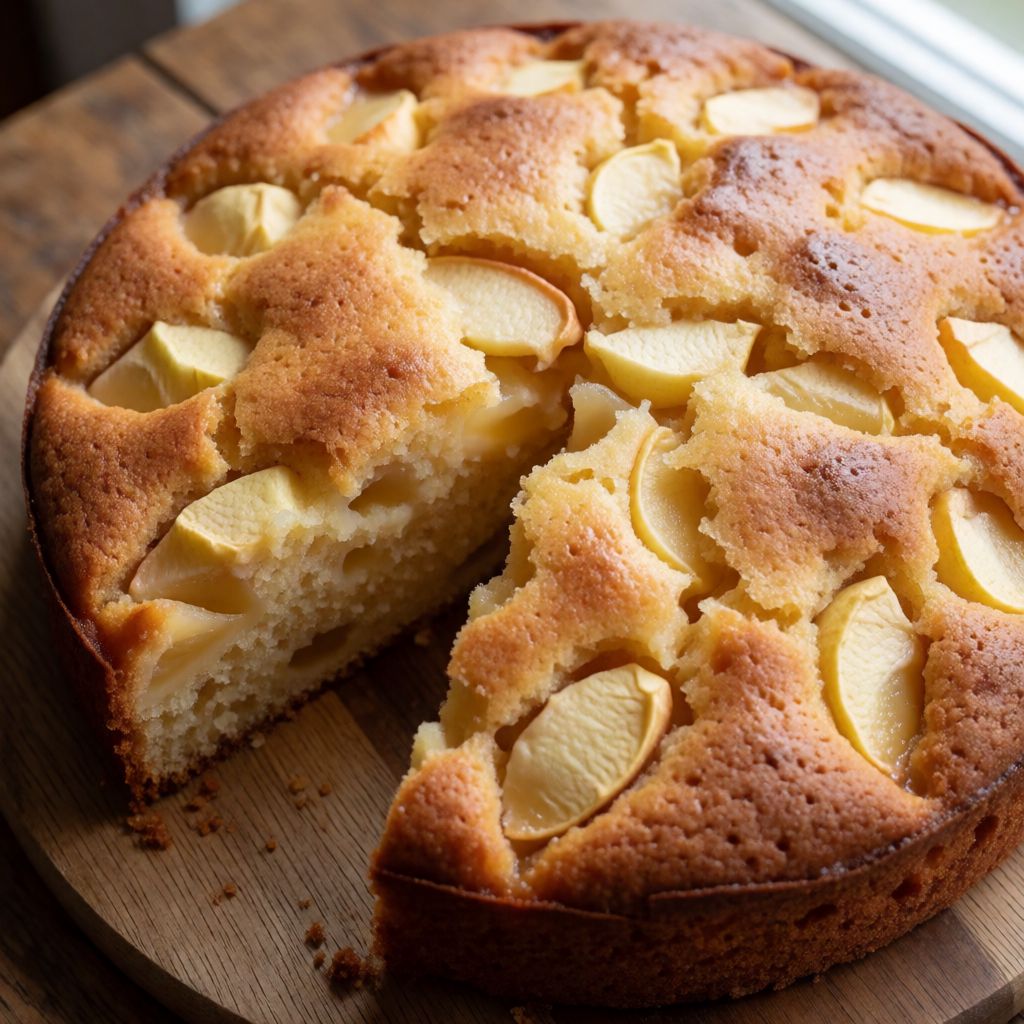
 AI photo
Apple Cake
A moist apple cake with fresh apple chunks mixed into the batter and thin apple slices baked on top.
Labels are worked out automatically from the ingredients and can be wrong. Check the packaging if it matters to you.
Ingredients
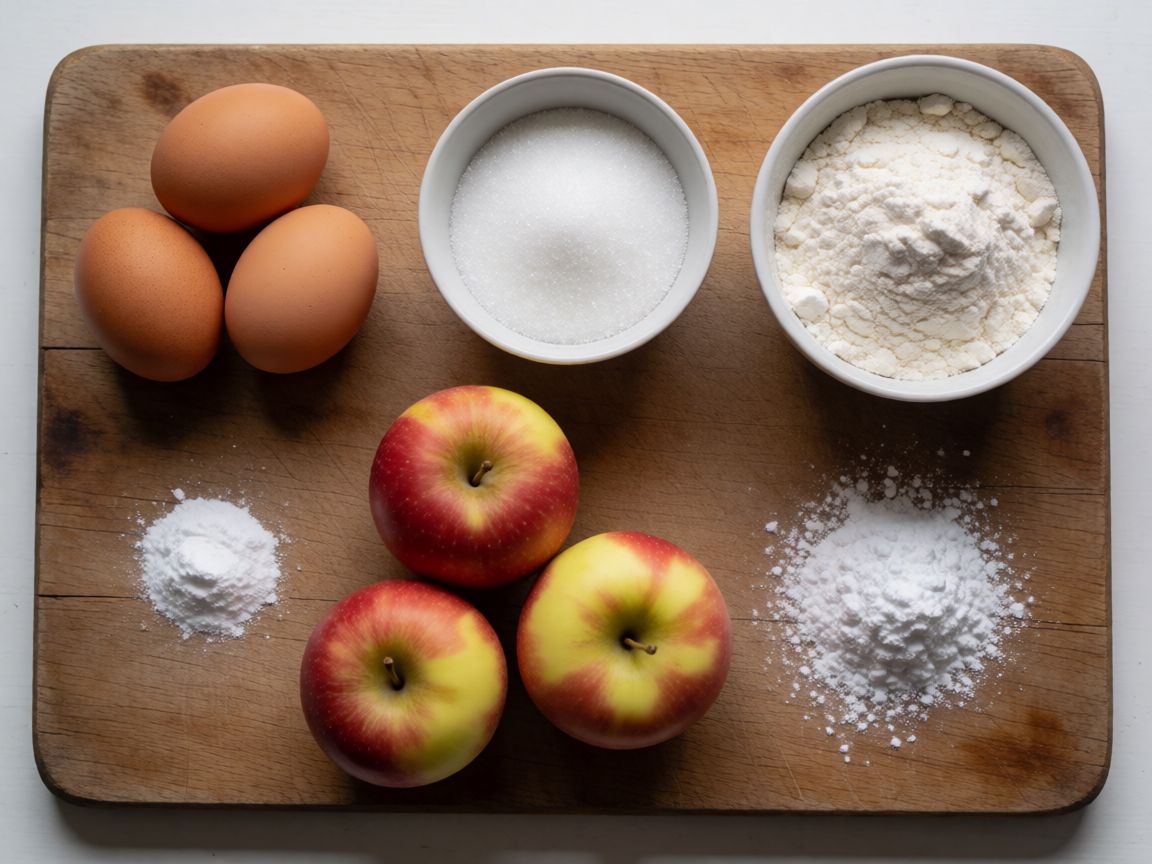
- 3 pcs Eggs
- 140 g Caster sugar
- 100 g Vegetable oil
- 300 g Plain flour
- 15 g Baking powder
- 3 pcs Apples two chopped, one sliced for the top
- 1 tbsp Icing sugar to taste, for dusting







Steps
Crack the eggs into a large bowl, add the sugar and beat with a mixer until pale and creamy.
Continue beating and pour in the vegetable oil in a thin stream.
Sift the flour and add it to the batter in small batches, so no lumps form.
Add the baking powder and mix well.
Peel two apples, cut into small pieces and fold them into the batter with a spatula.
Pour the batter into a 28x10cm loaf tin, greased with butter and dusted with flour.
Cut the third apple into thin slices and arrange them on top of the batter.
Bake in a preheated oven at 180°C for 55-60 minutes on fan mode, or 65-70 minutes on conventional mode.
60 minLet the cake cool, then dust with icing sugar before serving.
This is a plain, honest oil cake with apple doing two different jobs — chopped inside, where it breaks down and leaves little pockets of jammy moisture through the crumb, and sliced on top, where it just sits and looks like it means business while picking up a bit of colour. Nothing exotic, nothing you need a kazan for. A bowl, a mixer, a loaf tin — this is a flat-kitchen cake through and through.
What decides whether it rises properly or sits like a brick has almost nothing to do with the oven and everything to do with the first two minutes at the mixer. Beating the eggs and sugar until pale isn't decoration — you're whipping air into the mixture, and that air is half your lift, with the baking powder doing the rest once the heat hits it. Lose that air later by stirring roughly, and no amount of baking powder saves you.
The second thing that decides it: how thick the batter is when the apple goes in. Thin batter, chopped apple sinks straight to the bottom and you get a dense wet layer under a dry cake — some people blame the apple for this, as if it's the fruit's fault for being heavy. It isn't. It's the batter being too loose to hold it suspended. Fix the batter, not the apple.
And the last thing: don't trust the clock more than the cake. 180°C fan and conventional giving different times isn't a typo — a fan oven physically moves hot air past the surface faster, so heat gets into the middle quicker. Either way, the real test is a skewer coming out clean and the apple on top looking dry, not glistening. Time is where you start checking, not where you stop.
Eggs first, and they want to be at room temperature, not fridge-cold — cold egg white resists whipping and you get less air trapped before the sugar even goes in. Three eggs for 300g flour is a modest ratio; this isn't a cake built on eggs, it's built on beaten air plus baking powder, which is why the creaming stage matters more here than in a cake with six eggs and no raising agent.
Caster sugar dissolves into the egg foam fast because the crystals are small — use granulated and you'll be beating longer to get the same paleness, and you'll feel grit under your fingers if you stop too soon. There's no real substitute that keeps the same texture; icing sugar would collapse the foam, so don't reach for it here, save it for the dusting at the end.
The oil is poured in a thin stream while the mixer still runs, and that's not fussiness — oil is heavier than the foam and will sink and deflate it if you dump it in. Any oil with no smell of its own does the job: sunflower, rapeseed, groundnut. Olive oil is out, not because it's wrong in principle, but because its flavour will sit on top of the apple instead of staying out of the way. The reason oil and not butter, by the way, isn't fashion — oil needs no softening, no creaming, no waiting for it to come up to temperature, which is exactly why oil cakes became the everyday, no-fuss cake in kitchens that didn't have time to spare for butter theatrics. It also means the cake stays moist a day or two later with your tea, where a butter cake firms up as the butter sets hard again in the cold.
Flour and baking powder together are doing the same job a bag of self-raising flour does — if that's what's in your cupboard, use it and leave the baking powder out, that's the actual criterion, not a brand name. Sift it in gradually and fold rather than beat once it's in: flour meeting liquid starts building gluten the moment it's wet, and the more you thrash it, the tougher and more rubbery the crumb gets. A few short folds, lumps disappear, stop.
On the apples: two different jobs, two different apples if you can manage it. For the chopped portion folded through the batter, you want something that softens and breaks down a little as it bakes — that's what gives you those moist pockets rather than crunchy cubes. For the slices on top, you want the opposite: something firm enough to hold its shape and not collapse into a puddle while the surface is exposed to direct heat. A soft eating apple like Bramley will fall apart beautifully inside the cake but turn to mush on top; a firmer one — Braeburn, Granny Smith, even a Cox — holds its line on top and still softens enough inside. If you've only got one kind in the fruit bowl, use it for both and just expect the top to look a touch less tidy.
The tin size matters more than it looks — 28x10cm is longer and narrower than the standard UK 2lb loaf tin, so heat has less width to travel through and the centre sets a bit quicker than in a squatter tin. If yours is a different shape, don't panic over the exact minutes; just know a shallower, wider tin finishes sooner than a deep, narrow one, because the heat simply has less distance to walk to the middle. And the icing sugar at the very end wants a properly cooled cake — dust it warm and the sugar just melts into damp patches instead of sitting as a dry, white finish. That wait is not wasted time, it's the last ingredient doing its job.