
 AI photo
Apple and Cinnamon Smoothie
A quick blended smoothie with apple, milk and cinnamon, ready in minutes.
Labels are worked out automatically from the ingredients and can be wrong. Check the packaging if it matters to you.
Ingredients
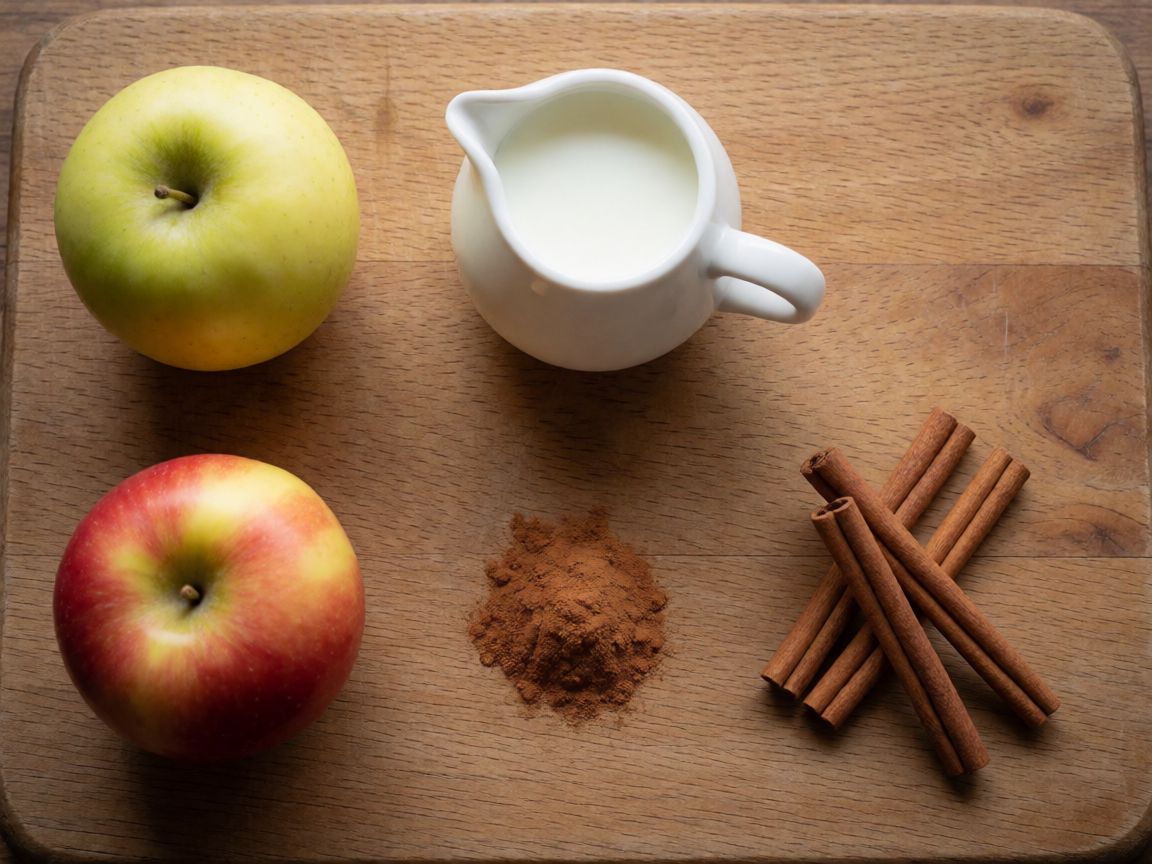
- 2 pcs Apple
- 600 ml Milk
- 5 tsp Cinnamon
- 4 pcs Cinnamon sticks for decoration




Steps
Peel the apples, cut them in half and remove the core.
Cut the apples into small pieces and put them into the blender bowl.
Add the milk and blend until smooth.
Add the cinnamon and blend for another 10-15 seconds.
Pour the smoothie into glasses and decorate with cinnamon sticks if you like.
If you like, leave a few pieces of apple whole or stir them in at the end.
This is not really a cooked drink — call it what it is, a cold blend of apple, milk and cinnamon that never sees a flame. The "cook: 10 min" on the recipe card is just the time your blender runs plus the time you let it sit afterwards. Nothing in a pan.
What decides whether it works isn't the apple and it isn't the milk — it's the cinnamon. Ground cinnamon straight off the blade tastes dusty and slightly bitter, almost like you've bitten into bark, because that's near enough what it is. It needs a few minutes resting in the apple-and-milk to soften that raw edge before it reaches a glass. Blend it in for the last 10-15 seconds as the recipe says, then don't rush the pour.
The apple decides the other half. A mealy, sweet apple — Gala, Red Delicious — makes the drink thick and cloying against milk that's already a touch sweet on its own. A tart, crisp one — Granny Smith, or a sharp Bramley if you want real bite — cuts through it and keeps the thing tasting of fruit rather than sugar water. Peeling isn't tradition for its own sake: on an ordinary kitchen blender, raw apple skin doesn't always pulverise fully, and you end up with stringy threads caught between your teeth. If your blender can turn ice to snow, leave some peel on and you won't notice.
On the apple: the criterion is firm and tart, something that doesn't collapse to mush the moment the blade touches it raw. Any apple of that shape works — Braeburn, Cox if yours are on the sharper side, even a firm pear in a pinch, though pear is wetter and you'll want slightly less milk to compensate. What you're avoiding is a fruit so soft or so sugary that the drink turns into apple-flavoured syrup rather than something you'd call fresh.
On the milk: fat is what gives body. Whole milk makes a rounder, creamier glass; semi-skimmed, which most UK fridges actually hold, gives something thinner and a bit lighter, no disaster either way — this isn't a custard where fat content changes the chemistry, it's just mouthfeel. If you're avoiding dairy, the criterion is a plant milk with enough body not to split into apple pulp floating in water — oat milk holds up, thin rice or soy milk tends not to.
On the cinnamon, the stick and the powder are doing two different jobs, and conflating them is the one myth worth naming here. Some people assume the cinnamon stick dropped in the glass is flavouring the drink along with looking nice — no, because cinnamon oil is locked inside whole bark, and getting it out needs heat and real time, the way it happens in mulled wine or a pot of tea left to steep. A stick sitting in a cold glass for a few minutes gives you decoration and nothing else; that's exactly why the recipe calls it "for decoration" and nothing more. Ground cinnamon, by contrast, is already broken down to a huge surface area, so its oils go into the milk fast — within the 10-15 seconds of blending — but that speed is also why it still tastes raw and a little bitter until it's had a few quiet minutes to settle and round off.
Five teaspoons across four glasses is just over a teaspoon a head, which sounds generous but isn't, once you know most cinnamon on a UK supermarket shelf is cassia — stronger, sharper, more bitter than true Ceylon cinnamon (the pale, soft, cigar-rolled bark you sometimes find in specialist shops). If what you've got is Ceylon, you can push the quantity up without the drink turning sharp on you; with cassia, stick to what's written or trust your own tongue partway through blending.
Small things that stop real faults: removing the core isn't fussiness, it's keeping pips and the woody bit out of the blade so you don't get a bitter, gritty note nobody can place. Holding back a few apple pieces to stir in whole at the end isn't decoration either — it gives your teeth something to do against all that smooth purée, which otherwise disappears in two gulps and leaves you wondering what you just drank.
Count on roughly 150ml a glass, a normal mug's worth, for four people — and give it the few minutes it needs to sit before anyone drinks it. That resting time is the one ingredient with no measurement on the label, and it's doing more work than the blender.