
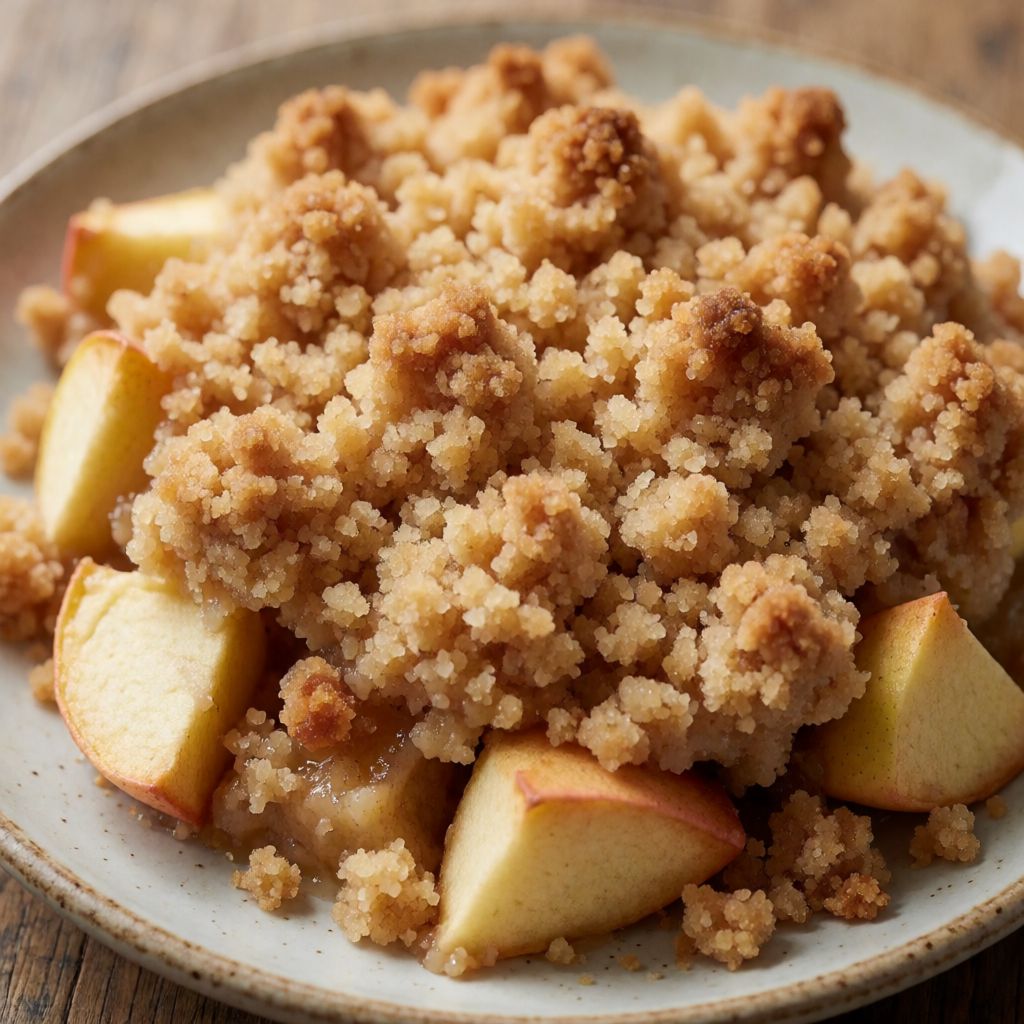
 AI photo
Apple and Amaretti Biscuit Crumble
A buttery apple crumble topped with crushed amaretti biscuits, baked until golden.
Labels are worked out automatically from the ingredients and can be wrong. Check the packaging if it matters to you.
Ingredients
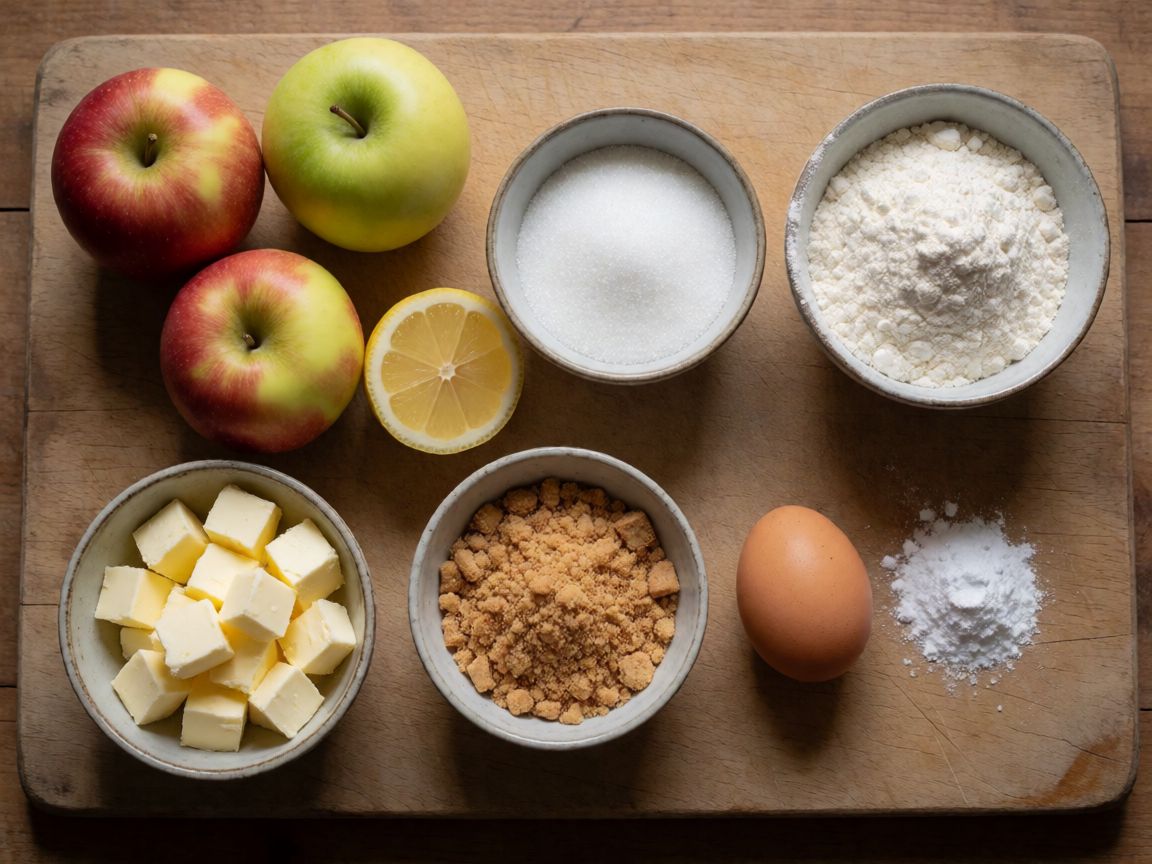
- 3 pcs Apple
- 0.5 pcs Lemon Juice
- 200 g Caster Sugar
- 350 g Plain Flour
- 170 g Butter cold, cut into pieces
- 1 pcs Egg
- 70 g Amaretti Biscuits crushed
- 8 g Baking Powder
- 1 pinch Cinnamon to taste









Steps
For the filling, peel the apples and cut them into cubes, add the lemon juice and 50g of sugar, and season with cinnamon.
6 minIn a bowl, mix the flour, the remaining sugar and the crushed amaretti biscuits; add the egg, baking powder and cold butter, and rub together with your fingers until it forms coarse crumbs.
Put the crumble mixture in the fridge for at least 30 minutes.
30 minGrease a 24cm round tin with butter and dust with flour, then press about two-thirds of the crumble mixture into the base with a spoon.
Spread the prepared apples on top.
Cover with the remaining crumble and bake in a preheated fan oven at 170°C until golden.
42 min
This is not the crumble your gran made with oats and a loose cap of butter and flour scattered over stewed fruit. It is a cousin twice removed, by way of Italy: a thin almond-shortbread case, pressed into a tin, holding spiced apple, with a loose crumb lid on top that never gets pressed. Same dough, two different jobs, depending entirely on how hard you push it with the spoon.
What decides whether it works is not minutes, it's the state of the butter and your own patience with it. Cold butter stays as distinct flecks of fat running through the flour; warm butter smears into a paste. A paste pressed into a base bakes into something dense and a bit greasy — a biscuit, not a short crust. The same paste scattered on top bakes into a fused, leathery cap instead of a crumb that shatters when the spoon goes in. The thirty minutes in the fridge after rubbing it together isn't a rest for your nerves, it's there to let the butter that warmed up under your fingers go hard again, and to let the gluten you woke up in the flour go back to sleep, so the base doesn't turn tough when you press it flat.
Crumble, in its English form, is a dish born out of not having enough butter or skill to make pastry during rationing — you crumbed what you had over fruit instead of rolling a lid. The amaretti version is a café trick layered on top of that thrift: crushed almond biscuits, often the ones left in the saucer by the espresso machine, dressing up a humble apple filling so it reads as something Italian-ish on a menu. Neither version is the 'real' one. Both are the same economic instinct — stretch flour and fruit with whatever dry, sweet thing is lying around — dressed differently.
Apples: you want ones that hold their shape under heat rather than collapsing into sauce, because this filling has no thickener to fall back on — Bramley, Granny Smith, or any firm, tart variety. If all you've got is a sweet eating apple, ease back on the sugar in the filling, because sweet apples plus 50g of sugar plus cinnamon will tip into cloying. The lemon juice isn't there for flavour so much as to stop the cut apple browning while it waits its turn, and to cut the sugar's flatness — any acid with no personality of its own does the same job, a teaspoon of vinegar diluted in water at a pinch, though lemon is cheap enough that there's rarely a reason to bother.
Flour should be plain, not strong or bread flour — you don't want gluten development here, you want shortness, and a low-protein flour gives you that without a fight. Butter: cold, straight from the fridge, cut into pieces before it ever meets your warm hands, because the whole point of rubbing-in by finger rather than by machine is that you can feel the moment it's gone from pea-sized lumps to something greasy and smooth — stop before that point. Caster sugar dissolves into the crumb evenly because the grains are fine; granulated will work, but you'll feel the odd gritty patch that caster avoids.
The amaretti biscuits do two things at once: they bring that bitter-almond perfume you can't get from flour alone, and because they're already baked and dry, they don't swell with moisture from the apple juice the way raw flour crumb would, so the base stays shorter for longer instead of turning soggy where it meets the fruit. If you've no amaretti, any dry, sweet biscuit with a bitter-almond edge will stand in — crushed digestives with a few drops of almond extract gets you close enough that nobody at the table will quibble. Baking powder is there only to lift the base a fraction so it doesn't bake into a dead slab; cinnamon is pure seasoning, add it the way you'd add salt to soup — by tasting the raw apple mix, not by a pinch written on paper.
One more thing worth saying plainly: six minutes macerating the apple in sugar and lemon is enough to season it, not to turn it into syrup. Leave it any longer sitting in that sugar and you'll draw out juice that pools under the top crumb once baked, and then your base — the one you worked so carefully to keep cold and short — goes soft from underneath, which is the one failure no amount of golden colour on top will hide.