
 AI photo
Apple Jam
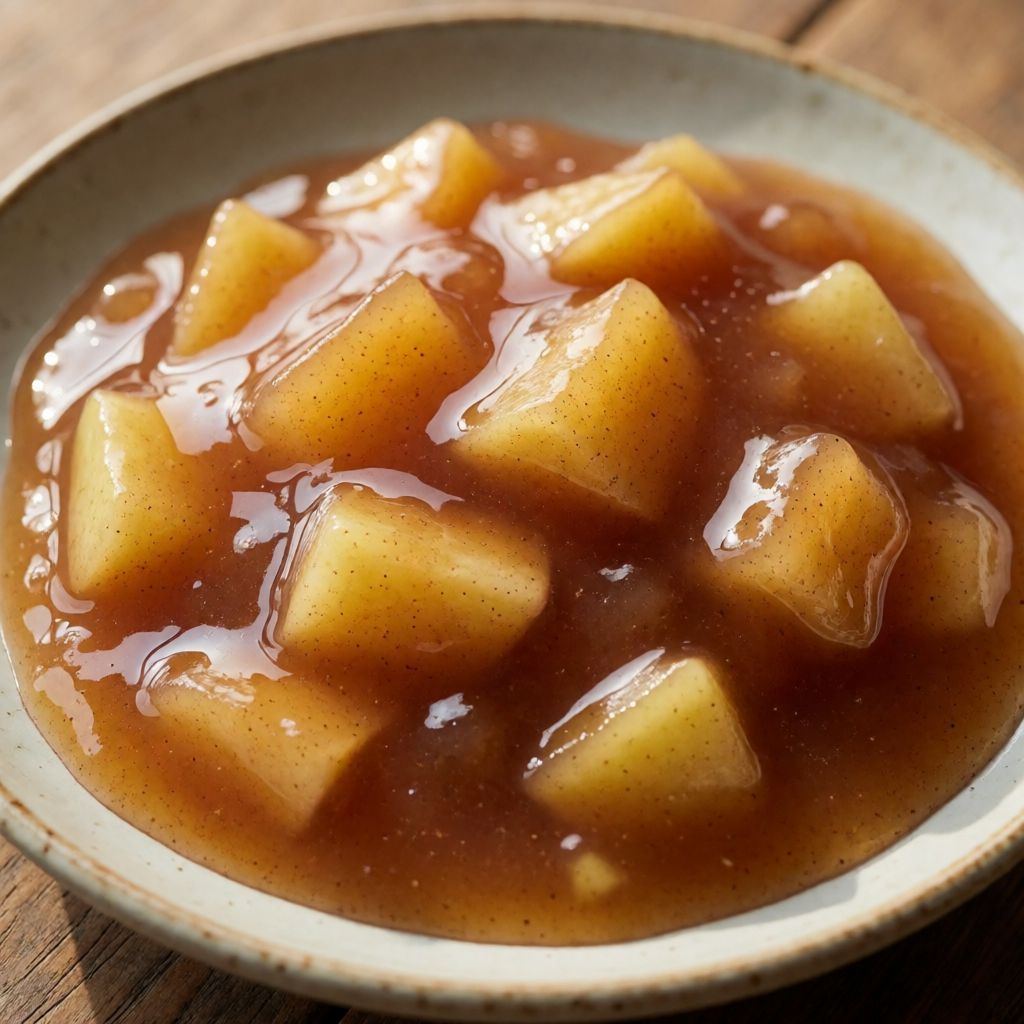
A simple homemade apple jam, slowly simmered with sugar and a touch of cinnamon.
Labels are worked out automatically from the ingredients and can be wrong. Check the packaging if it matters to you.
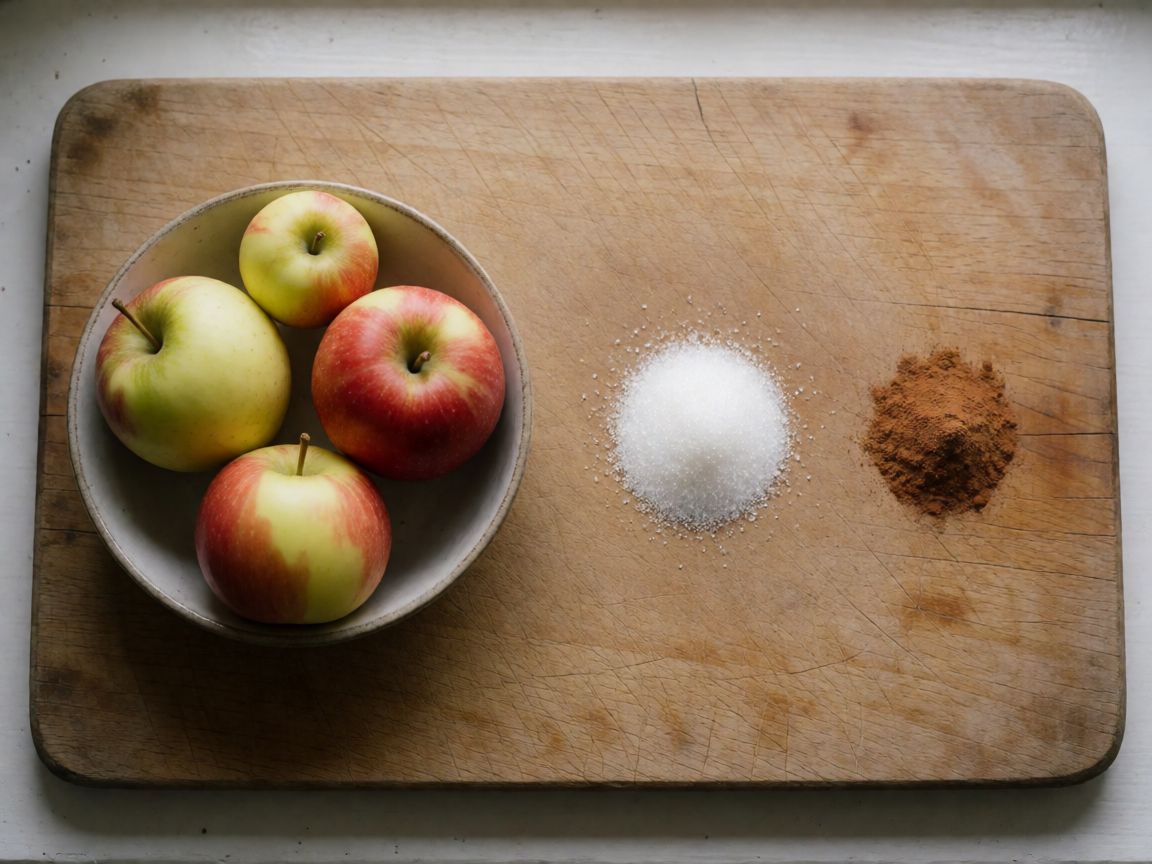
Ingredients



Steps
Wash the apples, peel them, remove the cores and cut into slices
Transfer the apples into a wide stainless steel pot and add the sugar
Simmer gently over a low heat, stirring so the jam does not catch, and skimming off any foam
45 minMash the apples with a wooden spoon until they form a smooth purée
Once the jam reaches the desired thickness, stir in the cinnamon and mix well
5 minSpoon the jam into sterilised, clean and dry jars with airtight lids
Turn the jars upside down and leave to cool
Check the seal is tight by pressing the raised dot in the centre of the lid
Apple jam is nothing mystical — it's water leaving fruit while sugar moves in to take its place. You start with roughly 2.5 kg of apple that is mostly water, and you finish with a jar of concentrated apple that barely remembers it was ever watery. Everything in the method exists to manage that one transformation: get the water out evenly, don't let the sugar scorch on the way, and stop at the right thickness, not a set time.
What actually decides whether this works is heat distribution, not heat intensity. A narrow, deep pot traps steam and heat at the bottom — the apple there cooks fast, the apple on top barely warms, and the sugar sitting against hot metal with nothing left to protect it starts to catch. A wide pot gives you a big surface exposed to the air, so water leaves from the top as steam while the bottom stays gentler. That's the whole reason for "wide pot, low heat, keep stirring" — it isn't tradition for its own sake, it's damage control. Stirring isn't busywork either: it's moving the jam that's been sitting on the hottest spot before it burns and tastes bitter through the whole pot, not just at the edges.
Some people think you need a packet of pectin to make jam set. No — not with apples. Apple flesh, especially a tart cooking variety, is already loaded with pectin in its cell walls; mashing the fruit and cooking it down releases that pectin into the syrup, and the sugar and the fruit's own acid do the rest. Pectin powder exists for fruits that are naturally short on it — strawberries, cherries — not for apples.
The apple itself is the one ingredient you actually choose, and choosing badly causes most apple-jam disasters. You want a variety with a sharp bite and acid in it — a Bramley, a Granny Smith, anything that makes your mouth water a bit raw. That acidity isn't about flavour balance alone; it helps the pectin set properly, the same way lemon juice rescues a low-acid jam. A sweet, soft eating apple like a Gala will cook down fine but give you a flatter, less structured jam — if that's all you have, a spoonful of lemon juice in the pot earns back some of what you're missing.
The pot matters more than people admit. Stainless steel because it's inert — aluminium reacts with the apple's acid and can leave a faint metallic edge in the jam, especially over forty-five minutes of contact. "Wide" isn't decoration either, as said above: it's your domestic hob's workaround for not having an open fire with heat coming from everywhere. On an electric ring with a single hot centre, or a gas flame that runs hotter at its tips, the stirring has to work harder because your heat source is less even than it looks. If your lowest gas setting still roars, a heat-diffuser mat under the pot buys you the gentleness the recipe is actually asking for.
Sugar is doing two jobs, not one. It sweetens, obviously, but its real work is pulling water out of the apple cells by osmosis and then binding what's left, so mould and yeast have nothing to grow on. That's why the ratio of apple to sugar isn't a matter of taste alone — 2.5 kg apple to 1.2 kg sugar is lighter on sugar than old-fashioned preserve recipes that go closer to equal weights, which means this jam is a little less of a shelf-stable brick and a little more of a short-term pleasure. Keep opened jars in the fridge and don't expect them to sit in a cupboard for a year.
Cinnamon is there by history more than necessity — it became the default pairing with apple in Britain once trade routes brought the price down from "luxury spice" to "kitchen staple," sometime in the Victorian era, and the pairing stuck the way habits do. Use any warm spice you actually like instead — a few cloves, a strip of orange zest — the only rule is add it at the end, after the heat's main work is done, so you taste it rather than its ghost.
Sterilising the jars isn't ceremony, it's preventing the one failure that actually matters here: mould or bacteria surviving on a damp surface under a sealed lid, in the dark, with sugar to feed on. Turning the jars upside down while the jam is still hot does two things at once — the heat sterilises the inside of the lid, and as the jam cools and contracts, it pulls the lid down into a vacuum. The dot in the centre of the lid is your proof: press it, and if it stays down, the seal held; if it springs back, it didn't, and that jar goes in the fridge now, not the cupboard.
From 2.5 kg of apple you're looking at maybe four or five standard jam jars once the water's gone — enough for a household's toast and tea for a few weeks, not a year's supply. And patience is the one ingredient missing from the list: rushing the simmer to save ten minutes is exactly how you end up scraping burnt sugar off the bottom of a pot instead of spooning jam into a jar.