
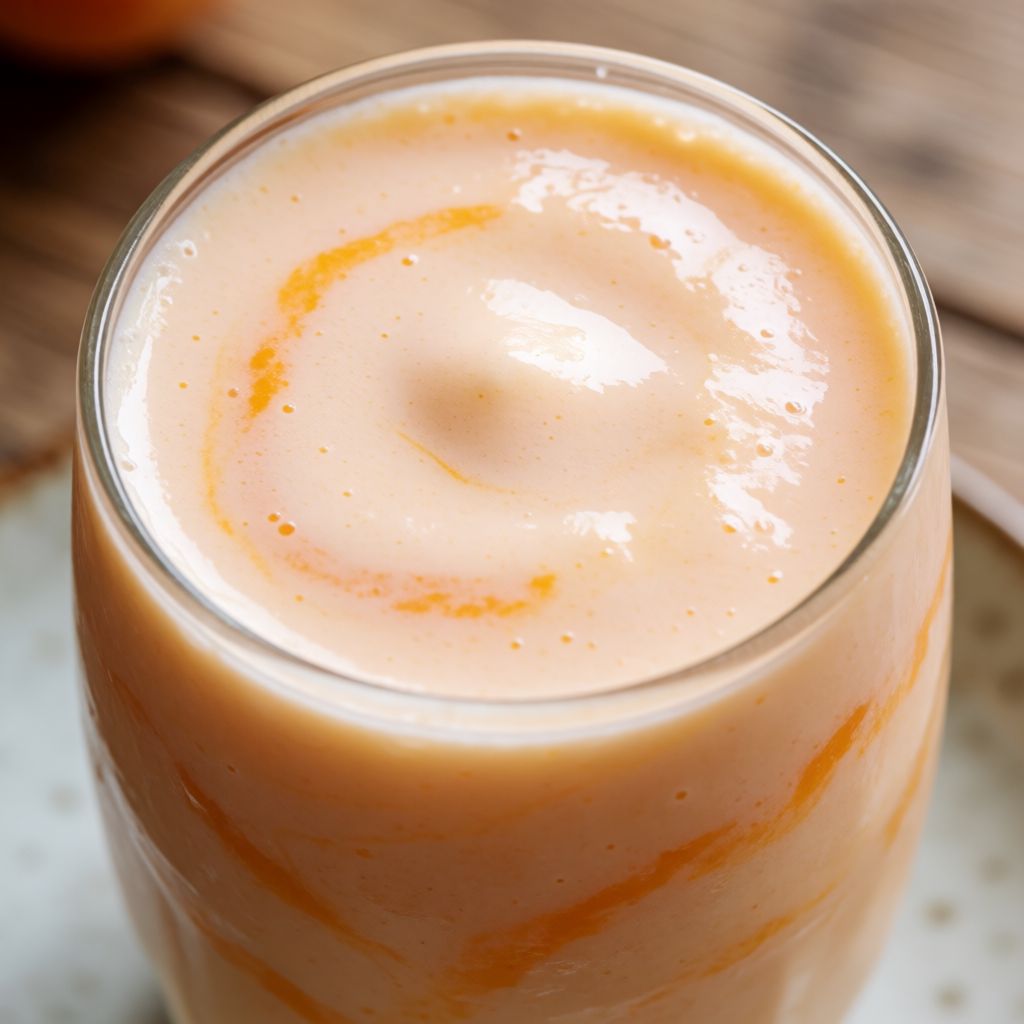
 AI photo
Apricot and Yogurt Fruit Smoothie
A quick, fruity apricot and yogurt smoothie ready in minutes.
Labels are worked out automatically from the ingredients and can be wrong. Check the packaging if it matters to you.
Ingredients
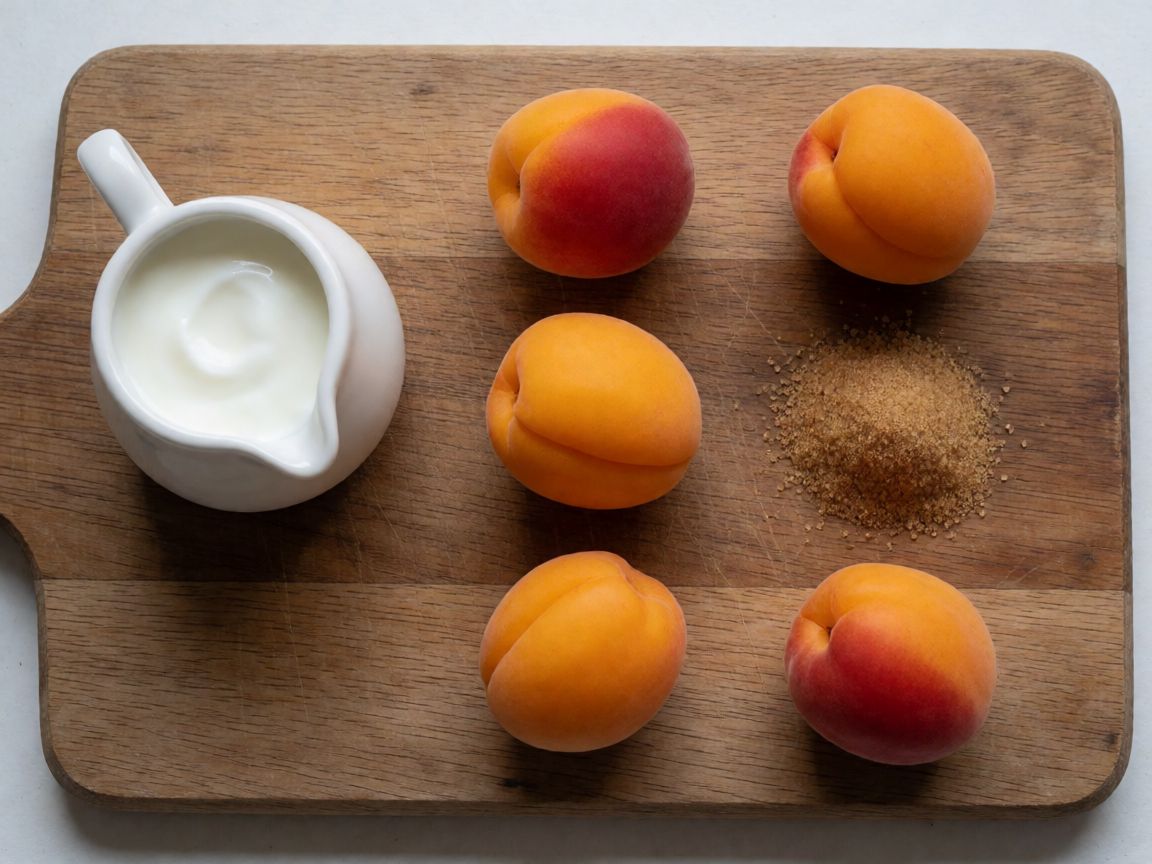
- 6 pcs Apricot
- 125 ml Yogurt
- 2 tbsp Brown sugar

Steps
Choose ripe apricots, wash them, halve and remove the stones, then cut into smaller pieces.
Transfer the apricots to a blender jug and blend until smooth.
Add the yogurt and brown sugar, taste and adjust to your liking.
Blend again until smooth, then pour into a glass and garnish with a sprig of fresh mint.
This is not really a cooked thing — it's a ratio. One ripe fruit, one pot of yogurt, a little sugar to round the edges, and a blender doing the work a kazan would do in other recipes: breaking a solid into something you can drink. Nothing here needs heat. The "10 minutes" on the label is really just you standing at the counter with a knife and a blender jug, not a pan on a flame.
What decides whether this works is not technique, it's the apricot. A hard, pale apricot bought cold from a UK supermarket shelf will give you a thin, sour, slightly chalky drink no matter how much sugar you add — because unripe apricot hasn't finished converting its starch to sugar yet, and its pectin is still locked up tight, tasting of water and skin. A ripe one gives against your thumb like a small bruise waiting to happen, smells sweet right at the stem end, and has gone from pale yellow to a deeper orange-gold. If what you bought is still hard, leave it on the counter two or three days — not the fridge, cold stops the ripening enzymes dead — and only then cut it up. Patience here isn't a virtue, it's an ingredient with no substitute.
Six apricots sounds like a lot for one glass, and it is — this is a thick, almost spoonable drink, closer to a liquid dessert than a breakfast shake. If that's more than you want, scale the fruit down and keep the yogurt-to-sugar ratio: it's the apricot-to-yogurt balance that sets the texture, not the absolute amount.
The yogurt wants to be plain and unflavoured — anything vanilla-scented or already sweetened will fight the fruit rather than carry it. Full-fat gives you a rounder, creamier result; low-fat works, it's just thinner, more juice-like. A standard UK 125g pot of natural yogurt lines up almost exactly with the 125ml asked for, so you don't need to measure at all, just empty the pot. If you only have Greek-style yogurt, which is strained and thicker, thin it with a splash of milk first or the whole thing turns into something you eat with a spoon rather than drink.
Brown sugar isn't decoration here, it's chosen because it dissolves into a cold liquid far more readily than white refined sugar does. White sugar is pure dry crystal and resists dissolving without heat or real mechanical force; brown sugar carries molasses, which is hygroscopic — it holds moisture and partly pre-dissolves itself just sitting in the jug, so a couple of spins of the blender blade is enough to vanish it completely, no grittiness left. If you've only got white sugar, use it, but expect to taste for grit before you call it done, or swap in honey or maple syrup, which are already liquid and dissolve on contact.
No apricots to be found, or they're hard as conkers and three days of ripening isn't going to happen before breakfast — use a ripe peach or nectarine instead, same sugar-acid family, same texture once blended, you'll barely notice the swap. Dried apricots, soaked in warm water for an hour until soft, are a real winter substitute too; they bring more concentrated sweetness, so cut the sugar back.
Ice has no business in this recipe, and some people reach for it out of habit because "smoothie" sounds like it should be cold and bulky. Don't — ice is just frozen water, and all it does here is dilute a drink that already gets its chill from fridge-cold yogurt and fruit. If you want it colder, chill the glass, not the drink.
The mint at the end is for smell more than taste — bruise the leaf lightly between your fingers before you drop it on, don't chop it, chopping releases too much of the volatile oil too fast and it turns bitter and grassy instead of fresh. A sprig that's just been pressed, not shredded, is what you want floating on top.