
 AI photo
Aristocrat Biscuits
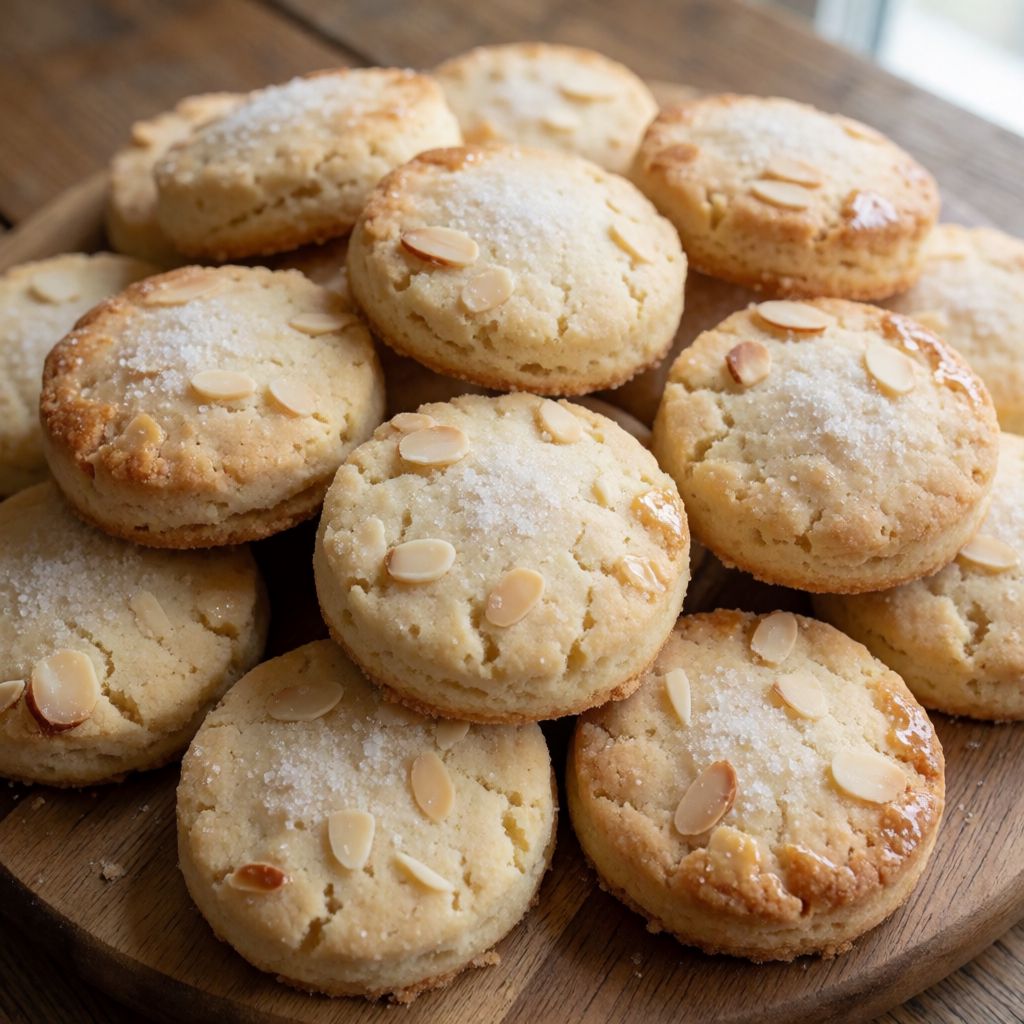
Crisp almond-and-lemon shortbread biscuits, sliced from a chilled dough log and baked until golden at the edges.
Labels are worked out automatically from the ingredients and can be wrong. Check the packaging if it matters to you.
Ingredients
- 75 g Almonds
- 250 g Plain flour
- 175 g Caster sugar
- 1 pcs Lemon finely grated zest
- 200 g Butter cold, cut into cubes
- 1 pcs Egg beaten






Steps
Pour boiling water over the almonds, let them sit briefly, then peel off the skins.
Preheat the oven to 150°C and toast the almonds for 10 minutes, watching that they do not change colour.
10 minFinely chop the almonds.
Put the flour, caster sugar and lemon zest into a bowl and rub together with your fingers until well combined and fragrant with lemon.
Add the butter and rub in until you have a uniform dough.
Mix in the almonds and bring the dough together with the beaten egg, adding half first and only adding more if needed.
Roll the dough into two logs about 4cm in diameter, wrap in baking parchment and chill in the fridge for at least 30 minutes.
30 minSlice the dough into 3mm rounds and arrange on a baking tray lined with parchment.
Bake in a preheated fan oven at 180°C for 8-10 minutes, until the edges turn golden.
9 minLeave the biscuits to cool on a wire rack.
This is shortbread with an almond-and-lemon lift, built on the rubbed-in method: flour, sugar and cold butter worked together with fingers until you've got crumb, before any liquid touches it. That rubbing is what decides everything. Fat coats the flour grains and blocks gluten from linking up into strands, so the biscuit stays "short" — it snaps clean instead of bending or chewing. Some say you have to cream butter and sugar for a good biscuit. No — creaming beats air into softened butter for a lighter, cakey crumb; here you want the opposite, a dense sandy one, so the butter goes in cold and gets rubbed, not beaten.
Butter staying cold is the whole battle. Warm it with your palms too long and the fat starts to melt rather than coat, the dough turns greasy, and in the oven it spreads into a flat puddle instead of holding the shape you sliced. That's also why the log goes into the fridge before cutting — not for flavour, for structure. Cold butter cuts clean; soft butter drags and smears under the knife and you get ragged, uneven rounds that bake unevenly.
The lemon zest rubbed into the sugar is pure mechanics, not romance: the sugar crystals act as an abrasive, bursting the oil glands in the zest and spreading that oil through every grain. That's why the instruction is to rub "until fragrant" rather than for a set number of seconds — your nose tells you when it's done, not a clock.
Flour is plain, not self-raising, and that matters — you don't want this biscuit to puff or lift. It should sit flat and give you a clean snap, and a raising agent would fight that by pushing air into a crumb built to be dense.
Sugar is caster, chosen for the grind, not the sweetness. Fine crystals rub evenly through flour and act as the abrasive that releases the lemon oil, as above. Granulated is too coarse and won't do that job cleanly; icing sugar is too fine and tends to clump with the butter instead of staying loose and sandy. If caster isn't in the cupboard, pulse granulated sugar a few seconds in a blender — not to powder, just to bring the grain size down.
Butter should be real butter, cold, cubed small so it rubs in fast before it warms from your hands. Its job is fat coverage of the flour, and butter's flavour is part of the point of a biscuit this plain. Margarine will do the same mechanical job — a solid fat at fridge temperature — but it carries more water and less flavour of its own, so the dough will be a touch softer and spread a little more; fine in a pinch, not the same biscuit.
Almonds are blanched because the brown skin is bitter and tough — leave it on and you get dark flecks and a faint tannic edge that has no business in a biscuit this delicate. If almonds aren't to hand, any mild, oily nut with no loud flavour of its own will do the same structural job — ground hazelnut is the obvious stand-in, walnut less so, since walnut has a bitterness of its own that will compete with the lemon rather than sit behind it.
Egg is binder only, and that's why the recipe tells you to add it half at a time. Too much liquid wakes up the small amount of gluten in the flour and the dough turns elastic and tough to slice, or spreads more than it should in the oven. If you're out of egg, a spoon of cold milk or cream will bind the crumb without bringing in egg protein — the dough will be a little more fragile to slice, so handle it gently and keep it cold.
In the oven, watch the edges, not the clock — they go gold while the centre stays pale, and that's your cue to pull the tray, because a biscuit this thin keeps cooking a little from its own residual heat once it's out. A fan oven runs a touch fiercer than a conventional one; if yours doesn't have a fan, give it closer to 200°C and keep an eye on the first batch, since home ovens vary and run hot or cool in patches nobody designed for. And don't skip the fridge rest before slicing — patience there is doing real work, not filling time, letting the butter firm back up so the knife goes through clean instead of dragging the dough out of shape.