
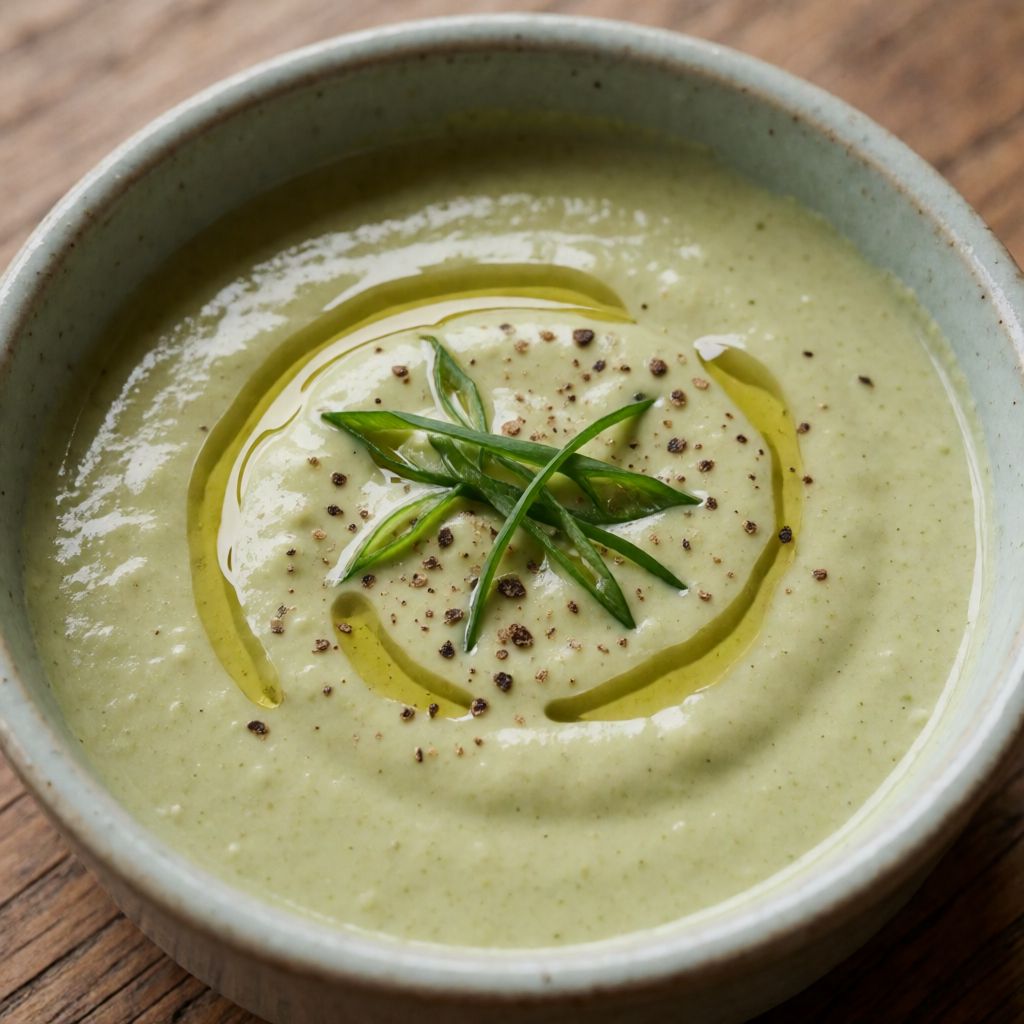
 AI photo
Asparagus Sauce
A creamy sauce made from stewed asparagus and potato, served with pasta.
Labels are worked out automatically from the ingredients and can be wrong. Check the packaging if it matters to you.
Ingredients
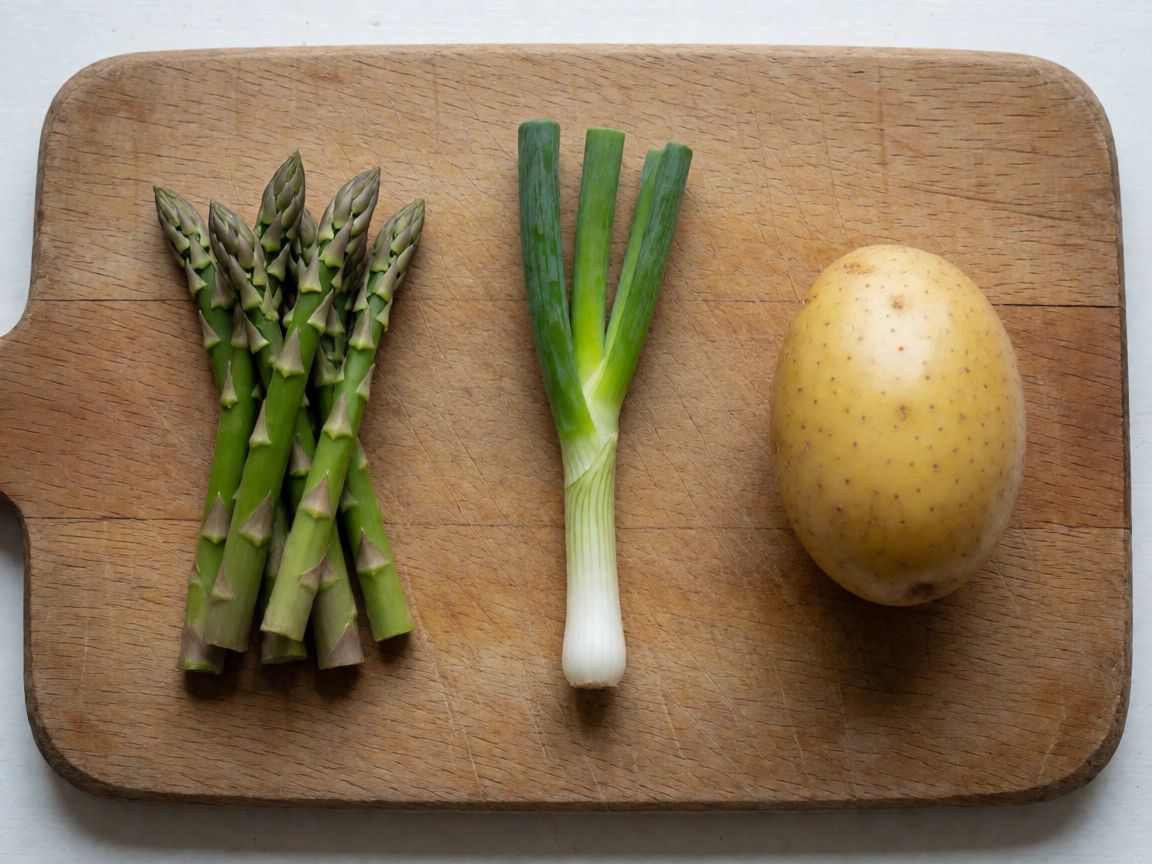
- 500 g Asparagus
- 1 pcs Spring Onion
- 1 pcs Potato
- Olive Oil to taste
- Salt to taste
- Black Pepper to taste






Steps
Trim the woody base of the asparagus stalks, removing at least 4–5 cm.
Rinse the asparagus and peel the rest of the stalk with a vegetable peeler, leaving only the tender part.
Cut the peeled asparagus into uneven pieces.
Finely chop the spring onion and fry it in a saucepan in olive oil.
Add the chopped asparagus, salt and black pepper to taste, cover with a lid and simmer over low heat.
15 minStir occasionally; check with a fork that it easily pierces the flesh of the asparagus.
Blend the stewed asparagus together with the pre-cooked potato and a little olive oil until smooth and creamy.
Serve the sauce with pasta, preferably a short shape.
This isn't a sauce in the flour-and-butter sense — it's asparagus made soft enough to become its own silk, held together by a potato instead of cream. That's the whole trick. You're not adding liquid to asparagus, you're trusting that asparagus is already mostly water (about 93% of it) and letting that water cook the vegetable from the inside, under a lid, with nothing poured in.
What decides whether it works has nothing to do with blending power. It's two earlier, duller steps: cutting away the woody base and peeling the stalk. Skip those and no amount of blitzing fixes it — the fibres that run lengthwise through the lower stalk don't break down with heat, they just go from crunchy-stringy to soft-stringy, and you'll feel threads catching between your teeth even in a puréed sauce. The peeler isn't fussiness, it's removing the part of the plant built to stand upright in a field, not to dissolve in a pan.
The second thing that decides it is restraint with water. Some people boil asparagus in a full pan, the way you'd do green beans — no, because that's throwing the flavour down the sink along with the cooking water. Here the onion sweats in oil first, the asparagus goes in on top, the lid goes on, and the vegetable steams in juice it's giving up itself. Low heat here means: no rattling, no bubbling you can hear from across the room — if it's noisy, it's boiling dry and sticking, and that's the thing to catch before the bottom catches.
Doneness is a fork sliding into the flesh without resistance, not a clock. Fifteen minutes is where to start checking, not where to stop.
Asparagus: thickness isn't quality, freshness is. Look for tight, closed tips — not weeping, not flowering open — and a stalk that still has some spring when you bend it. If it bends and gives without any resistance before snapping, it's old; the sugars have turned to starch and the fibres have toughened further up the stalk, which means you'll be peeling and trimming more than the usual 4–5cm, not less. British asparagus has its own short window — roughly May into June, mostly from the Vale of Evesham — and it's worth buying then, because asparagus flown in off-season has usually spent its sweetness travelling.
Spring onion rather than a regular onion: it's younger, milder, and it softens in the time it takes oil to go from cold to shimmering rather than needing the slow ten minutes a full onion wants to lose its raw bite. If you've only got a regular onion, that's fine — just give it longer in the pan before the asparagus goes in, until it's translucent and smells sweet rather than sharp, not golden, you're not caramelising it here.
The potato is doing the job cream would do in another kitchen: body, without a flavour of its own loud enough to compete with the asparagus. Use a floury variety — the kind that falls apart when boiled, the kind sold for mash or roasting — not a firm, waxy one that stays in neat cubes, because that firmness is exactly what won't break down into smoothness in the blender. And since this is a Sunday-roast kitchen, a leftover roast potato, already cooked and already a bit floury-soft, does the job without you boiling one specially.
Olive oil here means any oil with no smell of its own strong enough to sit on top of asparagus's flavour — a light, mild olive oil, or a neutral oil like sunflower if that's what's in the cupboard. Save anything peppery or heavily fruity for drizzling over the finished pasta, not for the pan; cooked in, its character just burns off and you've wasted the expensive bottle.
Salt and pepper go in while the asparagus is still stewing, not after blending — seasoning a hot vegetable lets the salt pull moisture and flavour together as it cooks, rather than sitting on the surface of a purée tasting of itself. And have patience with the fifteen minutes: a lid rattling impatiently on a pan, lifted every thirty seconds to check, lets steam escape that the asparagus needs to cook in. A plate set over the pan works as a lid if you don't own one that fits — it holds the steam in just the same, which is the only job a lid has here.