
 AI photo
Asparagus with Eggs
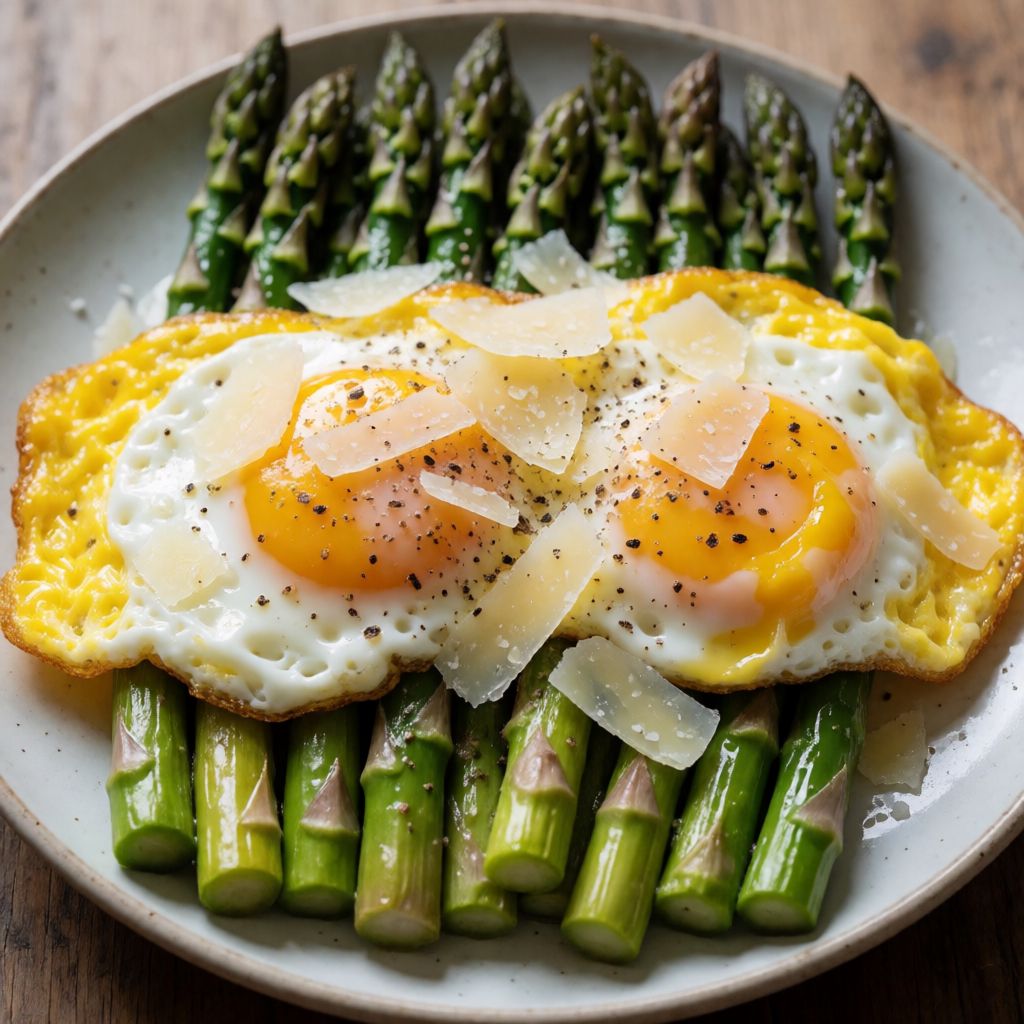
A simple side dish of tender asparagus topped with buttery eggs and grated parmesan.
Labels are worked out automatically from the ingredients and can be wrong. Check the packaging if it matters to you.
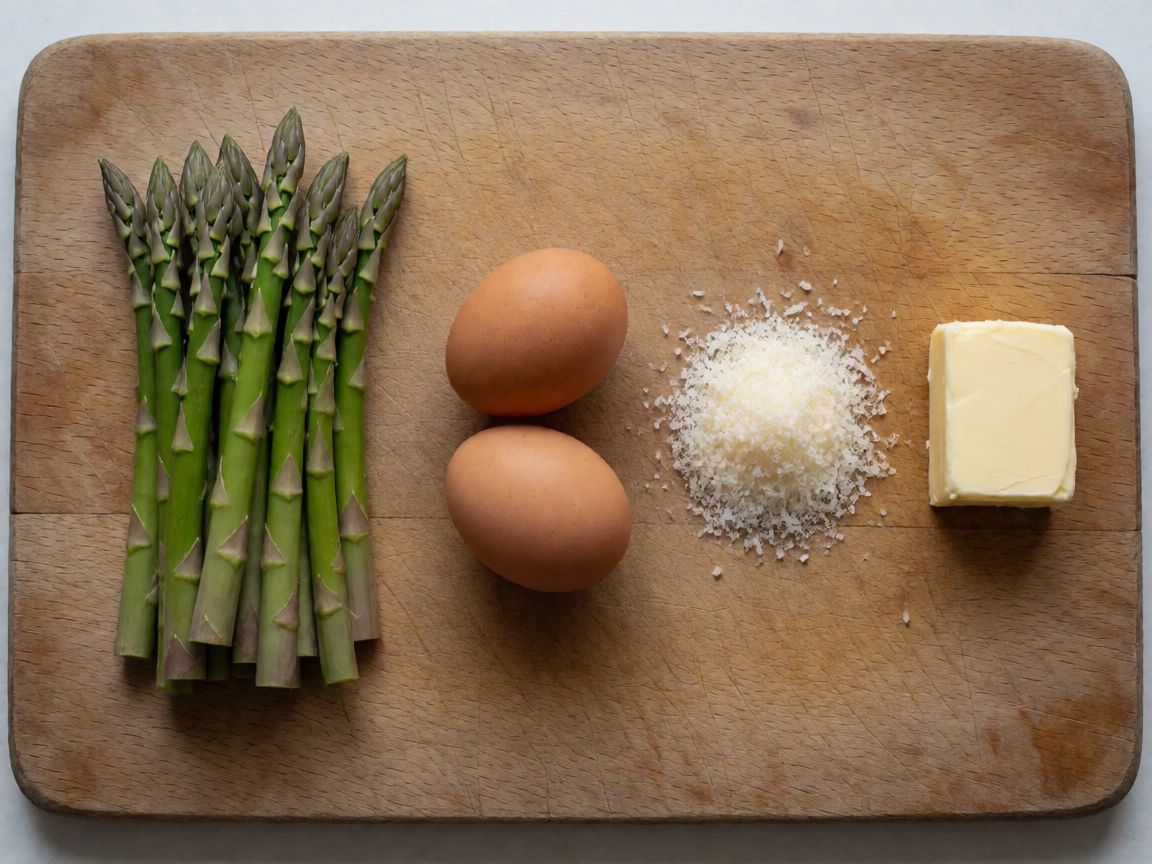
Ingredients






Steps
Rinse the asparagus under running water and trim off any woody ends. Peel the lower part of the stalks.
Fill a large pot with enough water, bring to the boil, season with salt and add the asparagus.
Cook the asparagus for about 10-15 minutes, depending on the thickness of the stalks.
12 minDrain the water and set the asparagus aside.
In a small frying pan, melt the butter, add the cooked asparagus and sauté for a few minutes.
Arrange the asparagus on the serving plate, stalk to stalk, with the tips facing the same way.
In the same pan, cook the eggs, seasoning with salt and black pepper.
Carefully transfer the eggs onto the asparagus.
Sprinkle the dish with grated parmesan.
This is not a boiled vegetable with a fried egg plonked on top. It's a vegetable cooked twice — once in water, once in fat — and that second cooking is the whole point. Water cooks the asparagus through; butter gives it back the flavour and the shine that water always steals. Skip the butter stage and you have canteen asparagus: correctly cooked, tasting of nothing.
What decides whether it works is not a clock but your eye and a fork. Asparagus is done when a stalk, lifted and held horizontal, droops — bends under its own weight instead of staying stiff or snapping in half. Snap means raw middle. Total collapse means you've made soup. Twelve minutes is where to start checking, not where to stop.
The second test is the egg. You want the white fully set — no glassy wobble left in it — and the yolk still soft enough to spread when you cut into it, because the yolk is doing a job here: it's the sauce. A hard yolk turns this from a dish into dry protein with a vegetable attached.
Some say asparagus must be tied in a bundle and stood upright in a tall pot, tips steaming while the stalks boil, because thick stalks cook unevenly otherwise. No — that's a solution for finger-thick French asparagus. The thin stalks sold in most UK supermarkets lie flat in a wide pan and cook evenly without any rigging. You don't need a kazan or a special asparagus pot for this; a frying pan and a saucepan from an ordinary flat do the whole job.
Peeling the lower third of the stalk isn't fussiness, it's damage control. The skin near the base is fibrous — it doesn't soften in the time the delicate tip needs to go from raw to tender, because the tip cooks faster than the base. Leave the skin on and you get a bite that's perfect at the top and stringy, chewy, slightly bitter at the bottom. A vegetable peeler, two passes, done. If the stalks are pencil-thin, skip it — there's nothing there to peel.
Salting the boiling water generously does two things: it seasons the vegetable from the outside in while it cooks (asparagus is mostly water, so it absorbs what's in the water around it), and it's your one chance to season the stalk itself, because once it's out of the pot and into butter, salt just sits on the surface. Under-salt the water and the finished dish will taste flat no matter how much you add later.
The butter stage is where flavour actually happens, and it's short on purpose — you're not frying, you're coating. Butter is a fat, and fat carries aroma the way water cannot; this is why the same asparagus tastes completely different the moment it goes from the pot into the pan. Any fat with no smell of its own and a tendency to brown nicely at the edges will do the same job — ghee, or a mild oil if you're avoiding dairy, though you lose some of butter's particular nuttiness. Salted butter works, but then go lighter on the pot salt, or the dish tips over into salty.
Cooking the eggs in the same pan, without wiping it, isn't laziness dressed up as method — it's picking up the butter and the asparagus residue left behind, so the eggs taste of the dish they're about to sit on rather than of a blank fried egg. Use eggs you'd be happy to eat soft — freshness matters more here than in most cooking, because a stale egg spreads thin and ragged in the pan instead of holding a shape.
Parmesan goes on raw, at the very end, off the heat, and that's not a presentation choice — hard cheese melted straight into hot egg and butter turns greasy and separates instead of just softening into the warmth already there. Grate it yourself if you can; pre-grated parmesan is often cut with starch to stop it clumping in the bag, and that starch is exactly what stops it melting properly on your plate. Any hard, salty, aged cheese — pecorino, grana padano — will stand in for it; just taste before you add extra salt, since they vary a lot in how salty they already are.
One honest note on quantity: 150 g of asparagus and two eggs across four plates is a taste, not a serving — fine as a token side to a Sunday roast, thin if this is meant to be the main event for four. If you want it to actually feed four as a course on its own, double the asparagus and the eggs; the butter and cheese barely need to move. And don't rush the two cooking stages into one — the whole dish is built on doing them separately, water then butter, and patience there is the one ingredient that isn't on the list but is doing real work.