
 AI photo
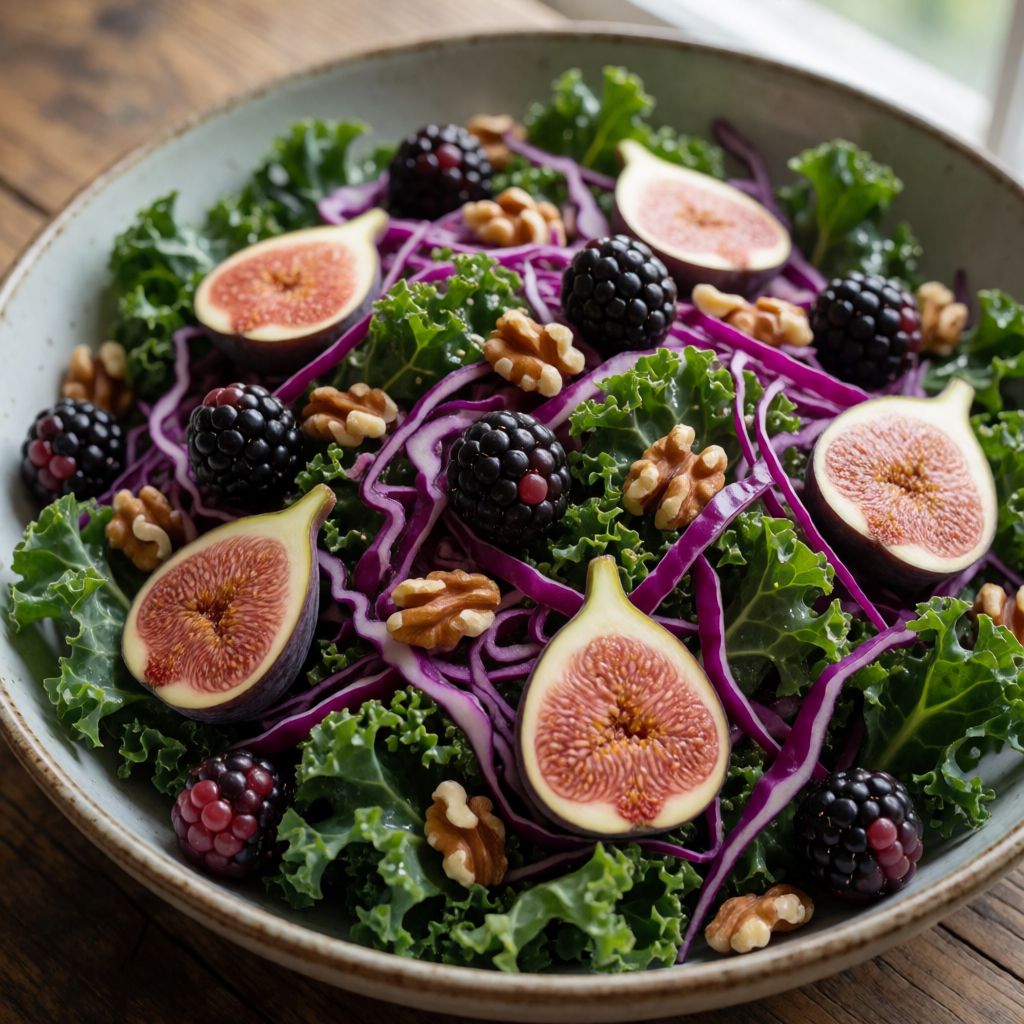
Autumn salad with blackberries and figs
A fresh autumn salad combining kale, red cabbage, blackberries and figs with maple-glazed walnuts.
Labels are worked out automatically from the ingredients and can be wrong. Check the packaging if it matters to you.
Ingredients
- 250 g Kale finely chopped
- 1 pcs Lemon juice and grated zest
- 60 g Walnuts
- 2 tbsp Maple syrup
- 150 g Red pointed cabbage finely shredded
- 125 g Blackberries
- 4 pcs Figs cut into quarters
- 3 tbsp Olive oil
- Salt to taste
- Black pepper freshly ground, to taste





Steps
Place the kale in a bowl with the olive oil, lemon juice and grated lemon zest. Massage the kale for a few minutes until it becomes soft and pleasant to eat.
3 minToast the walnuts in a dry pan for 1 minute, stirring.
1 minAdd the maple syrup, remove from the heat immediately and mix well so the walnuts are evenly coated in syrup.
1 minArrange the kale, cabbage, blackberries, figs and walnuts on a large serving platter and season with salt and freshly ground black pepper to taste.
This is not a cooked salad — it is an assembly of three different textures, each handled by a different mechanism, and the whole thing stands or falls on whether you respect that. Kale does not want to be eaten raw and whole — it is stiff, waxy, built to survive frost, not a fork. So you break it down by hand: oil, lemon, salt, massage. That is not a wellness ritual, whatever the food blogs tell you — it is mechanical digestion done before it reaches your mouth. The leaf's surface wax and the rigid cell walls along the ribs give way under pressure and acid, the way meat fibres give way to a mallet. Skip this and you are eating cabbage leaves dressed up as salad, bitter and tough.
The walnuts go through the opposite logic — heat, then sugar, then an immediate stop. A dry pan for a minute wakes up the oils in the nut and gives you real toasted flavour instead of the flat taste of a raw walnut. The moment you add maple syrup you are one step from burnt sugar, because syrup caramelises fast and walnuts carry a lot of residual heat even off the flame — so off the heat it comes, straight away, and you keep stirring so the syrup sets as a thin shell, not a pool at the bottom of the pan.
Kale: buy it dark, tight-leaved, with no yellow creeping in at the edges — that yellow is the leaf breaking down on its own, and you want it breaking down under your hands, not in the bag. If the stems are thick, strip them out before chopping; they never soften, massage or no massage, and you'll bite into a rib like a twig in your salad. There is no honest substitute here — spinach collapses to nothing, chard carries too much water and goes slimy under oil. Kale's whole value in this dish is that it resists, then yields.
Lemon does two separate jobs, which is why you use juice and zest both. The juice is the acid that helps break the leaf down alongside the massage — vinegar would do the same mechanical job, but it brings its own smell and you'd be fighting it against the figs. The zest is pure aromatic oil sitting in the skin, no acid in it at all, there only for scent — rub it in and you get lemon on the nose before you taste anything.
Walnuts: freshness is not optional here, and this is where most kitchens quietly fail. Walnut oil goes rancid faster than almost any other nut oil, and a stale walnut doesn't taste neutral — it tastes bitter in a way that no amount of maple syrup disguises. Buy in small amounts, keep them cool, taste one raw before you toast a whole batch. Pecans work as a substitute if you want a softer, sweeter bite instead of walnut's natural tannic edge.
The olive oil here should be the kind with no flavour of its own loud enough to compete with lemon and figs — a mild one, or any neutral oil you'd use for the same reason: to coat the leaf evenly and carry the acid into it, not to announce itself. A heavily peppery, grassy oil fights the fruit instead of supporting it.
Blackberries and figs are the part of this salad with real seasonal logic behind it, not decoration. In Britain this is bramble season — hedgerows are full of blackberries exactly when figs are at their softest and sweetest, late summer sliding into autumn, which is presumably why the two end up on the same plate. Choose figs that give slightly under your thumb, not hard ones — a hard fig is a fig that will never ripen further once it's off the tree, it will just dry out. If neither is in season where you are, pears and a handful of pomegranate seeds do the same job: something soft and sweet against something with a burst of acid.
Patience is the ingredient nobody lists. The massage on the kale takes longer than three minutes if the leaf is thick or you're going easy on it — go by feel, not by the clock: it should go from stiff and squeaky to soft and almost silky, folding over your fingers instead of springing back. That's the leaf telling you it's ready, not a timer.