
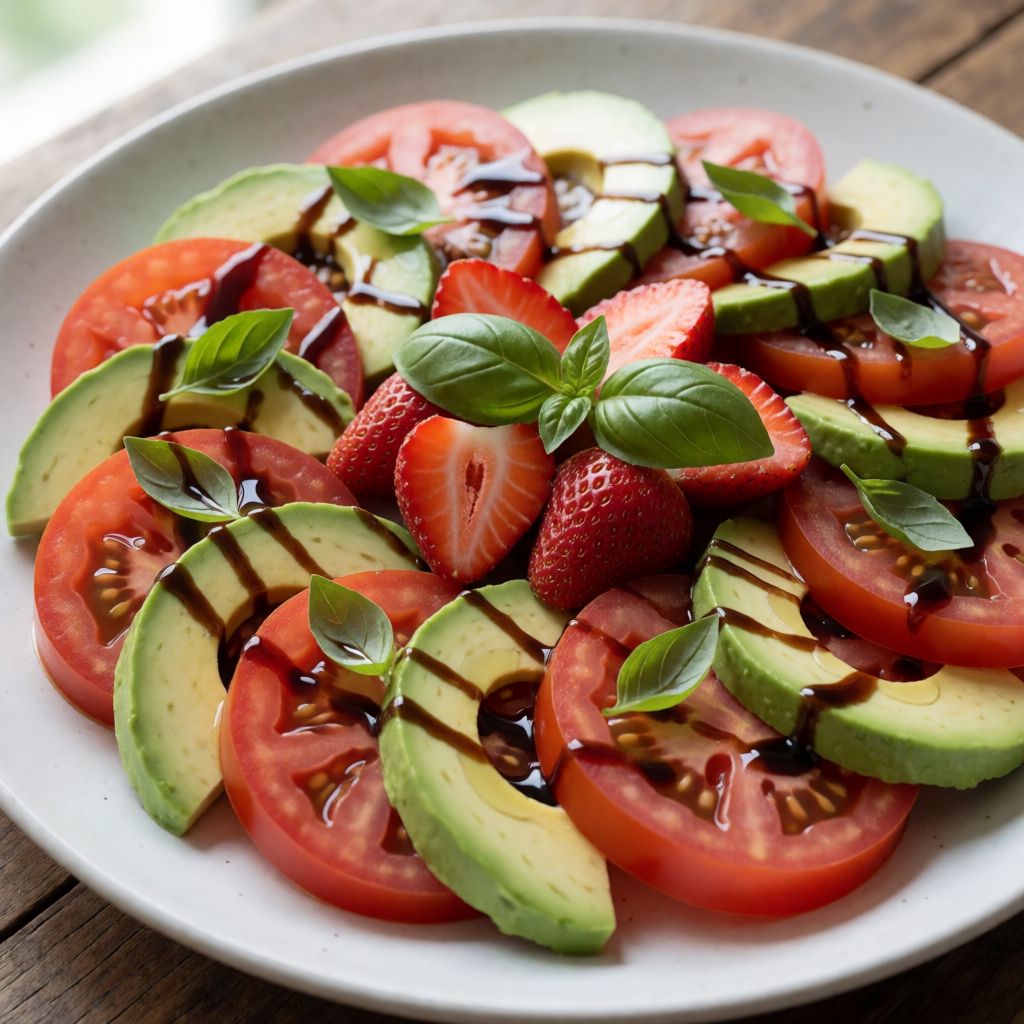
 AI photo
Caprese with Avocado and Strawberry
A fresh avocado and strawberry twist on the classic Caprese salad with a balsamic reduction.
Labels are worked out automatically from the ingredients and can be wrong. Check the packaging if it matters to you.
Ingredients
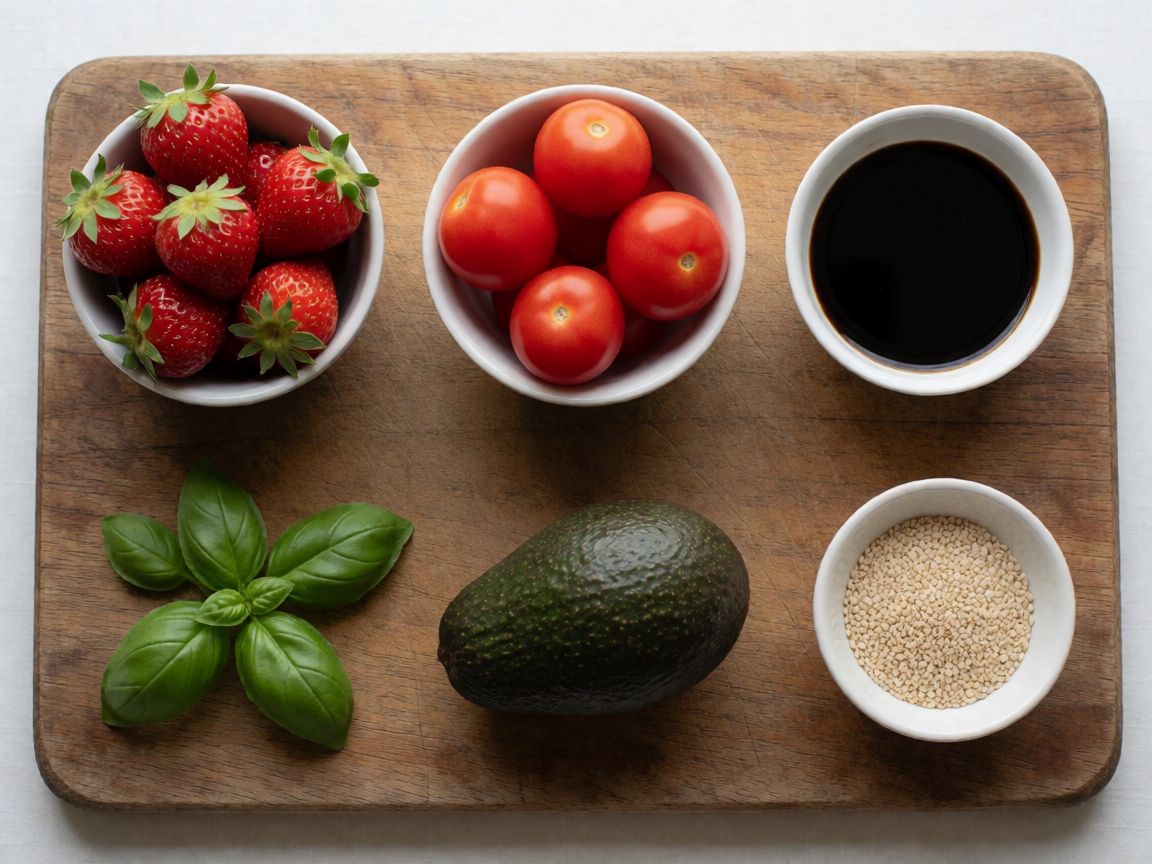
- 140 g Strawberries
- 160 g Tomatoes
- 80 g Balsamic vinegar
- 1 pcs Avocado
- Basil to taste
- 2 tsp Olive oil
- Salt to taste
- Black pepper to taste
- Sesame seeds to taste








Steps
Bring the balsamic vinegar to the boil over medium heat and simmer for 7 minutes until it thickens into a syrupy reduction.
7 minWash and slice the strawberries, halve the tomatoes, and dice the avocado.
In a bowl, combine the washed and sliced strawberries, tomatoes, avocado and torn basil leaves.
Add the olive oil, salt, black pepper and sesame seeds to taste, along with the finished balsamic reduction.
Mix well and serve immediately.
This isn't really a Caprese — it borrows the red-white-green logic of the original (tomato, something pale and creamy, basil) and swaps the mozzarella for avocado. Worth naming that up front: some call anything tomato-and-basil a Caprese, but the real one is a Capri fisherman's lunch — tomato, buffalo mozzarella, basil, oil, nothing reduced, nothing sweet. Here the mozzarella's job — cool, bland, creamy — is done by avocado instead, and because avocado has no rind and no salt of its own, the whole balance shifts toward the dressing to carry flavour. That dressing is the one thing in this recipe that is actually cooked, and it's also the one thing that decides whether the dish reads as a salad or as fruit salad with vegetables wandering into it.
Strawberries and tomatoes sit together here because they're closer relatives than the fruit aisle suggests — both are sweet-acid, both soften the same way under salt, and a ripe strawberry dropped next to a ripe tomato won't taste out of place. 140 g is roughly a small punnet, enough for two if you're not padding the bowl with much else. Buy them a touch underripe rather than soft and weeping — they're going to sit in dressing and salt, and a firm strawberry holds its slice; a soft one collapses into the avocado and you lose the contrast the whole dish depends on.
Tomatoes (160 g, about two medium ones) want to be the kind with actual flavour — vine or plum, something that tastes of more than water and pink skin. A hothouse tomato out of season will taste mostly of the dressing, which isn't a disaster here, but it's a waste of the tomato. Halve rather than dice them; they bruise less and hold their juice a little longer, which matters because you're salting at the end, not steeping them in it.
The avocado should give slightly under thumb pressure without feeling bruised or hollow underneath — rock-hard and it won't dice cleanly, it'll crush; overripe and it'll turn to paste the second the dressing hits it. One average avocado for two people is generous rather than mean; this is the creamy, filling part of the salad, standing in for the mozzarella that a true Caprese would use, and the whole point of using it is that it melts into the dressing a little, the way mozzarella never does.
Balsamic vinegar at 80 g is the one ingredient worth spending a little more on, because the cheapest bottles are barely more than wine vinegar with caramel colouring added, and they will reduce into something thin and sharp rather than syrupy. If a proper aged balsamic is out of budget or out of reach, a decent balsamic blended with a spoon of honey or brown sugar before reducing gets you most of the way there — you're rebuilding the sugar the cheap bottle never had.
Olive oil here just needs to carry flavour without fighting the basil — any oil with no smell of its own does the same job; a flavourless light oil works if that's what's in the cupboard, though you lose a little of the roundness olive oil gives raw. Sesame seeds and black pepper are texture and a background warmth, not structure — leave them out and nothing collapses, they're the kind of thing you add because you have them, not because the dish was built around them. Basil, by contrast, isn't optional: it's the one note tying tomato back to its Italian cousin, so tear it rather than chop it — a knife bruises the leaf and lets it go bitter and dark before it even reaches the bowl.