
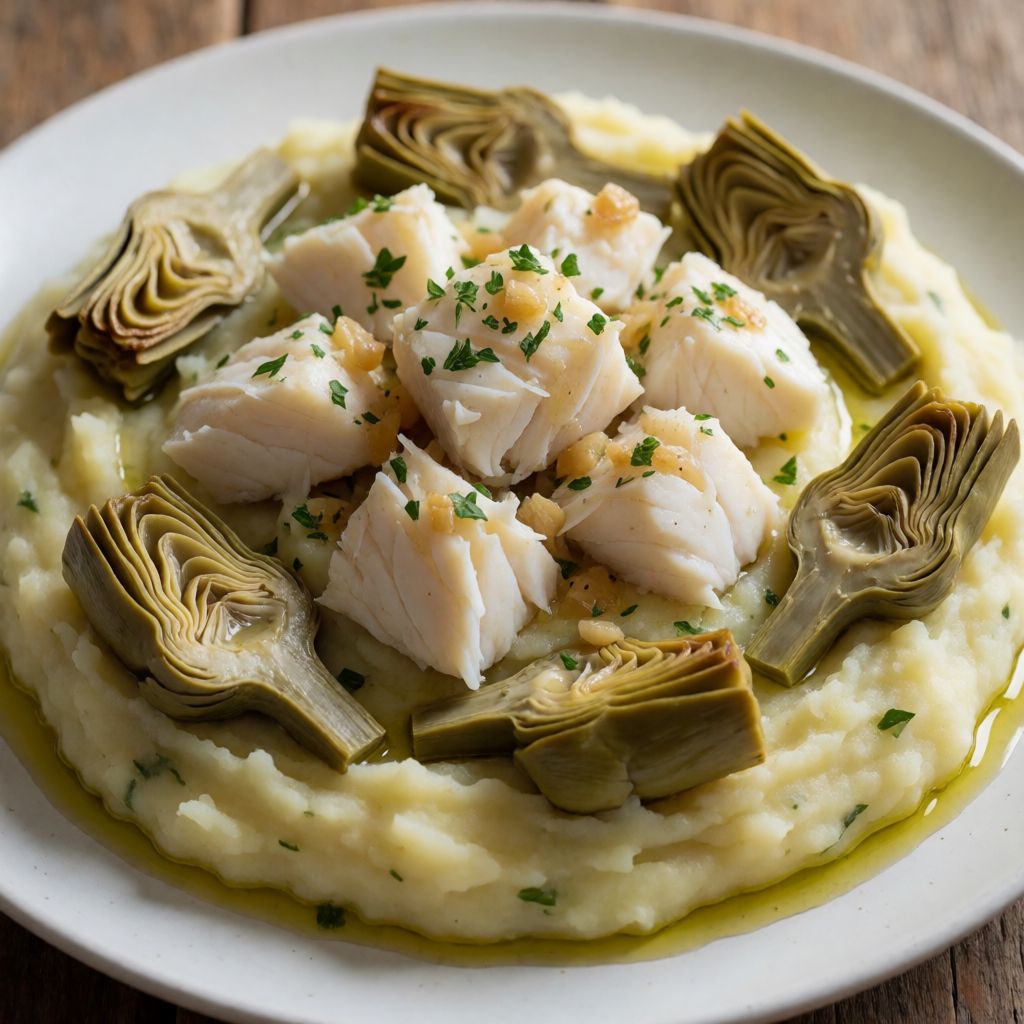
 AI photo
Salt Cod with Mashed Potato and Artichokes
A simple dish of salted cod served with creamy mashed potatoes and lightly stewed artichokes.
Labels are worked out automatically from the ingredients and can be wrong. Check the packaging if it matters to you.
Ingredients
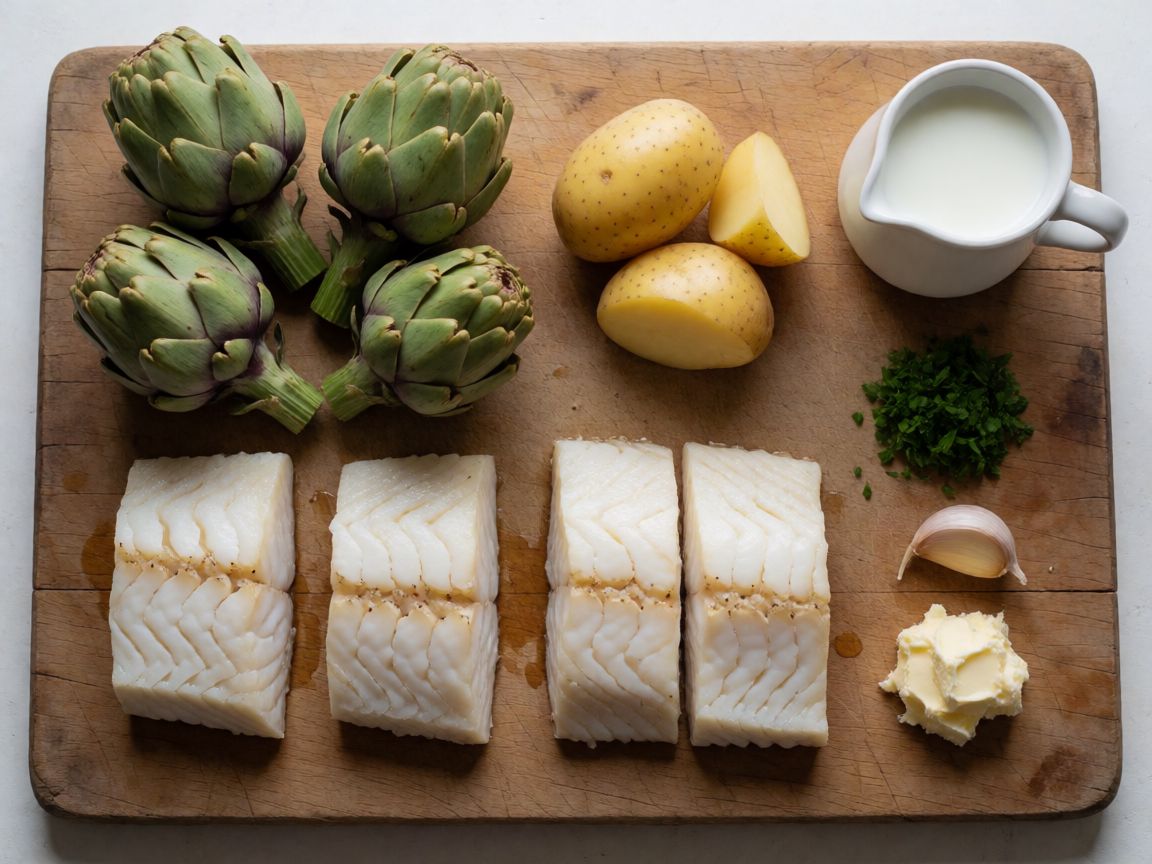








Steps
Peel the potatoes, cut them into pieces and put them into salted boiling water.
In a small saucepan, warm the milk over low heat, and thinly slice the artichokes.
Heat olive oil in a frying pan, add the artichokes and garlic, and stew gently.
8 minSeason with salt, add the parsley, cover and keep warm.
Make the mash: add the butter and mashed potatoes, stir in the milk gradually, and season with salt to taste.
Place the cod on baking paper, drizzle with olive oil and bake in the oven at 180°C.
Serve the cod with the mashed potatoes and the stewed artichokes.
This is a dish built on contrast: a fish that was once preserved to survive months without ice, sitting on a potato that has to stay soft and buttery, next to a vegetable that turns bitter if you rush it. What decides whether it works isn't the oven, it's the three separate timelines you're running at once — the cod's desalting, which started days ago, the mash's starch, which hates being overworked, and the artichoke's stew, which wants patience more than heat.
Salt cod exists because fresh fish didn't survive a sea voyage and salt does what refrigeration does now — it pulls water out of the flesh so bacteria have nothing to work with. Soaking reverses that: water moves back into the fish by osmosis, carrying the salt out with it, provided you keep changing the water so the salt doesn't just sit around the fillet in a saturated cloud going nowhere. Some say you can speed this along with warm water — no, because warm water starts cooking the surface proteins while the inside is still a block of salt, and you end up with a fish that's tough on the outside and briny in the middle. Cold water, changed a few times, is slower and it's also the only way that actually works.
The oven at 180°C isn't about colour, there's nothing here to brown — it's about setting the protein gently enough that the fish stays moist and separates into flakes rather than seizing into rubber. Salt cod has already lost a lot of its natural moisture to the curing, so it has less margin for error than a fresh fillet; too fierce a heat and it dries out fast, with nothing left to baste it back.
Salt cod is the fish to use, but it's a method as much as an ingredient — it's just cod that's been dry-salted then soaked back out, so if your fishmonger doesn't stock it, you can fake the economics in reverse: salt a fresh fillet yourself for a few hours in coarse salt, rinse, and you get a firmer, slightly seasoned flesh without the days of soaking, though it won't have the deep, slightly cheesy depth that real cure develops over weeks. Don't confuse it with smoked cod — smoking and salting solve the same old problem, preservation, by different mechanisms, and they taste nothing alike.
For the potato, you want one that falls apart willingly when boiled — a floury variety, not a waxy salad potato that holds its shape and refuses to break down into anything but lumps. Peeling and cutting into pieces, as this recipe does, means more surface area touching the water, which means a wetter potato by the time it's done — that's exactly why the butter-before-milk order matters here more than it would with a whole boiled-in-skin potato, which stays drier and more forgiving.
Milk and butter are just fat and liquid doing a job, not a flavour statement, so if you're dairy-free, a neutral oil with no smell of its own and a plant milk warmed the same way will get you a smooth mash, just leaner — olive oil works but it will announce itself, so use a mild one or accept the trade.
The garlic is there to perfume the oil the artichokes stew in, not to be tasted as garlic — a single clove, left whole or lightly crushed, bruised enough to release its oil into the pan without turning bitter, which is what happens if it's chopped fine and left too long over heat it can't handle. Parsley goes in at the end because its aroma is volatile — cook it and you're left with green colour and none of the smell that made you add it.
Artichokes are the one ingredient with no good substitute in this flat, cold-climate kitchen, since fresh ones are fiddly and often not in season here — jarred artichokes in oil, well drained, will stew into something close enough, and they save you the trimming, the inedible choke, and the business of rubbing cut surfaces with lemon so they don't go grey in the air (that greying is real — the cut flesh oxidises fast — so the lemon trick isn't superstition, it's just a step the jar has already done for you).
What ties the whole plate together is not stacking it the moment everything's ready, but the ten minutes of patience built into step four — letting the artichokes sit covered, off the heat, so the flavour settles into the oil instead of staying separate from it. Patience here isn't a virtue, it's an ingredient, the same way the days of soaking were for the cod.