
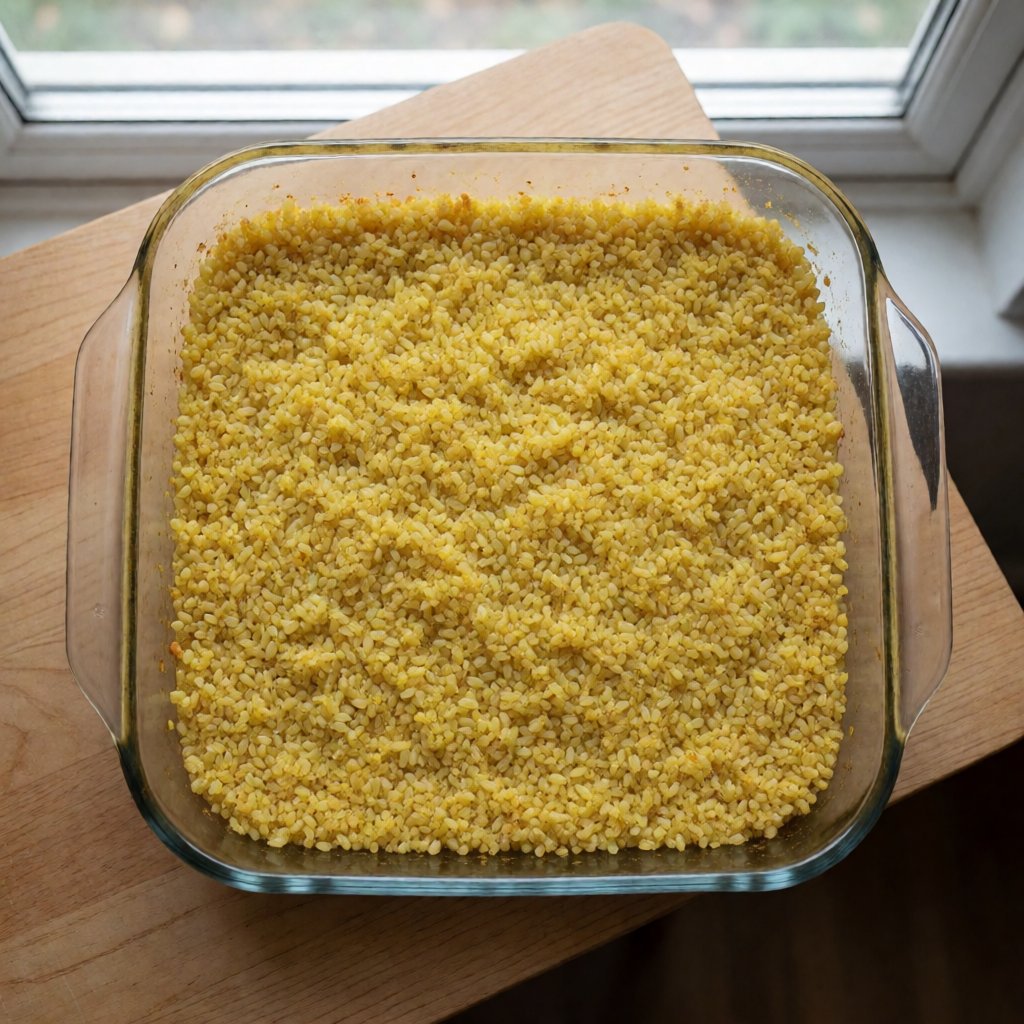
 AI photo
Oven-Baked Bulgur
A simple oven-baked bulgur, fluffed with a fork once it comes out of the oven.
Labels are worked out automatically from the ingredients and can be wrong. Check the packaging if it matters to you.
Ingredients
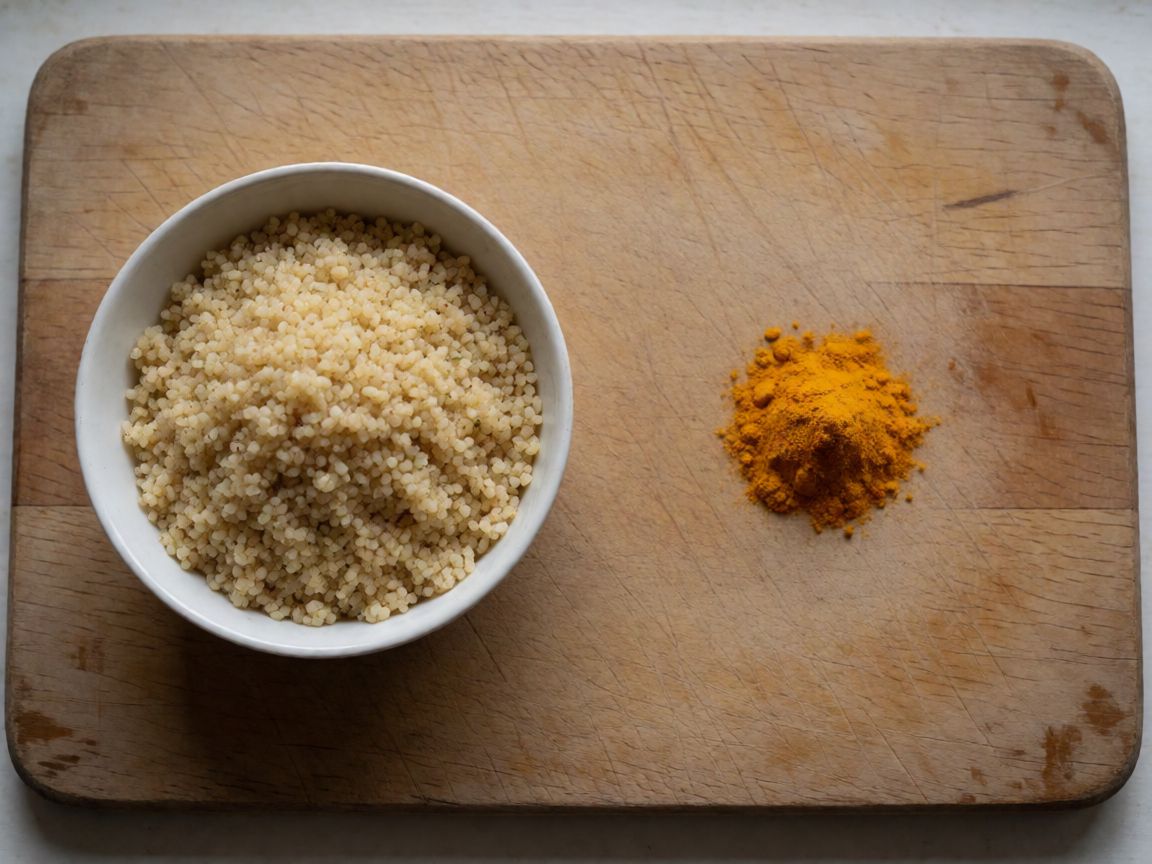
- 150 g bulgur
- 300 ml boiling water or hot stock
- 1 tbsp sunflower oil
- 1 pinch salt
- 1 pinch turmeric





Steps
Mix the bulgur, salt and turmeric in a baking dish, then stir in the oil.
Pour over the boiling water and cover with foil.
Place the dish in an oven preheated to 200°C and bake for 30 minutes.
30 minTake the dish out of the oven and fluff the bulgur with a fork.
This is the lazy cousin of pilaf — same mechanism, different heat source. In a kazan you build layers over a flame and watch the liquid disappear into the grain by sight. Here the oven does the watching for you: steady 200°C heat all around a sealed dish instead of one hot spot under a pan. The foil lid is doing the job a tight-fitting kazan lid does in the old recipe — trapping the steam so the bulgur cooks in its own fog rather than drying out on top while the bottom turns to glue.
What decides whether it works is the seal, not the clock. Thirty minutes is a guess that holds only if the foil actually traps steam — crimp it loosely and air leaks, the dish runs dry at the edges, and you get crunchy rims with a soft centre. Press the foil down properly, right to the lip of the dish, and the whole thing cooks evenly because the steam has nowhere to go but back into the grain.
Some people think pilaf needs a stovetop and constant watching, that an oven can't do it. No — because what matters is even, enclosed heat, and an oven gives you that more reliably than most hobs, which run hot in the centre and cool at the edges. You're trading control for evenness. Fair trade for a Tuesday.
Bulgur itself is the whole reason this dish exists in half an hour. It's wheat that's already been boiled and dried once, back when it was made — a preservation trick as old as granaries, because dried grain keeps and whole wheat berries take forever to cook otherwise. That first boiling is why 150 g of it only needs 300 ml of water and thirty minutes in a hot box: it's rehydrating, not cooking from raw. Buy medium or coarse bulgur, not the fine kind meant for tabbouleh — fine bulgur turns to porridge under foil, it hasn't got the structure to hold its shape through a steam bath. No bulgur in the cupboard? Cracked wheat works the same way. Rice and couscous don't — different starch, different water ratio, you'll either flood it or starve it.
Boiling water, not cold, is not fussiness. Pour cold water over bulgur and put it straight in the oven, and you lose ten minutes of the thirty just getting the dish up to temperature — by which point the grains near the foil have already started drying before the ones at the bottom have properly swollen. Boiling water means every grain starts absorbing and softening at the same moment. If you've got stock on hand, use it instead of water — the bulgur drinks whatever liquid you give it, flavour included, so stock buys you seasoning for free. No stock, no bother: salt and turmeric alone make a dish that tastes of itself, which bulgur does well.
The oil goes in before the water for one reason: it coats the grains first, so they don't fuse into a single starchy brick once the water hits. Any oil with no smell of its own does this — sunflower, rapeseed, a flavourless vegetable oil. Olive oil will work but it'll argue a little with the turmeric; use it if that's what's open.
Turmeric here is colour, mostly, and only a little flavour. This is the same instinct that puts saffron in a proper pilaf — a cheap way to make plain grain look like it cost something. Saffron is the real thing if you have it and the budget for it; turmeric is the version every kitchen can afford, and it's been doing saffron's job in budget cooking for a very long time. A pinch is enough — it stains, it doesn't need to dominate.
Fluffing with a fork at the end isn't decorative. Steam keeps working inside that sealed dish even after you've decided it's done, and if you leave the grains packed together they'll carry on sweating against each other and clump. A fork breaks the surface, lets the last of the steam escape upward instead of sideways into the next grain, and that's what keeps this a bowl of separate, fluffed grain rather than a solid cake of it. Do it the moment the foil comes off, while it's still hot enough to steam when disturbed — wait, and the grains have already cooled into whatever shape they were lying in.
·