
 AI photo
Baked Carnival Zeppole
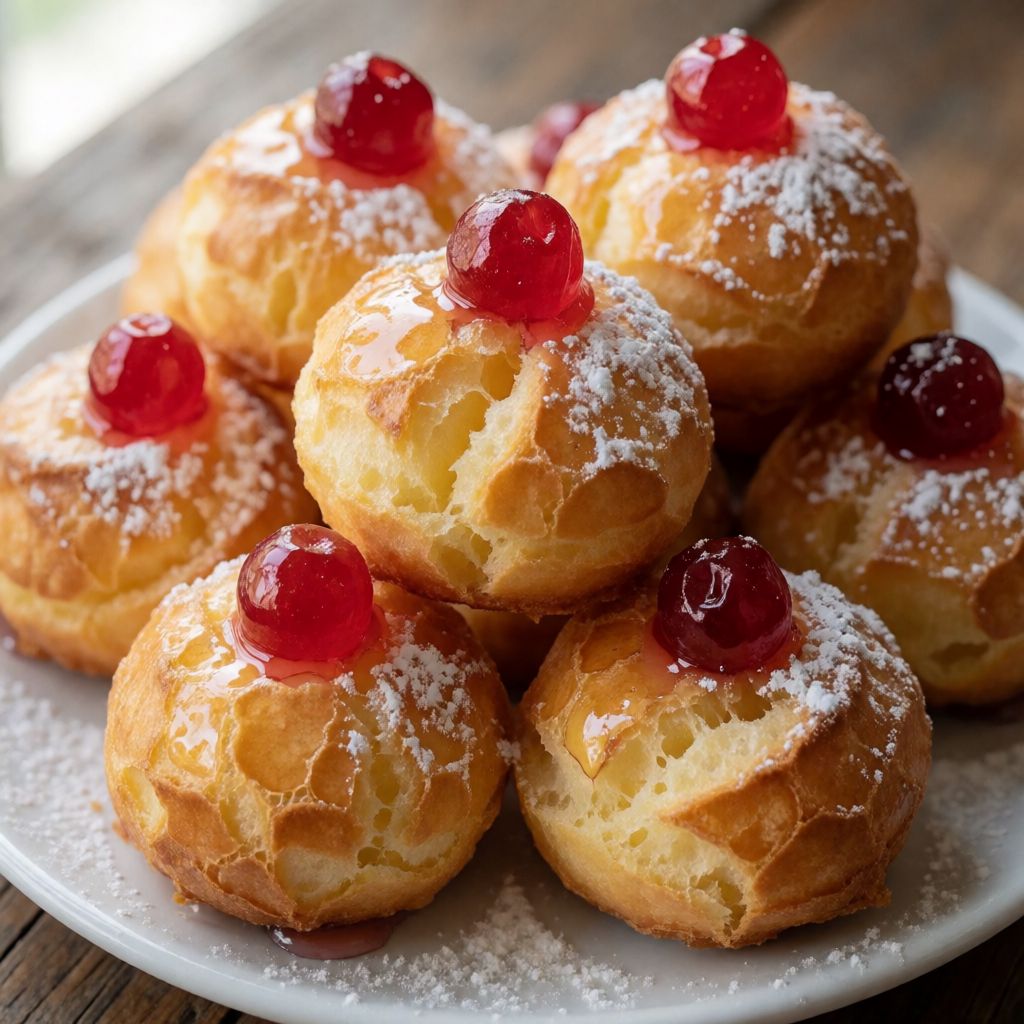
Light baked zeppole, a carnival treat, cut in half, filled with pastry cream and topped with a candied cherry.
Labels are worked out automatically from the ingredients and can be wrong. Check the packaging if it matters to you.
Ingredients
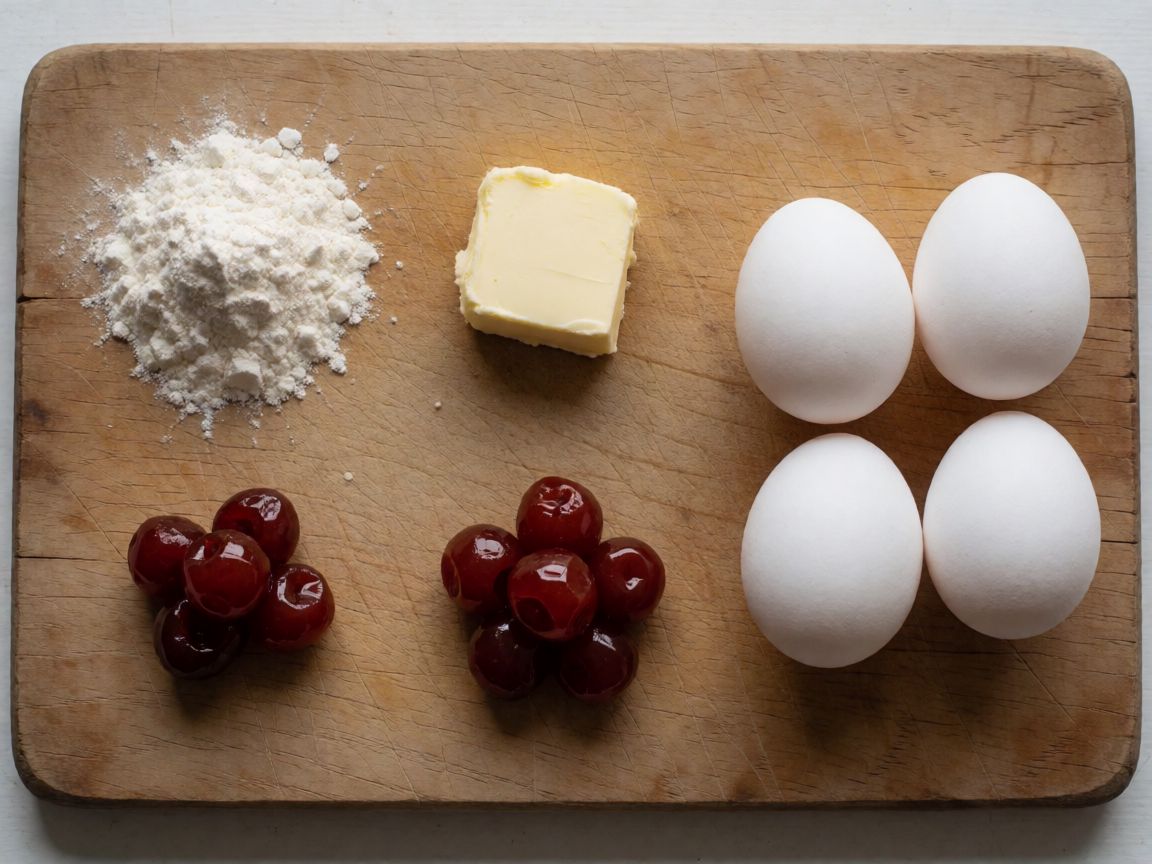
- 140 g Plain Flour
- 240 ml Water
- 70 g Butter
- 4 pcs Eggs
- 1 pinch Salt
- Candied Cherries to taste






Steps
Put the butter into the salted water and bring to the boil, then remove from the heat and gradually stir in the flour, mixing continuously.
Return to low heat and cook for 2 minutes.
2 minLet the dough cool, then add the eggs one at a time, mixing thoroughly until smooth after each addition.
Transfer the dough to a piping bag. Line a baking tray with baking paper and pipe spirals, piping a second spiral on top of each first one.
Bake in a preheated oven at 200°C for 20 minutes.
20 minLet the zeppole cool completely, cut each one in half and fill with pastry cream.
Place one candied cherry in the centre of each zeppole.
This is choux pastry wearing a carnival costume. Forget the frying pan — these zeppole are baked, which already tells you the whole story: you are using the oven's dry heat instead of a bath of hot oil to make the paste puff into a hollow shell, and that one swap changes almost nothing about the dough and almost everything about how forgiving the method is.
What decides whether this works is not the piping pattern, not the cherry on top — it's three moments in the dough. First, the flour has to be cooked into the boiling butter-water, not just mixed with it, so the starch swells and grabs the liquid properly; skip that and you get a paste that never holds its shape under a piping bag. Second, the dough must cool before the eggs go in, because egg proteins start to set around 60°C — add them hot and you are scrambling egg into your dough instead of binding it, and a dough with bits of cooked egg can't trap steam evenly, so it won't rise, it'll just sit there looking offended. Third, the oven has to be hot enough, long enough, that each spiral puffs and dries into a shell before it has the chance to collapse back on itself.
Flour here is just structure — plain flour, nothing fancy, no need for a strong bread flour because you are not after chew, you're after a wall thin enough to go hollow. Add it to the boiling butter-water in one go and stir hard; lumps at this stage are the start of a dough that bakes unevenly, dense in the lumpy bits, hollow where it's smooth.
Butter does two jobs: it coats the flour so the paste turns glossy instead of gluey, and it's most of the flavour this plain little dough has, since there's no sugar in it at all — the sweetness comes later, from the cream and the cherry. Margarine will get you a shell that rises the same way, because the mechanism is water-and-fat-into-steam, not butter specifically — but it tastes like nothing, and a dough with no sugar and no flavour of its own needs that butter to carry it.
Eggs are the leavening. There's no baking powder in this list, and there doesn't need to be — the lift comes from egg moisture turning to steam inside a dough stiff enough to hold a skin around that steam while it expands. That's why they go in one at a time, each one beaten in until the dough goes smooth again before the next: you're rebuilding that elastic, steam-tight structure after every addition, not just diluting a paste. Four eggs for 140 g flour and 240 ml water is a wet dough by any normal pastry standard — that's deliberate, that wetness is the fuel for the puff.
Salt in the water is seasoning for the dough itself, small as the amount is — choux without salt tastes flat even once it's full of sweet cream, because your tongue notices the absence of salt faster than the presence of sugar.
Candied cherries carry no mechanism worth explaining — they're Carnival's way of marking a plain pastry as festive, the same instinct that puts a cherry on a trifle. Glacé cherries from the baking aisle do the job; so would any small, bright, firm piece of crystallised or dried fruit, so long as it isn't so wet it bleeds colour into the cream once it sits there.
One honest gap: the recipe tells you to fill with pastry cream in step 6 but never gives you the pastry cream itself. That's crème pâtissière — milk, egg yolks, sugar, a little cornflour, cooked gently until it thickens, cooled before it goes anywhere near the warm shells. Fill too early and the shell is still breathing out steam from the inside; trap that steam under a layer of cream and you get a soggy roof by teatime instead of a crisp one. Let the shells go properly cold first — patience here isn't a virtue, it's the difference between a zeppola and a wet biscuit.