
 AI photo
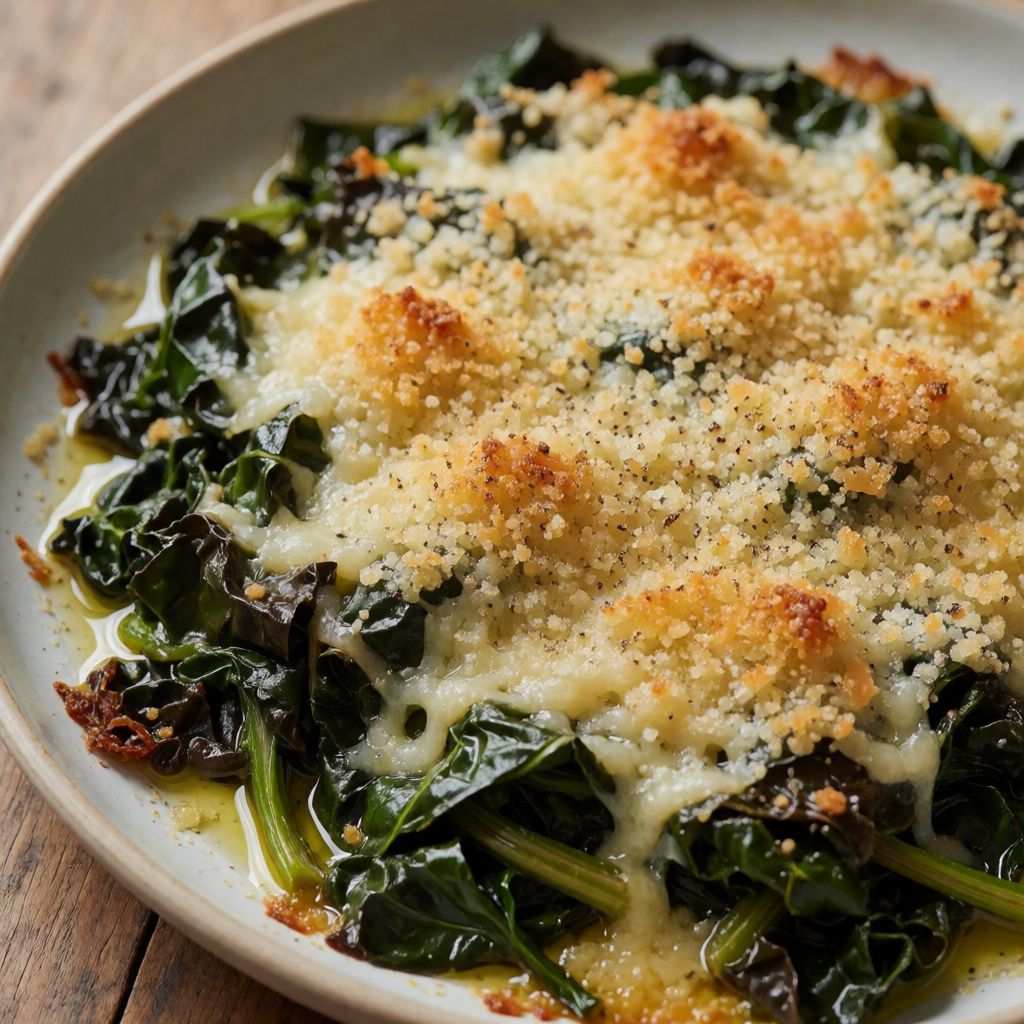
Baked Swiss Chard with a Cheese Crust
A simple baked Swiss chard side dish finished with a golden Parmesan and breadcrumb crust.
Labels are worked out automatically from the ingredients and can be wrong. Check the packaging if it matters to you.
Ingredients
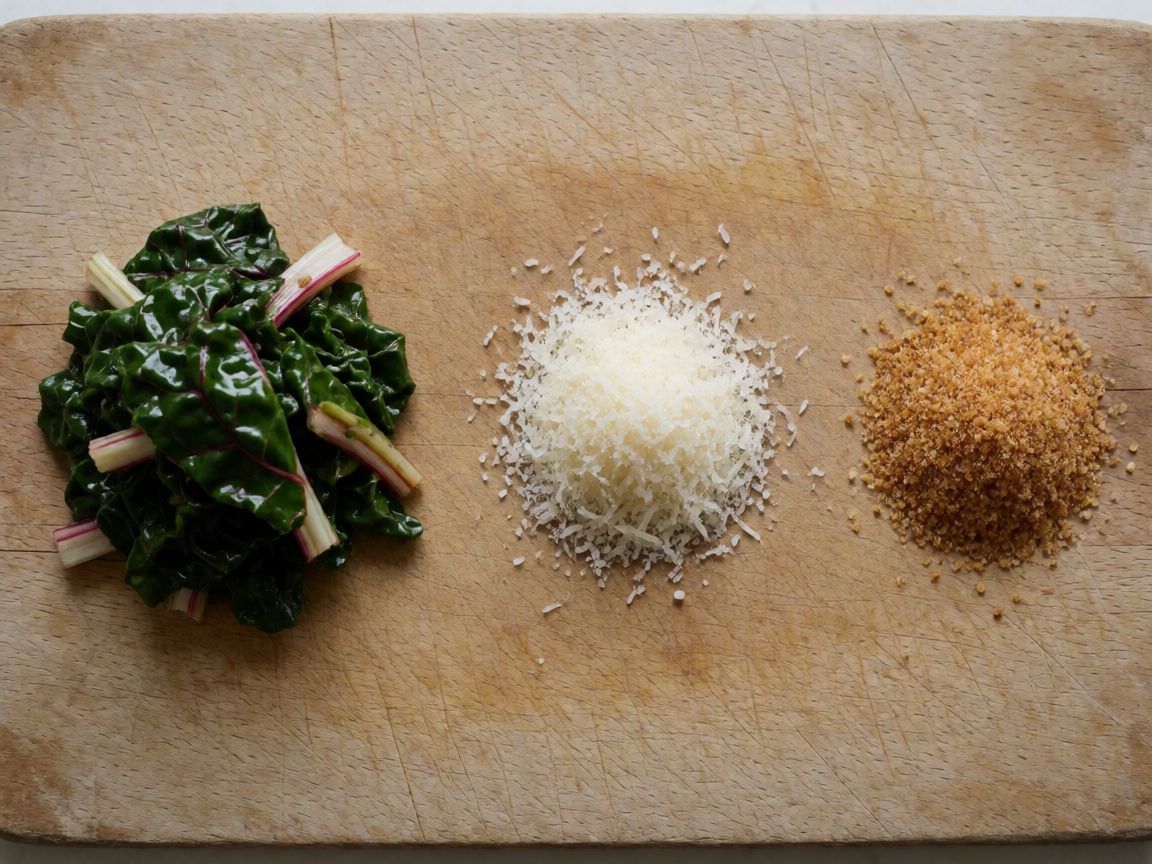
- 1 kg Swiss Chard
- 60 g Parmesan
- Breadcrumbs as needed
- Olive Oil to taste
- Salt to taste
- Black Pepper to taste





Steps
Wash each chard leaf thoroughly under running water to remove any soil or dirt.
Slice the stalks into thin rounds and cut the leaves into medium pieces.
Boil the chard stalks in boiling water.
10 minAdd the chard leaves to the pot and continue boiling.
10 minDrain the chard in a colander.
Grease a baking dish with olive oil and dust it with breadcrumbs.
Spread the boiled, well-drained chard over the base of the dish.
Season with olive oil, salt and black pepper, then sprinkle with Parmesan.
Bake at 200°C.
10 minSwitch on the grill to form a golden crust.
5 minRemove from the oven and serve hot.
This is a two-stage dish wearing one disguise. Underneath, it's simply boiled chard; on top, it's a crust that only exists because of what you did five minutes before it formed. The whole recipe stands or falls on one unglamorous step: how well you drained the chard. Water is the real enemy here, not heat. A pan of chard that's even slightly wet will sit under the grill steaming instead of browning — the cheese will dry out and crumble before the surface ever catches colour. Press it, let it sit in the colander, squeeze it with your hands if you have to. That's not fuss, that's the step doing its job.
The second thing that decides whether this works is treating the chard as two vegetables, not one. The stalk is closer to celery than to the leaf — dense, a bit fibrous, slow to soften. The leaf collapses in minutes. Some say chard is basically spinach and you can throw the whole thing in together — no, because then you either leave the stalk crunchy or turn the leaf to rag. Boiling the stalks first and adding the leaves after isn't ceremony, it's just matching the cooking time to the actual structure of the plant.
A kilo of chard looks like a lot of washing-up and not much dinner, but chard loses most of its bulk in the pot — leaves especially collapse to a fraction of their raw volume. A kilo feeding four as a side is realistic once you've seen how much it shrinks; don't be tempted to halve the quantity because the raw pile looks huge in your sink.
Choose chard by the stalk, not the leaf. The stalk should be crisp enough to snap cleanly if you bend it — if it bends like rubber, it's old and will stay tough no matter how long you boil it. If you can't get chard, spinach works for the leaf part, but spinach has no real stalk equivalent, so you lose the textural contrast that makes this dish more than a green mush under cheese. Cavolo nero is a reasonable stand-in too, treated the same two-stage way.
Parmesan's job here isn't flavour alone — it's moisture, or rather the lack of it. A hard, aged cheese has very little water left in it, which is exactly why it browns fast and crisps under the grill instead of just melting into a puddle. Any cheese with that profile will do: grana padano, an aged pecorino, even a mature cheddar in a pinch, though it browns differently and tastes less sharp. A soft, wet cheese — fresh mozzarella, say — will never give you a crust, it'll give you a hot cheese sauce. That's not a failure of the recipe, that's a failure of cheese choice.
Breadcrumbs on the dish before the chard goes in aren't decoration, they're insurance against sticking and a second, quieter crust underneath. Dry, stale bread grated or blitzed does the job; fine shop-bought crumbs work too, just don't use anything so fine it turns to paste the moment it meets olive oil.
Olive oil here is just the fat that stops things sticking and carries heat evenly across the surface — any oil with no smell of its own will do the same work, sunflower or a neutral vegetable oil included. Save the good, peppery olive oil, if you have one, for drizzling at the table afterwards, where you can actually taste it; under the grill its finer aroma just burns off and you've wasted it.
Salt and pepper go on after draining, not before boiling the chard in salted water out of habit — chard already has a mild, slightly mineral bitterness, and seasoning it directly, where it sits under the cheese, lets you judge the amount by what's actually in the dish rather than guessing what survived the boiling water.