
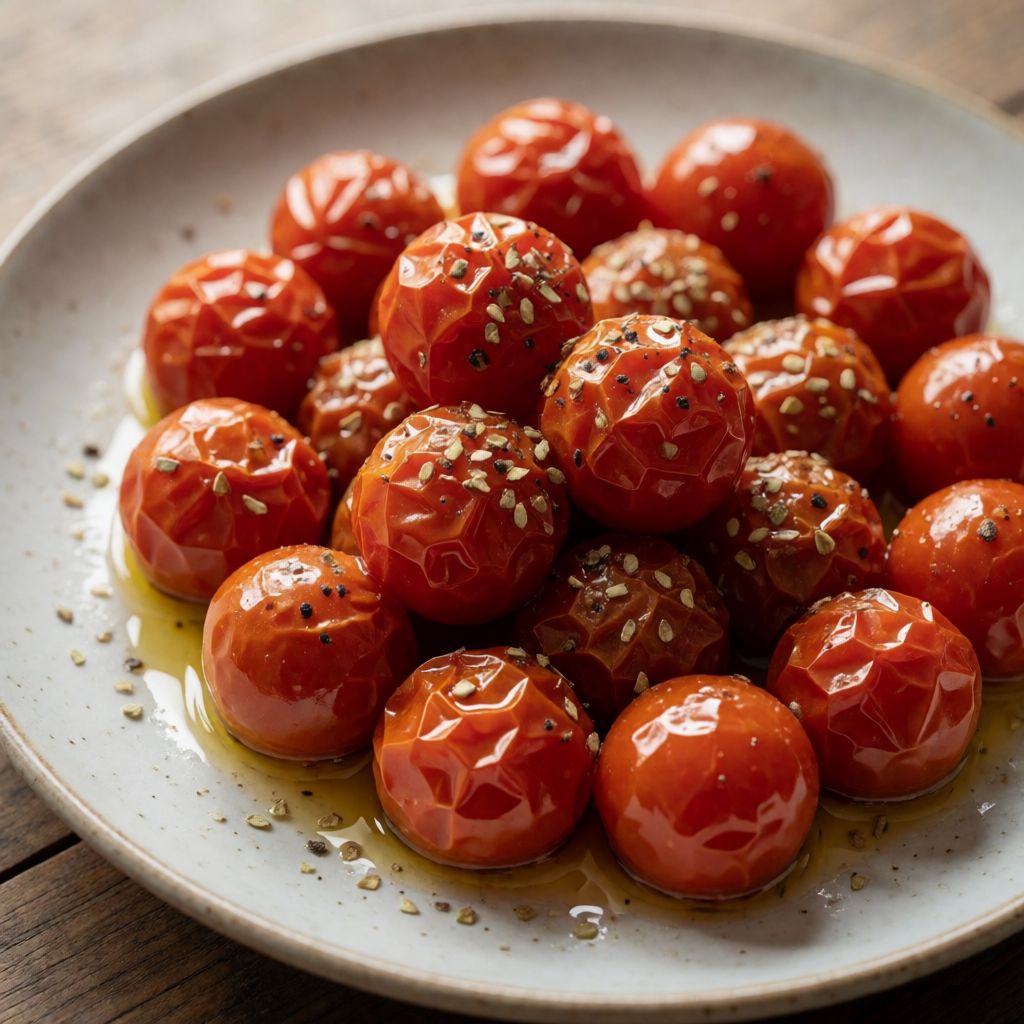
 AI photo
Roasted Piccadilly Cherry Tomatoes
A simple side dish of roasted Piccadilly cherry tomatoes with olive oil, oregano, salt and pepper.
Labels are worked out automatically from the ingredients and can be wrong. Check the packaging if it matters to you.
Ingredients
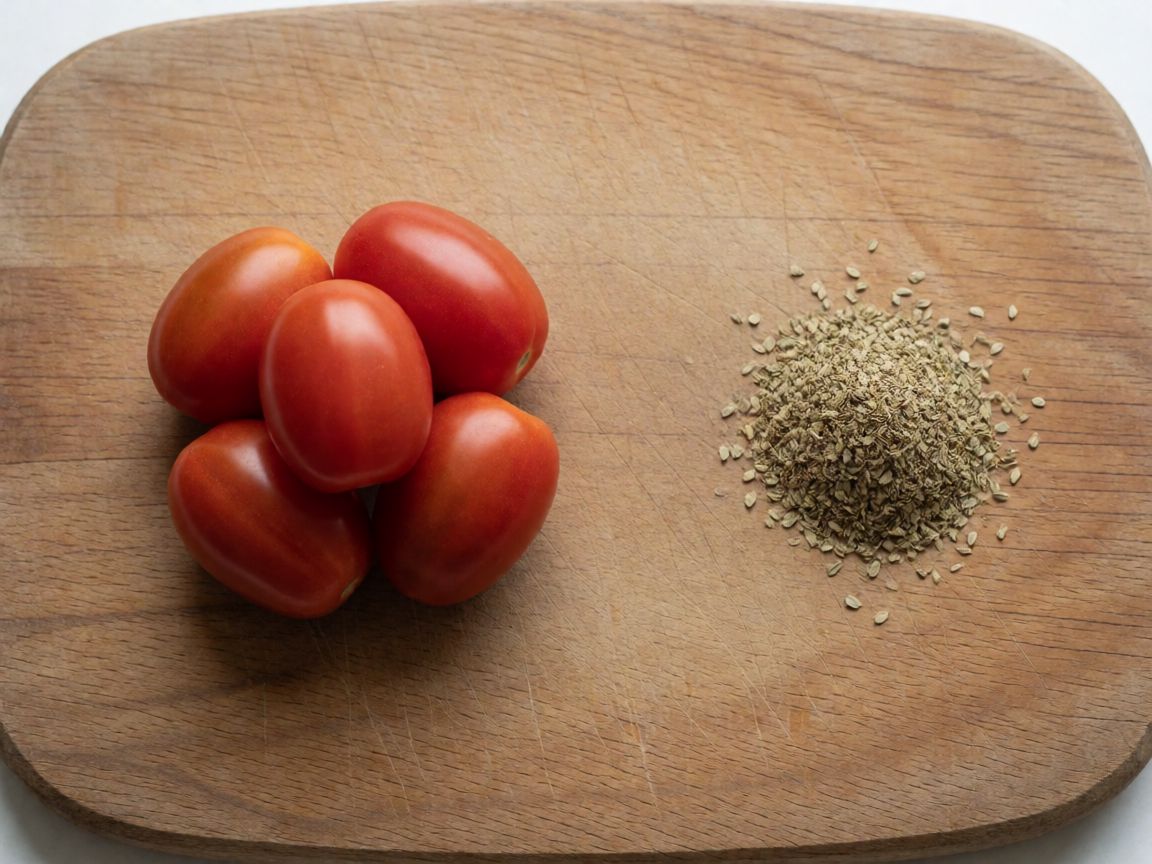
- 400 g Piccadilly cherry tomatoes
- 3 tbsp Olive oil
- Salt to taste
- Black pepper to taste
- Oregano to taste





Steps
Wash the Piccadilly cherry tomatoes and cut them in half. Scoop out the seeds and watery pulp with a knife.
Place the halves cut-side down on a paper towel and let the liquid drain.
10 minLine a baking tray with baking paper and brush with 1 tablespoon of olive oil. Place the tomatoes cut-side down.
Bake in an oven preheated to 180°C.
13 minRemove the tray from the oven and turn the tomatoes cut-side up.
Drizzle with the remaining olive oil, and sprinkle with oregano, salt and black pepper to taste.
Return the tray to the oven.
20 min
This is not tomato salad and it is not sun-dried tomato either — it is a middle thing: fresh tomato with most of its water driven out by heat, so what is left is flesh, sugar and a trace of smoke from the tray. Serve it next to a roast the way you'd serve roast parsnips, or spread it on toast with the oil that pools underneath. 400 g gives you a proper side for four — this is not a dish you build a meal around, it is one that fixes a meal that is otherwise all meat and potatoes.
What decides whether it works is water, and where it is when the heat arrives. A tomato is mostly water held in a jelly of seeds and pulp. Leave that jelly in and the tomato steams in its own liquid before it ever gets hot enough to brown — you get a soft, grey, faintly boiled thing, not a roasted one. Scooping the seeds and pulp out, then standing the halves cut-side down on paper towel for ten minutes, removes the water that would otherwise sit between the tomato and the hot tray and turn roasting into steaming. Skip that ten minutes and you are not saving time, you are changing the dish.
Piccadilly (or any plum-shaped) tomato is specified for a reason, not snobbery: it has a thicker flesh wall and less of the loose, seedy jelly that a round salad tomato is mostly made of. Proportionally, you throw less away and you're left with more actual tomato to roast. If all you have is ordinary round tomatoes, use them — just expect to scoop out more pulp relative to what remains, and expect the halves to collapse further, because there's less structural flesh holding them up once the water's gone. Cherry tomatoes on the vine, left whole, are a different dish entirely — the skin holds the water in, so they burst rather than concentrate; that's fine too, just not this.
Olive oil here is doing two jobs: it coats the tray so the cut face browns instead of sticking and tearing, and later it carries the oregano's flavour into the flesh rather than letting it sit on top as dust. The criterion for substitution is any oil with no smell of its own strong enough to fight the tomato and the herb — a flavourless sunflower or rapeseed oil works for the tray-coating job; for the second drizzle, something with a little more character (olive oil, or oil you've already infused with garlic or chilli) earns its place, because that's the oil that actually reaches your mouth.
Salt does the ordinary salt jobs — seasoning, but also it pulls out a little more surface moisture from the cut flesh, so a light sprinkle in the second stage, not the first, is right: salt it before the first bake and you're fighting your own ten minutes of draining.
Oregano, dried rather than fresh, is correct for once — fresh oregano has water in its leaves and would just wilt and lose its oil-soluble aromatics to steam in the oven; dried oregano's flavour compounds are concentrated and release slowly into the olive oil over twenty minutes, which is exactly the contact time it's given here.
On the oven: 180°C is a gentle number, chosen so the surface sugars have time to caramelise before the edges scorch — this is not a blast-roast, it's a slow concentration. Domestic ovens lie about their own temperature more often than gas hobs do, and a fan oven runs differently to a conventional one, so treat 180°C as a starting instruction and the wrinkled skin, shrunk shape and browned freckles as the actual truth. If your oven runs hot, you'll see that truth arrive early; if it runs cool, let it run on past the stated time rather than pulling tomatoes that still look plump and wet in the middle — a plump tomato at the end means water that hasn't left yet, and you've made soup, not a roast.
The paper towel on the draining step is just a domestic stand-in for what a professional kitchen does on a wire rack over a tray — the point is contact with something absorbent, not the specific object. A clean tea towel laid flat works the same way, if you don't want to waste kitchen roll on it.